 How-to
How to Prevent Vehicle Damage During Towing
Quick Summary
Vehicle damage towing is usually caused by driven wheels or the drivetrain moving when they should not, so the safest approach is to match the tow method to your drivetrain, check your owner's manual before the truck arrives, and document the car's condition before and after the tow. Flatbed towing is the safest default for all-wheel drive, electric, and hybrid vehicles.
- Read the towing section of your owner's manual before the tow truck arrives.
- Tell the dispatcher if your manual says flatbed only or no wheels on the ground.
- Photograph your car from all sides before loading, including existing dents.
- Ask the operator to secure tie-downs to the frame or approved points, not bumpers.
- Report new damage in writing with your photos and keep all tow paperwork.
Table of Contents
- Why Vehicles Get Damaged During Towing
- Step 1: Check Your Vehicle Before a Tow Truck Arrives
- Step 2: Choose the Right Towing Method for Your Vehicle
- Step 3: Confirm the Operator Secures the Vehicle Properly
- Electric and Hybrid Vehicle Precautions and Weather or Route Risks
- Step 4: Inspect Your Car After the Tow and Document Any Damage
- Booking Your Next Tow With Jetz Towing
- Frequently Asked Questions
Last Updated: October 30, 2026
Towing a vehicle is supposed to be routine, but a poor setup can turn a simple tow into a costly repair bill, which is why vehicle damage towing is worth understanding before the truck arrives. JETZ TOWING helps drivers across Sacramento and Placer County get their cars moved safely. Most of it comes down to three things: knowing your vehicle's drivetrain, choosing the right towing method, and checking the car before and after the tow.
Why Vehicles Get Damaged During Towing
Towing damage usually happens for one reason: the wheels or drivetrain are moving when they should not be. A car pulled with its driven wheels on the pavement can spin parts that were never meant to turn at road speed without the engine running.
Transmission and drivetrain risks
The transmission and drivetrain are the most common casualties. Front-wheel drive, rear-wheel drive, and all-wheel drive vehicles each send power differently, so each has its own weak point. Most owner's manuals spell out which wheels can stay down and what the maximum tow distance is, so check yours before anyone hooks up. For the towing options JETZ Towing offers in Carmichael, see towing and roadside services.
Common types of towing-related damage
- Transmission wear or failure from driven wheels rolling without lubrication
- Bumper and undercarriage damage from improper hookup points
- Brake problems, including overheated brakes and glazed rotors from sudden braking
- Suspension and wheel alignment shifts from rough loading
- Steering lock damage if the wheels are not secured straight
Step 1: Check Your Vehicle Before a Tow Truck Arrives
Spend five minutes on a quick pre-tow inspection before the operator shows up. It gives you a baseline and helps you spot problems early.
Match the tow method to your drivetrain
Towing requirements differ by how power reaches the wheels. Use this guide, then confirm every detail in your owner's manual, the manual always overrides general advice.
- Front-wheel drive (FWD): The front wheels are driven. A wheel-lift that raises the front wheels and rolls the rear wheels is common, but only if the manual permits it. Towing a FWD vehicle with its front wheels on the ground can spin the transmission without the engine running it, which may starve it of lubrication. Many manuals cap the distance and speed for this configuration.
- Rear-wheel drive (RWD): The rear wheels are driven. A wheel-lift that raises the rear wheels and rolls the front is the usual approach, again only if the manual allows it. Towing with the rear wheels down can turn the driveshaft and transmission output shaft at road speed.
- All-wheel drive (AWD) and four-wheel drive (4WD): Power reaches all four wheels, and the system may bind or spin components if any driven wheel rolls on the pavement. Flatbed towing is the safest default. Some manuals permit a dolly under one axle, but only when the manual explicitly says so.
- Electric vehicles (EVs): The drive motor can generate current when the wheels turn, even with the car off. Many manufacturers require flatbed towing and prohibit wheel-lift or dolly towing entirely. Check the manual for the exact wording before anyone hooks up.
- Hybrids: Treat them like EVs for towing purposes unless the manual says otherwise. The regenerative drivetrain can turn when wheels roll, and some models have parking locks that must be released in a specific service mode.
- Manual transmission: Some manuals permit towing with the driven wheels down in neutral, but distance and speed limits still apply. Never assume neutral makes it safe.
Pre-tow checklist
- Find the owner's manual and read the towing section
- Note which wheels, if any, may stay on the ground, plus any distance and speed limits
- Confirm whether the vehicle is FWD, RWD, AWD/4WD, EV, or hybrid
- Put the transmission in neutral only if the car is safe to do so and the manual allows it
- Release the parking brake only if the manual allows it
- Check for fluid leaks under the car
- Photograph the car from all sides, including any existing dents or scratches
- Remove or secure loose parts, hubcaps, spoilers, roof racks, and anything in the bed or cargo area
- Note any low-clearance features, such as a front air dam or lowered suspension
If your car is an automatic and the manual says it must be towed on a flatbed, say so when you call. If it is an EV or hybrid, mention that too, so the dispatcher sends a flatbed rather than a wheel-lift truck.
Step 2: Choose the Right Towing Method for Your Vehicle
Flatbed towing and wheel-lift towing are the two methods you will hear about most. They work very differently.
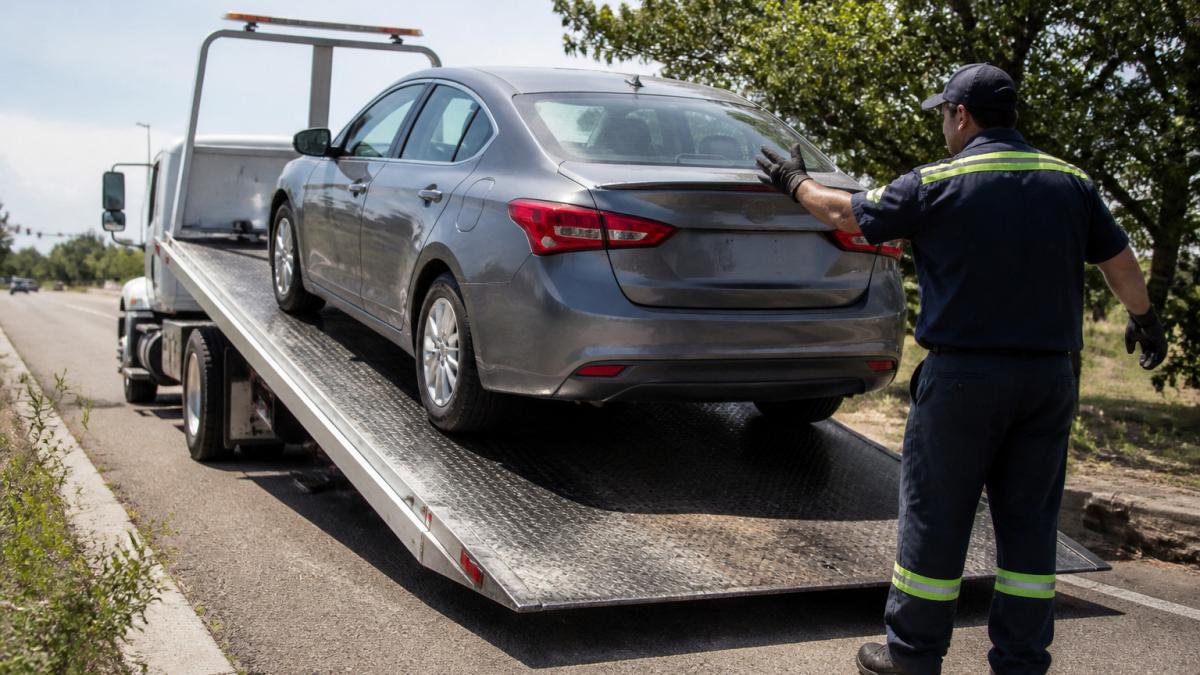
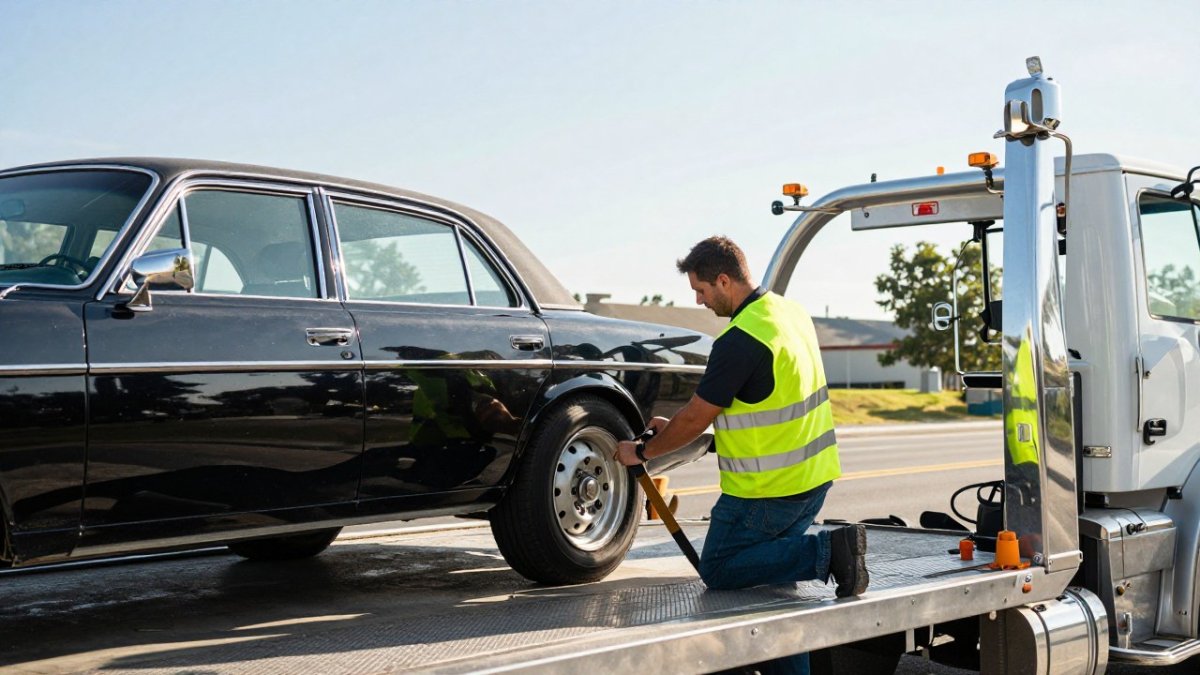
A flatbed truck lifts the entire vehicle onto a level bed, so no wheels touch the road. For more detail on light-duty towing options in Sacramento, read our complete guide. This is the safest option for all-wheel drive vehicles, low-clearance cars, classic cars, and any vehicle the manual marks as flatbed-only.
Ask the operator which method fits your car before loading.
Vehicles with driven wheels on the ground
If a car must be towed with some wheels on the ground, a dolly can protect the driven wheels. This keeps the drive wheels lifted while the others roll. Ask whether a dolly is available before you agree to any tow where driven wheels will touch the pavement.
Step 3: Confirm the Operator Secures the Vehicle Properly
Good loading protects your car as much as the towing method does. To understand what towing insurance coverage typically includes, read our explainer. Watch the process if you can.
Look for these signs of a careful operator:
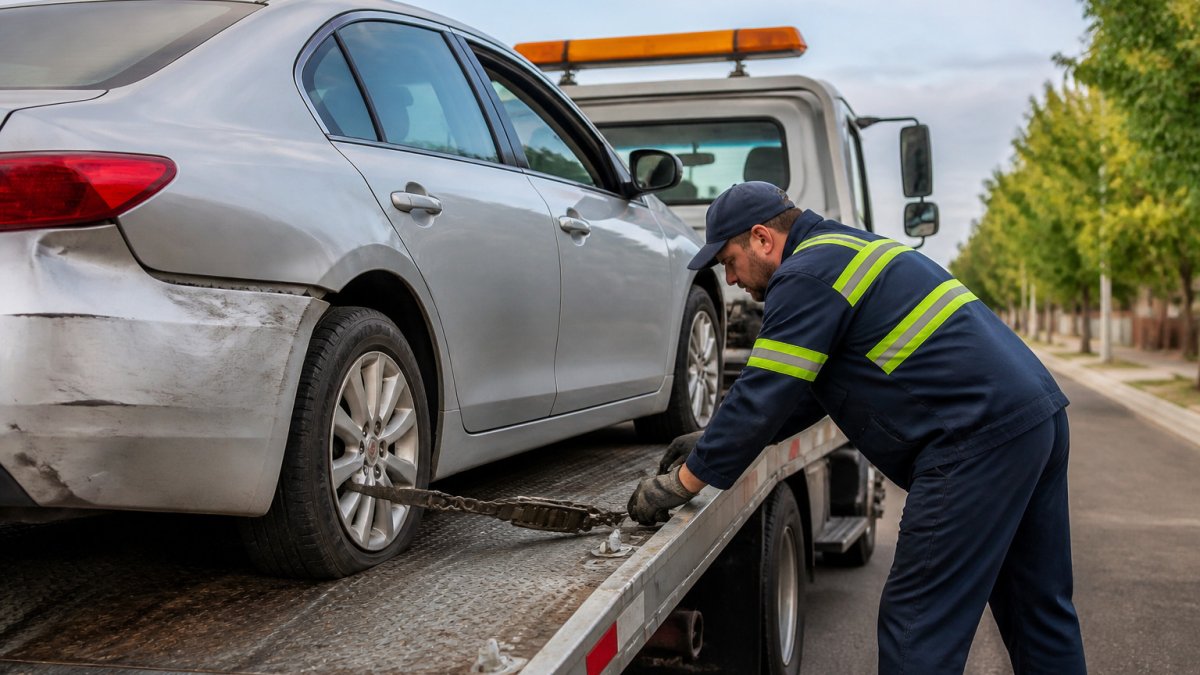
- Tie-downs or wheel straps attached to the frame or approved points, not bumpers or axles
- Wheels locked straight and secured before the car moves
- Chains or straps checked for tension before the truck leaves
Watch out: never let an operator attach straps to a plastic bumper cover or suspension arm. Those parts crack or bend under load and cost far more to fix than the tow itself.
Electric and Hybrid Vehicle Precautions and Weather or Route Risks
Electric and hybrid vehicles need extra care. Many EVs should not be towed with their drive wheels on the ground at all, because the motor can turn even when the car is off. Check the manufacturer's guidance before loading.
Weather and road conditions also raise the risk. Wet pavement, steep grades, and fast highway speeds can make a loaded truck harder to control. Routes with sharp turns or rough surfaces can shift a car on its straps.
Step 4: Inspect Your Car After the Tow and Document Any Damage
Inspect the car as soon as it is unloaded, before you drive it or sign anything. Compare it to the photos you took earlier. A calm, documented inspection is the difference between a quick resolution and a dispute that drags on for weeks.
What to check
- Bumpers, body panels, and paint for new scratches or dents
- Undercarriage and exhaust for fresh damage
- Tires and wheels for scuffs or alignment changes
- Steering and braking response during a slow test drive in a safe area
- Fluid levels and any new leaks
- Lights, turn signals, and any warning lights on the dash
Document the condition
- Photograph everything. Take dated photos of the whole vehicle, then close-ups of any new damage. Include the tow truck, the license plate, and the hookup points if they are still visible.
- Write it down. Note the date, time, location, driver name, company name, and dispatch or ticket number. Describe each new mark in plain language.
- Keep the paperwork. Save the tow receipt, dispatch record, and any text or email confirmation. These establish the timeline.
- Notify the operator in writing. Report new damage to the company right away, email or text is better than a phone call because it creates a record. Include your photos and ask for a written response.
- Preserve the evidence. Do not wash the car or repair anything until the company has responded or your insurer has inspected it. Cleaning can erase evidence of a fluid leak or scrape.
If the company does not respond
Check your auto insurance policy to see whether it covers tow-related damage. If you paid by credit card, ask the card issuer about dispute options for services not delivered as agreed. Keep every record in one folder so you can hand over a complete file if the dispute escalates.
Here is a quick summary of common damage and what to do about it:
| Damage Type | Likely Cause | What to Do |
|---|---|---|
| Transmission noise or slipping | Driven wheels on the ground | Stop driving, report it, get it inspected |
| Bumper cracks | Wrong strap points | Photograph and report in writing |
| Brake fade or grinding | Overheated brakes or sudden stops | Avoid driving until inspected |
| Alignment shift | Rough loading or route | Schedule an alignment check |
| New warning lights | Electrical or sensor damage | Photograph the dash and report it |
Booking Your Next Tow With Jetz Towing
At JETZ TOWING, we handle towing and roadside assistance across Sacramento and Placer County. Check whether we serve your community before you book.
When you need a tow, request a tow online. You can also call or send a message to our contact page for fast assistance. Be ready to share your location and vehicle details.
Frequently Asked Questions
How can I prevent damage to my car during towing?
Start by checking the car before the truck arrives: confirm the transmission, parking brake, and steering status, and note any existing dents or leaks. Ask the operator which method they plan to use. Flatbed towing lifts all four wheels off the road. Following your owner's manual towing instructions is one of the most reliable ways to avoid damage.
Is flatbed towing safer for my car?
In most situations, yes. A flatbed carries the entire vehicle, so no wheels rotate against the road and the drivetrain stays out of motion. Wheel-lift towing lifts only the front or rear wheels, leaving the other pair on the pavement. That can stress the transmission and drivetrain if the vehicle is not built for it, particularly all-wheel-drive models. Ask the operator which method they plan to use before loading begins.
What should I do if my car is damaged during towing?
Stop the tow process if it is safe to do so and ask the operator to note the damage on the paperwork. Photograph the vehicle from several angles and include close-ups of the damaged area, along with the time and location. Keep your receipt, dispatch record, and the driver's name and company information. Report the incident to the towing company in writing and ask how they handle claims.
Can a car be towed with the wheels on the ground?
Some vehicles can be towed with wheels on the ground, but only if the manufacturer allows it and the transmission is in the correct state. Front-wheel-drive cars with a manual transmission often tow this way, while most all-wheel-drive and many automatic vehicles should not. Check the owner's manual before any tow. If it does not specify, use a flatbed or dolly to lift the driven wheels off the road. Towing a driven-wheel vehicle the wrong way can damage the transmission or drivetrain.
Next time you need a tow, a few minutes of preparation will protect your vehicle. Call JETZ TOWING at 916-628-8646 and we will take it from there.