 How-to
How to Get a Damage-Free Vehicle Transport With Jetz Towing
Last Updated: November 21, 2026
Quick Summary
Damage-free vehicle transport requires the right equipment, a secure load, and a documented record of the car's condition before it moves. Most damage happens during loading and unloading, so a good operator plans for those moments. Documenting the vehicle with dated photos and a written checklist answers any later questions about damage.
- Most damage happens during loading and unloading, not on the road.
- Take photos from all four corners at eye level in daylight.
- Remove key fobs and steering wheel locks before loading.
- Choose a flatbed for low-clearance, all-wheel-drive, or non-running cars.
- Compare the car to your pre-transport photos at delivery.
Table of Contents
- What Damage-Free Vehicle Transport Actually Requires
- How to Prepare a Car for Towing Before the Truck Arrives
- Using a Vehicle Towing Checklist to Document Condition
- How Tow Trucks Secure Vehicles for Transport
- Towing a Non-Running Car Without Added Damage
- The Jetz Towing Damage-Prevention Process, Step by Step
- Booking Your Damage-Free Transport With Jetz Towing
- Frequently Asked Questions
What Damage-Free Vehicle Transport Actually Requires
Damage-free vehicle transport depends on three things: the right equipment, a secure load, and a clear record of the car's condition before it moves. Most damage happens during loading and unloading, not on the road. A good operator plans for both.
Damage-free vehicle transport starts long before the truck pulls up. It means matching the method to the vehicle, securing the car at the right points, and documenting its condition so any question can be answered later. Federal Motor Carrier Safety Administration cargo securement rules
Many drivers assume the tow itself is the risky part. In practice, the moments when a car rolls onto a ramp or gets hooked to a bed cause the most problems. Knowing that makes it easier to ask the right questions when you book.
How to Prepare a Car for Towing Before the Truck Arrives
Preparation takes about ten minutes and prevents most avoidable problems. Start by checking that the vehicle is in neutral or park, the parking brake is released when the car is non-running, and loose items are removed from the cabin and trunk.
Here is what to check:
- Remove personal items, phone chargers, and loose accessories
- Fold in side mirrors if they stick out past the body
- Note existing dents, scratches, and cracks with photos
- Confirm the tires hold air and the wheels turn freely
- Tell the operator about low ground clearance or modifications
Watch out: Do not leave a key fob or steering wheel lock in place. A locked steering wheel can cause the front wheels to turn during loading and scrape the tire.
Using a Vehicle Towing Checklist to Document Condition
A written checklist protects both you and the operator, but only if it captures the right details. Before loading, walk around the car in a consistent order, front bumper, hood, driver side, roof, passenger side, trunk, rear bumper, and record every mark you see. Take photos from all four corners at eye level, plus close-ups of any existing damage, the odometer reading, and the tire tread on each wheel.
A useful checklist covers more than body panels. Include:
- Body panels, bumpers, and trim, with a note for each existing dent, scratch, or crack
- Glass and mirrors, including chips and cracks in the windshield
- Lights and lenses, front and rear
- Tires and wheels, including curb rash and tread depth
- Undercarriage and exhaust, especially on low-clearance cars
- Odometer reading and fuel level
- Any modifications, such as a lowered suspension, aftermarket wheels, or a front lip
Sign the checklist and keep a copy; the operator should keep one too. If a question comes up later about a scratch or a cracked lens, the record settles it quickly. A common pattern is for a dispute to come down to whether a mark was already there, and a dated photo with a close-up answers that in seconds.
Watch out: A photo taken in dim light or from too far away will not show a hairline scratch, so shoot in daylight and get within a few feet of each panel.
After delivery, compare the car to your pre-transport photos before the operator leaves. If you spot something new, photograph it on the spot. Ask the operator how the company handles a transport-related issue and what the claims process requires before you authorize transport.
How Tow Trucks Secure Vehicles for Transport
Securing a vehicle correctly matters more than the truck itself. The goal is to hold the vehicle still without stressing its suspension or body.
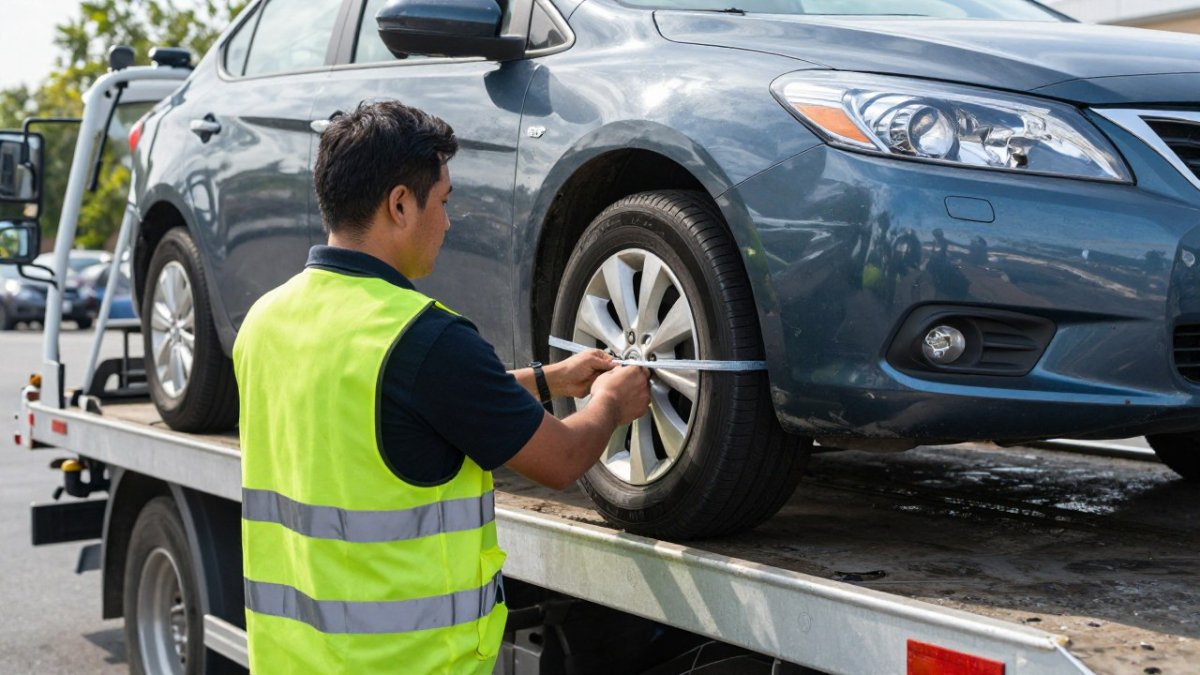
Flatbed Loading and Wheel Strap Positioning
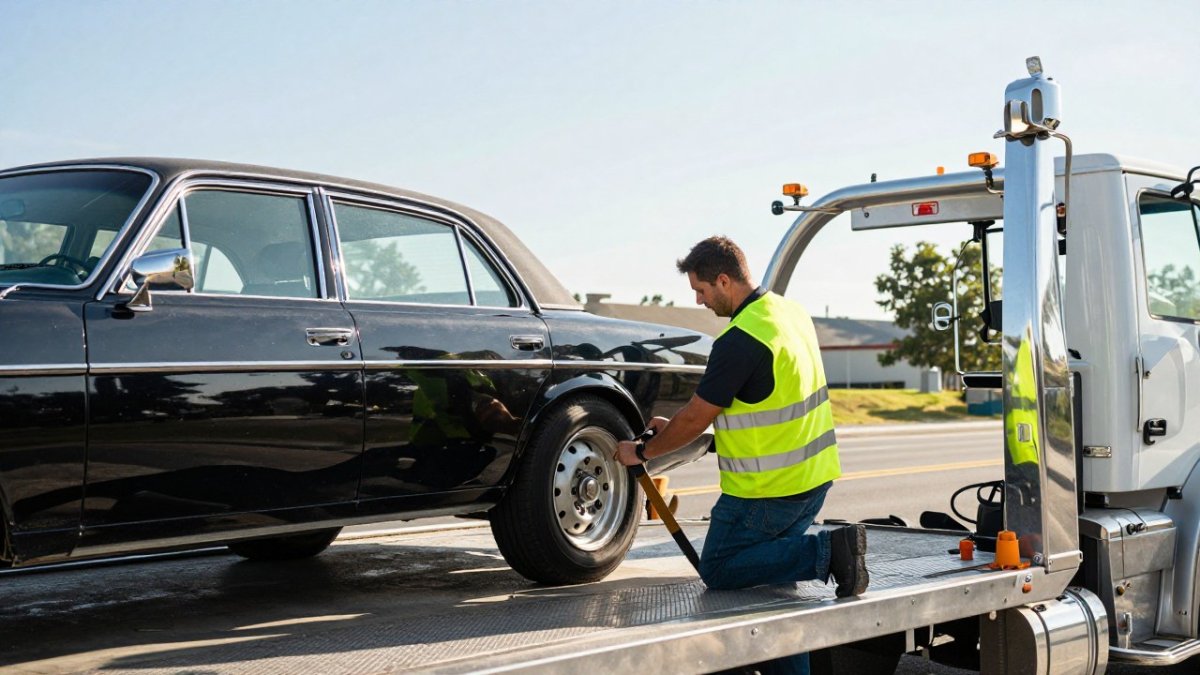
A flatbed carries the whole car on a sloped bed, which keeps the drive wheels off the road.
A licensed tow operator in a reflective vest fastens wheel straps to the front tires of a sedan on a flatbed truck in a Sacramento-area parking lot.
Common mistakes include straps that are too loose, straps on the wrong part of the tire, and skipping the rear wheels. Ask how the car will be secured before loading starts.
Choosing Equipment for Low Clearance and AWD Vehicles
Low-slung cars and all-wheel-drive vehicles need extra care.
Towing a Non-Running Car Without Added Damage
A non-running car needs the same care as any other vehicle, plus a few extra checks. Our guide to typical roadside assistance arrival times explains what to expect when you need a tow truck.
Tell the operator if the car has a seized engine, flat tires, or a damaged axle. Those details decide the method.
The Jetz Towing Damage-Prevention Process, Step by Step
Here is how we keep transports damage-free from start to finish:
- Confirm the vehicle details. Make, model, drivetrain, and ground clearance.
- Record the condition. Photos and a written checklist before loading.
- Choose the method. Flatbed for low, AWD, or non-running cars.
- Load slowly. Controlled winching on the ramp.
- Secure at the correct points. Straps on tread, tie-downs on the frame.
- Check the load. Confirm straps are tight before the truck moves.
- Document at delivery. Compare the car to your pre-transport photos.
Here is a quick summary of the steps Jetz Towing follows to keep each transport damage-free.
| Step | What happens | Focus |
|---|---|---|
| Confirm vehicle details | Make, model, drivetrain, ground clearance | Right equipment |
| Record condition | Photos and written checklist before loading | Documentation |
| Choose method | Flatbed for low, AWD, or non-running cars | Method match |
| Load slowly | Controlled winching on the ramp | Loading |
| Secure correctly | Straps on tread, tie-downs on frame | Securement |
| Check the load | Confirm straps are tight before moving | Final check |
| Document at delivery | Compare to pre-transport photos | Delivery |
Booking Your Damage-Free Transport With Jetz Towing
Booking is simple. Call towing and roadside services in Carmichael, CA to check availability and get the right truck for your vehicle. You can also contact JETZ Towing for fast towing and roadside help by phone or online.
When you call, have your vehicle's make, model, and drivetrain ready. Mention any low clearance or non-running issues. This lets us choose the right equipment before we arrive.
Not sure whether we cover your area? Check our service area across 18 communities to confirm before you book. For background on what coverage protects your car during transport, read our guide on towing insurance coverage.
Our licensed and insured professionals handle each transport with care. Request a tow today and get your vehicle moved safely.
Frequently Asked Questions
How can I prepare my car for a tow to help prevent damage?
Remove personal items, loose accessories and any aftermarket parts that could snag during loading. Confirm the parking brake is released if the car must roll, and note the transmission state. Photograph all four sides, the wheels and any existing dents or scratches before the truck arrives. Turn off the ignition, close all windows and secure the sunroof. Tell the operator about low ground clearance, body kits, lowered suspension or all-wheel drive so they can choose the right loading method. Preparation gives you a clear record if a question about condition comes up later.
What is the safest way to transport a vehicle that will not start?
A non-running car should go on a flatbed rather than being towed on its drive wheels. Flatbed transport lifts the entire vehicle off the road, so the wheels, transmission and drivetrain are not turning against the pavement. For front-wheel drive cars, a wheel lift or dolly can work for short distances, but flatbed is safer for all-wheel drive vehicles and anything with a locked steering wheel or a seized component. Tell the dispatcher the car will not start so the right equipment is sent.
How do tow operators secure a vehicle for transport?
Proper securement keeps the car from shifting during transit.
How can I document my vehicle's condition before a tow?
Walk around the car in good light and photograph each side, the front and rear, the wheels and the undercarriage if it is accessible. Record the odometer reading, fuel level and any warning lights on the dashboard. Note existing scratches, dents, cracked glass and tire wear in writing as well. Keep time-stamped photos on your phone. If the car is delivered with new damage, these records support a claim with the transport company's insurer.