 How-to
How to Handle a Roadside Breakdown Safely in 2026
Last Updated: November 7, 2026
Quick Summary
Safe roadside assistance tips start with getting the vehicle off the traveled lane, turning on hazard lights, and staying inside the car with your seat belt on. Move as far right as you can, then wait for a verified responder before exiting.
- Move as far right as you can, using the shoulder or nearest safe exit.
- Turn on hazard lights as soon as you stop and keep them on until help arrives.
- Stay inside with your seat belt on unless the car is on fire or leaking fuel.
- Confirm the responder's company name and driver against the number you called.
- Share your exact location using a mile marker, cross street, or landmark.
Table of Contents
- What to Do When Your Car Breaks Down on the Road
- Situation-Specific Guidance: Highways, Shoulders, Tunnels and Low Visibility
- How to Stay Safe While Waiting for a Tow Truck
- How to Verify a Roadside Responder and Share Your Location
- Roadside Assistance Checklist for 2026
- After a Collision Versus a Mechanical Breakdown
- Choosing Among Roadside Assistance Plans
- Booking Your Tow With JETZ TOWING
- Frequently Asked Questions
What to Do When Your Car Breaks Down on the Road
Roadside assistance tips in 2026 can keep you safe when your car stops in traffic. Most breakdown mistakes happen in the first two minutes. Slow down, stay calm, and follow a clear order of steps.
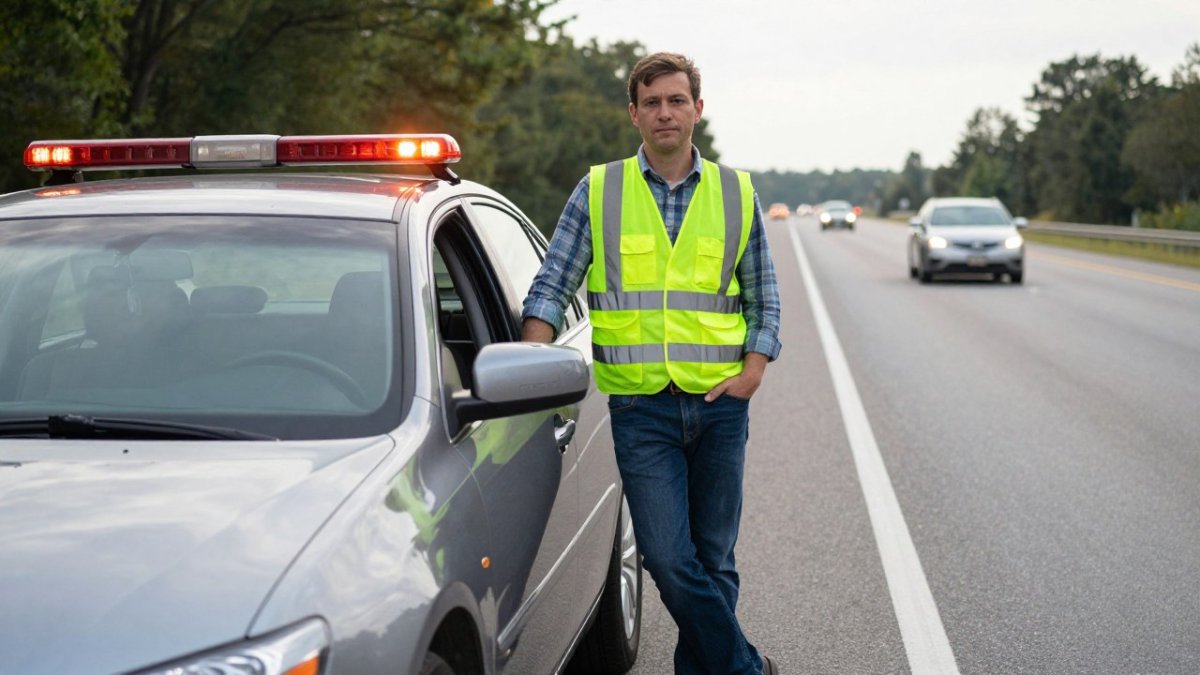
A breakdown on a busy road is stressful. Your first job is to get out of the traffic lane. Your second job is to make sure other drivers can see you.
Get the Vehicle Off the Roadway
Move your car as far to the right as you can. Use the shoulder if there is one, or the nearest safe exit. Do not stop in a lane of moving traffic if you can avoid it.
- Signal right and check your mirrors before you move
- Steer to the shoulder, not into a ditch or median
- Keep your wheels pointed away from traffic
- Leave the car only when it is clearly safe to do so
Watch out: Do not push a disabled car across several lanes. It is far more dangerous than a short rolling stop on the shoulder.
Turn On Hazard Lights and Make Yourself Visible
Turn on your hazard lights as soon as you stop. Keep them on until help arrives or you are back on the road. If it is dark, turn on your interior dome light as well.
Visibility is a big part of safe roadside assistance. Drivers need time to see you and move around you. Reflective vests and warning triangles help even more, especially on highways.
Situation-Specific Guidance: Highways, Shoulders, Tunnels and Low Visibility
General breakdown advice assumes a normal road with a normal shoulder. Most breakdowns do not happen there. The environment you stop in changes where you put the car, where you put your body, and how you call for help. Use the guidance below for the four environments that cause the most trouble.
Highways and Freeways
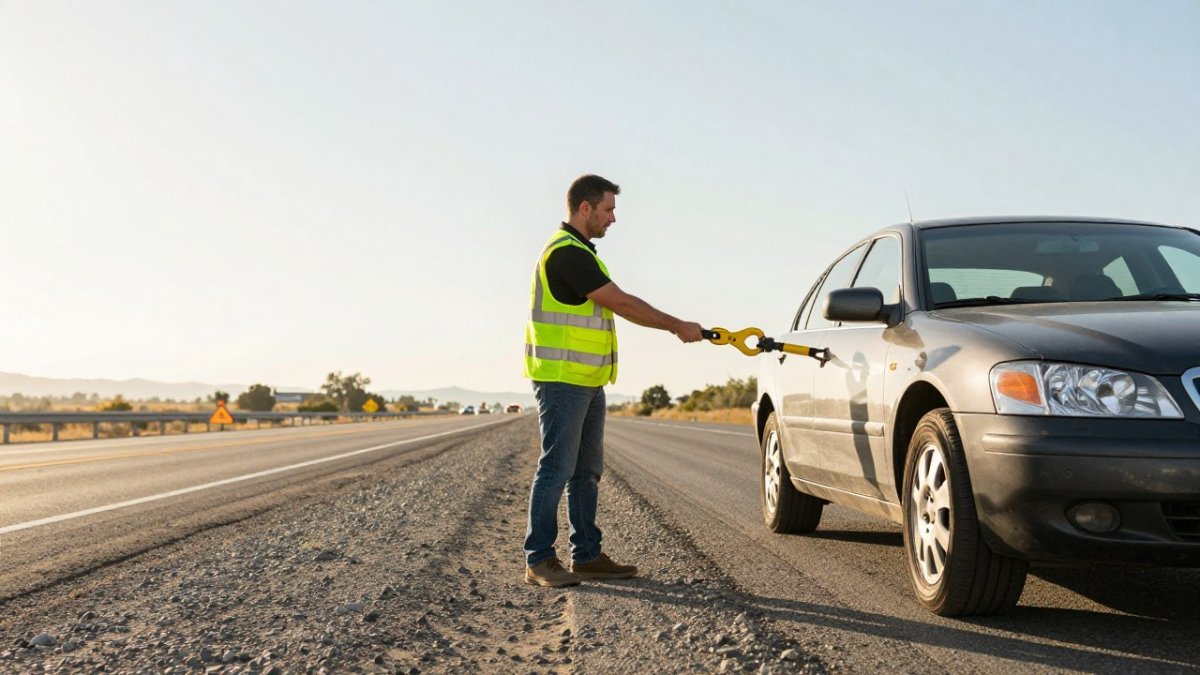
On a high-speed road, the shoulder is a narrow strip between a travel lane and a barrier, and drivers closing at highway speed may not register a stopped car until they are close. Get as far right as the pavement allows, turn the wheels so the car would roll away from traffic if it moved, and set the parking brake. If the shoulder is narrow or nonexistent, do not stop half in the travel lane; continue at reduced speed to the next exit or wide spot if the car will roll.
Watch out: A common mistake is stopping just past a crest or around a curve where approaching drivers have the least sight distance. If you can roll a short distance to a straight, visible stretch, do it.
Shoulders and Rural Two-Lane Roads
A rural shoulder is often soft gravel or grass, and a car can sink or tip if you pull too far. Stop with all four tires on firm ground if possible. On a two-lane road with no shoulder, the safest option is usually to get the car completely off the pavement and to move people well behind the guardrail or fence line, not to stand beside the car. Rural roads also mean longer dispatch times, so call early and give the dispatcher the nearest cross street and a description of the surroundings.
Tunnels and Overpasses
Tunnels have their own emergency systems, and using them is faster than calling a general tow line. Look for emergency call boxes mounted along the wall, follow the posted exit signs, and use the tunnel's designated refuge areas rather than standing in the bore. If your car stops in a tunnel and will not roll, turn on hazards, exit on the side away from traffic, and move to the nearest call box or refuge alcove. Do not attempt repairs inside a tunnel. Overpasses and bridges offer little or no shoulder, so treat them like a highway with no escape route and get clear of the structure if you can.
Low Visibility: Fog, Heavy Rain, Snow, and Darkness
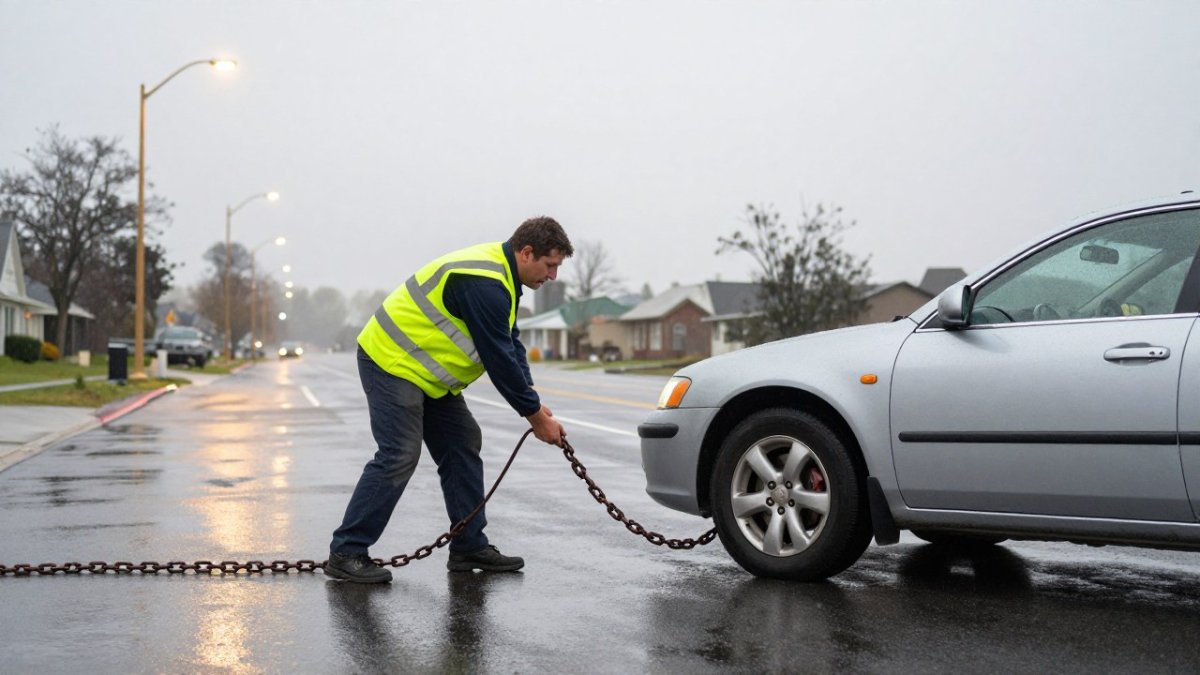
When visibility drops, your car becomes a shadow that approaching drivers see late. Hazard lights help, but they are not a substitute for distance. If you carry warning triangles, place them behind the vehicle on the traffic side, starting close and working back, and only if you can do so without entering a travel lane. In fog and heavy rain, do not use high beams; they reflect off the moisture and reduce what you can see. At night, turn on the interior dome light so responders can identify the occupied vehicle.
Remote Areas and Limited Cell Coverage
A breakdown in a remote area adds a second problem: you may not be able to call. Before a long trip, download an offline map, note the mile markers or exit numbers along your route, and tell someone your route and expected arrival time. If you have no signal, stay with the vehicle unless it is unsafe, and try a higher spot or a short walk to a rise only if you can keep the car in sight.
Extreme Heat and Cold
Heat and cold change the waiting plan. In extreme heat, keep the engine off unless you need it for climate control, crack the windows, and watch passengers for signs of heat illness. In cold, run the engine intermittently for heat only if the exhaust is clear of snow and debris, and never leave it running in an enclosed space. Keep blankets, water, and a charged phone within reach in both cases.
How to Stay Safe While Waiting for a Tow Truck
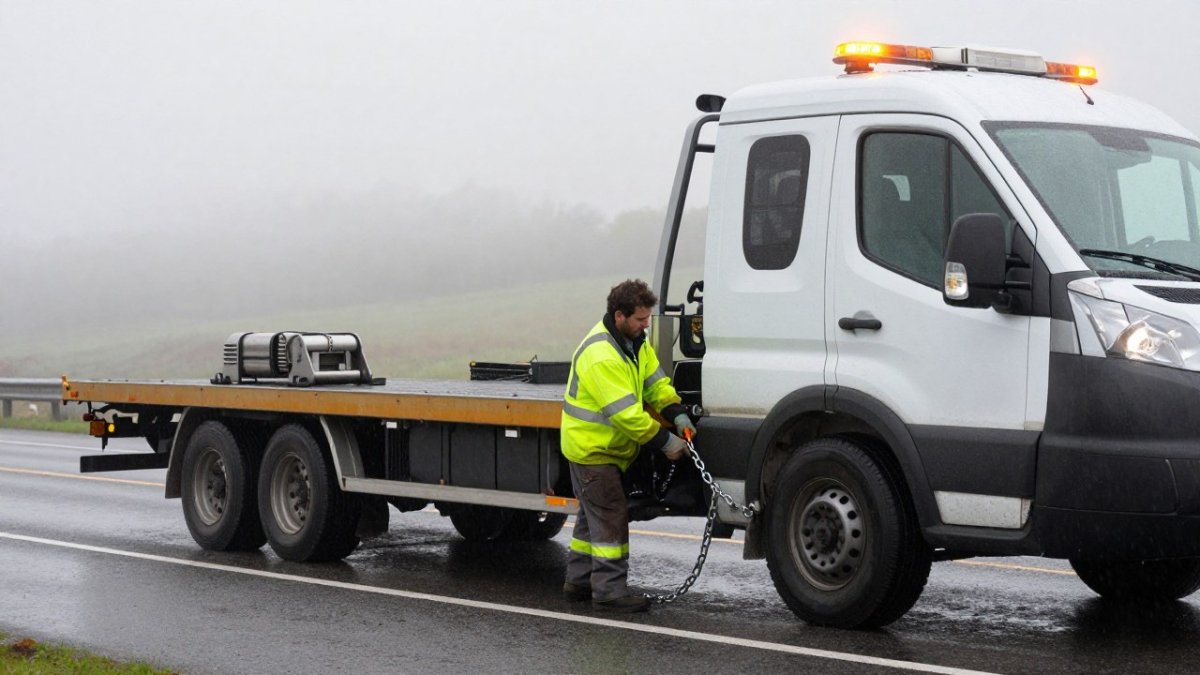
Waiting for a tow truck can take a while. Plan to stay calm and stay alert. Our article on roadside assistance response times explains what arrival windows to expect while you wait. Keep your car locked and your windows mostly closed until a verified responder arrives.
Stay Inside or Exit the Vehicle: Deciding Safely
In most cases, staying inside the vehicle with your seat belt on is the safer choice. Exit only if your car is on fire, is leaking fuel, or is in a spot where you are at risk from passing traffic and can get clear.
If you do get out, move to a spot far from the roadway, such as behind a guardrail. Never stand between your car and traffic.
Passengers, Children, Older Adults and Pets
Keep children buckled in their car seats and keep them calm. Older adults may need help walking to a safe spot, so offer a steady arm. Keep pets leashed or inside the car with the windows cracked.
Passengers with disabilities may need extra planning. Tell the responder about any special needs when you call.
How to Verify a Roadside Responder and Share Your Location
Before you open a door or hand over keys, confirm who you are speaking with. Ask the responder for the company name and the name on the dispatch record. Compare it with the number you called.
Share your exact location with the dispatcher. Use the mile marker, cross street, or a landmark. Many phones also let you share your location directly with a contact.
- Confirm the company name matches your call
- Ask for the driver's name and truck number
- Do not accept rides from strangers
- Keep your phone charged and nearby
Roadside Assistance Checklist for 2026
Keep these items in your car so you are ready for any breakdown:
- Phone charger and a backup battery pack
- Reflective vest and warning triangles or flares
- Flashlight with extra batteries
- First-aid kit
- Jumper cables
- Bottled water and non-perishable snacks
- Basic tools and a tire inflator
- Printed copy of your roadside plan phone number
Check the list before long trips and after each season change.
Keep these items in your car so you are ready for a breakdown.
| Item | Purpose | Note |
|---|---|---|
| Phone charger and backup battery | Keeps you connected to help | Keep it charged and nearby |
| Reflective vest and warning triangles | Makes you visible to drivers | Especially important on highways |
| Flashlight with extra batteries | Lights your work and signals | Check batteries before long trips |
| First-aid kit | Treats minor injuries | Keep it accessible |
| Jumper cables | Restarts a dead battery | Check before each season change |
| Bottled water and snacks | Supplies while you wait | Use non-perishable food |
| Basic tools and tire inflator | Handles minor fixes | Check the list before long trips |
After a Collision Versus a Mechanical Breakdown
A collision and a breakdown call for different steps. After a crash, check everyone for injuries and call 911 first. Move people out of traffic only if they are in immediate danger. Exchange information with the other driver and take photos of the scene.
After a mechanical breakdown, the focus is on getting the car off the road and waiting safely for help. You usually do not need emergency services unless someone is hurt or the car is on fire.
Choosing Among Roadside Assistance Plans
Roadside assistance plans differ in what they cover. Some include towing up to a set distance, while others cover jump starts, lockouts, and tire changes only. Read the terms before you buy.
Check whether your car insurance already includes towing. Many policies do, but limits vary. Our guide to what towing insurance covers walks through the coverage details before you compare plans. Ask about response times and whether the plan covers classic or specialty vehicles.
Booking Your Tow With JETZ TOWING
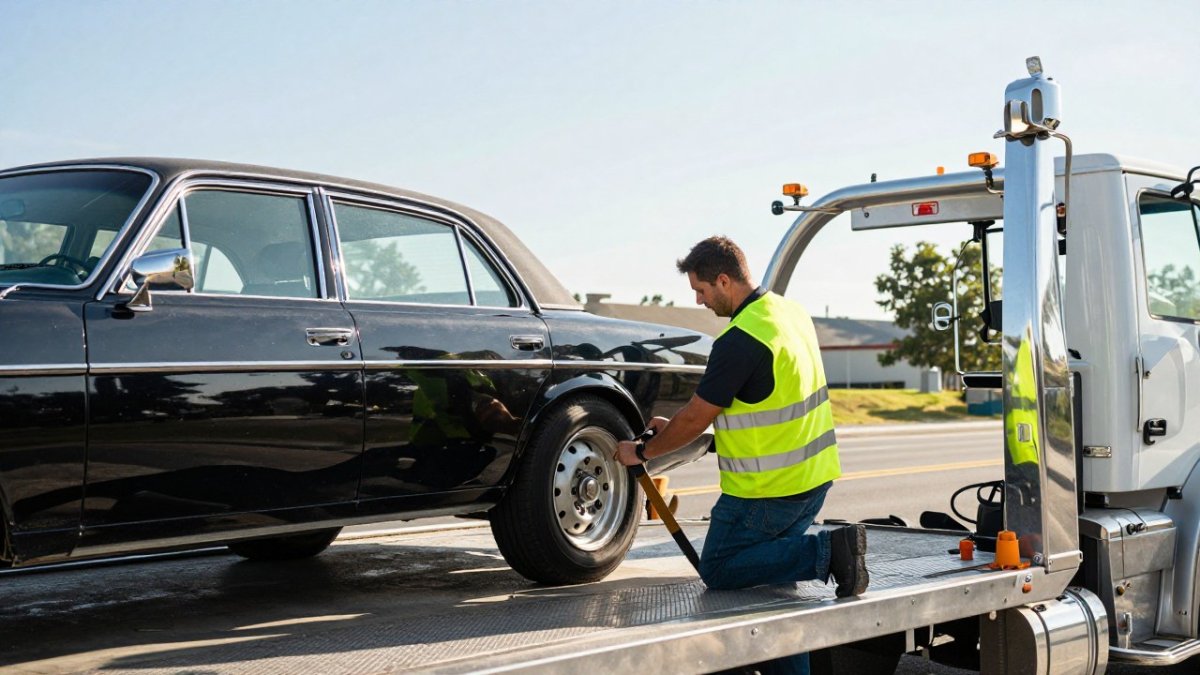
When you need help, JETZ TOWING provides light and heavy-duty towing and roadside assistance across the Greater Sacramento area. Our licensed and insured professionals provide fast local dispatch and safe, secure vehicle transport. You can contact JETZ Towing directly by phone or online message at any time. Request a tow on our website for current service details.
Frequently Asked Questions
Should you stay in your car while waiting for a tow truck?
In most cases, staying inside your vehicle with your seat belt fastened is the safer choice, especially on a highway or shoulder with fast-moving traffic. Exiting puts you next to passing cars. Leave only if the vehicle is on fire, smoke is coming from it, or you can reach a clearly safe area well away from the roadway, such as behind a guardrail. Keep your hazard lights on, lock the doors, and keep your phone charged so you can call for help and share your location.
How do you verify that a roadside assistance provider is legitimate?
Call the number printed on your membership card or the company's official website rather than a number from an unsolicited message or an ad that appeared on your phone. Ask for the operator's name, the company name, and an estimated arrival time, then check that the truck's company name and vehicle match what you were told before getting out or handing over keys. Licensed and insured operators can provide their details without hesitation.
What information should you give a roadside assistance dispatcher?
Give the exact location first: the nearest highway, exit number, cross street, mile marker, or landmark, and which direction you are traveling. Then describe the vehicle (make, model, color, and license plate), the problem if you know it, whether you are in a lane or on the shoulder, and any passengers who need assistance. Keep your membership number or account details ready. Clear location details are the main factor in how quickly help can reach you.
What should you do first when your car breaks down on the road?
Turn on your hazard lights, then steer the vehicle as far from moving traffic as you can, ideally onto the shoulder or a safe pullout. Set the parking brake, shift into park, and stay alert to passing vehicles before you open a door. If you cannot move the car, stay inside with your seat belt on and call for help. Once you are safe, note your location and call roadside assistance or emergency services if someone is injured.