 How-to
How to Verify Towing Company Insurance: 5 Steps
Table of Contents
- Why Verifying Towing Company Insurance Matters
- Step 1: Request a Certificate of Insurance
- Step 2: Check Coverage Types and Limits
- Step 3: How to Check a Towing Company's Insurance Coverage
- Step 4: Questions to Ask Before Hiring
- Step 5: Red Flags That Signal Inadequate Coverage
- What to Do If Damage Occurs During Transport
- Frequently Asked Questions
Last Updated: October 18, 2026
Why Verifying Towing Company Insurance Matters
An uninsured towing company can leave you liable for thousands in repair costs.
Verifying towing company insurance ensures the business carrying your vehicle has coverage if something goes wrong, minutes of work that prevent major financial headaches.
Not every towing company maintains the same standards, which is why knowing how to verify towing company insurance is essential.
The stakes are real: a $15,000 vehicle could suffer $5,000 in damage during transport, and without proper coverage you'd pay out of pocket.
Step 1: Request a Certificate of Insurance
The first step in how to verify towing company insurance is requesting a certificate directly from the company, which shows what coverage they carry and its limits.
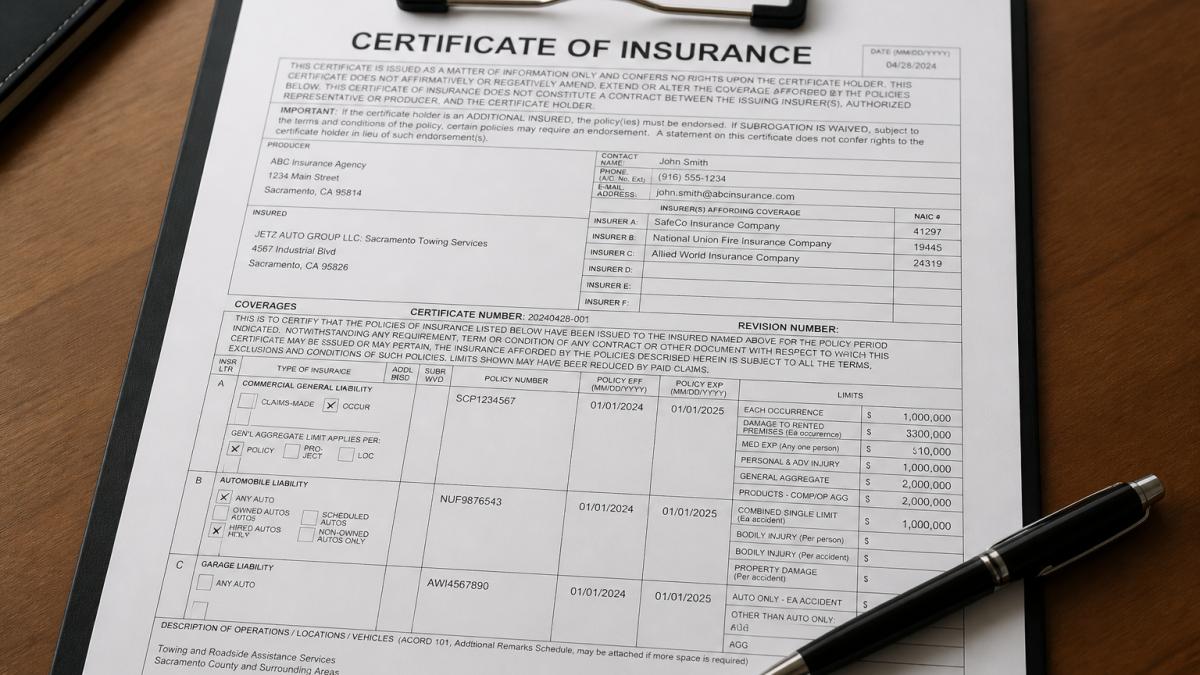
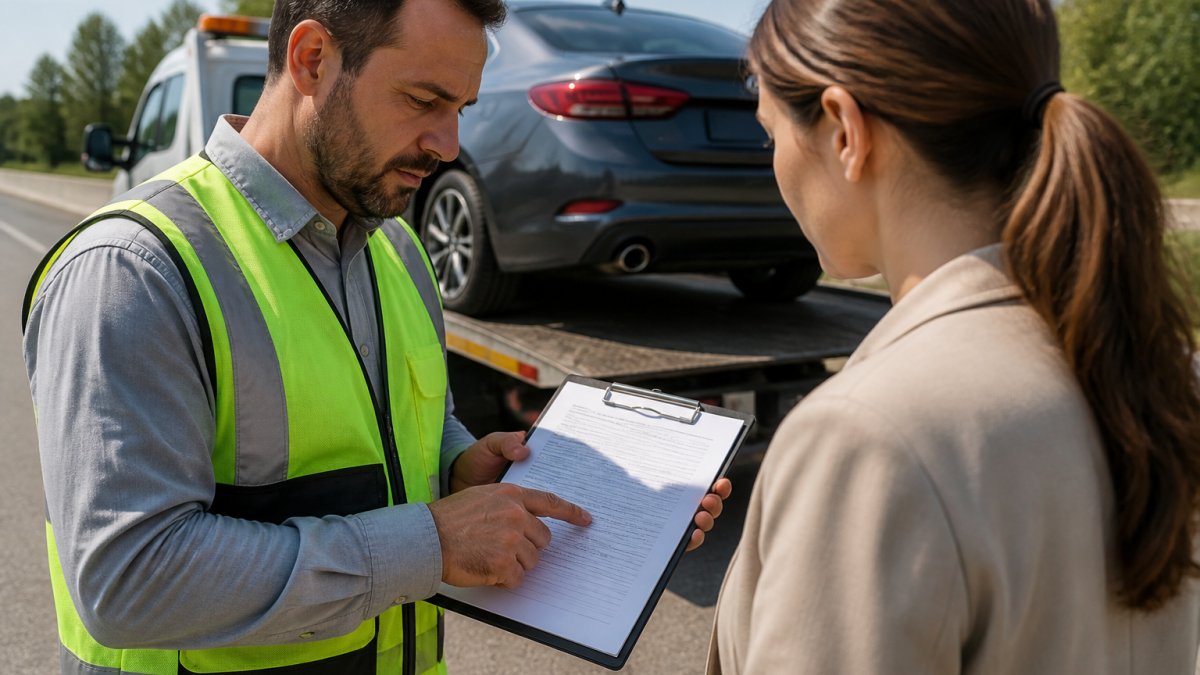
What to ask for:
A certificate of insurance lists the towing company as the policyholder and shows the carrier's name, policy numbers, coverage types, limits, and effective and expiration dates.
Ask specifically for a certificate naming the towing company as the insured party.
How to request it:
Request it by phone (fastest), email (get it in writing), their website (many post it publicly), or in person.
A professional towing company keeps this document ready. If the company seems annoyed or evasive, call someone else.
Step 2: Check Coverage Types and Limits
A certificate lists coverage lines, but they only matter if they respond to what happens to your vehicle. The same tow can involve four exposures, damage the truck causes to other property, damage to your vehicle while hooked up and moving, damage while stored, and damage to the truck itself, and a policy can include one line without the others.
Commercial auto liability
Commercial auto liability responds when the tow truck causes bodily injury or property damage to someone else, including other vehicles and fixed property. It is the line most states require for tow trucks, but it generally does not pay to repair the vehicle being towed, that is on-hook coverage's job. Confirm the limit is shown per occurrence and, if the company operates across state lines, that the policy meets each state's minimum financial responsibility requirements.
On-hook coverage
On-hook coverage, sometimes written as cargo or towed-vehicle coverage, responds to damage to the vehicle attached to or loaded on the tow truck, the line that most directly protects you during loading, transport, and unloading. Ask the insurer to confirm on-hook coverage is included, the per-vehicle limit, and whether the policy excludes vehicle types such as motorcycles, RVs, or salvage-title vehicles.
Garagekeepers coverage
Garagekeepers coverage responds to vehicles stored on the towing company's lot or in its building, including theft, vandalism, fire, and sometimes weather. It comes in two forms: legal liability, which pays only when the garagekeeper is legally liable, and direct primary, which pays regardless of fault. If your vehicle will sit overnight, ask which form the policy carries and the per-vehicle limit.
Physical damage coverage
Physical damage coverage on the tow truck itself (comprehensive and collision) protects the towing company's equipment, not your vehicle. Do not let a certificate showing only physical damage satisfy your verification.
Roadside assistance and service call coverage
If you are hiring the company for a jump-start, lockout, tire change, or fuel delivery rather than a tow, confirm the policy covers service calls and the technician while working on or around your vehicle. Some policies exclude roadside service or treat it as a separate classification, so ask the insurer to confirm the classification code matches the service.
Read the limits against your vehicle's value
A limit only means something relative to what you are protecting. Compare the on-hook and garagekeepers per-vehicle limits to your vehicle's actual cash value or replacement cost. If a limit is below your vehicle's value, the policy may not make you whole after a total loss, ask whether the company carries higher limits or whether your own comprehensive coverage would respond.
Check the dates and the endorsements
Confirm the effective and expiration dates bracket the date of your tow, then look for endorsements that narrow coverage, such as a vehicle-type exclusion, a named-peril limitation on garagekeepers coverage, or a per-vehicle deductible.
Step 3: How to Check a Towing Company's Insurance Coverage
A certificate of insurance is evidence that coverage existed when it was issued, not the policy itself, and not a guarantee that coverage will be in force on the day your vehicle is towed. The only way to confirm active coverage is to verify the certificate against the insurer's own records.
Authenticate the certificate field by field
Lay the certificate next to the towing company's website, business card, and any written quote. Check each of the following:
Named insured. The named insured must be the towing business itself, using its legal name (for example, the name on its business license or state registration), not a trade name, an individual driver, or a parent company unless that parent is the entity you are hiring. A certificate listing only an individual's name is usually a personal auto policy, which typically excludes commercial towing.
Certificate holder. If the towing company generated the certificate for you, ask to be listed as the certificate holder.
Insurer name and NAIC number. Every admitted insurer has a five-digit NAIC company code.
Coverage lines and limits. Each coverage line should show a limit and, where applicable, a deductible.
Authorized representative signature. A genuine certificate is issued by the insurer or an authorized agent, not typed up by the towing company.
Find the insurer's contact information independently
Do not rely on the phone number printed on the certificate. Look up the insurer's claims or policy service number on the insurer's own website or through your state insurance department's company search, then call and ask for the policy verification unit.
If the towing company is a sole proprietor or uses a managing general agent, the certificate may list the agent rather than the insurer.
Use a verification script
When you reach the insurer or agent, identify yourself as a prospective customer of the towing company and ask for policy verification only. Insurers will not release claim history without authorization, but they will usually confirm whether a policy is in force and what it covers. A script that works:
"Hi, I'm hiring [towing company legal name] to tow my vehicle on [date]. They provided a certificate of insurance showing policy number [number] with [insurer name]. Can you confirm the policy is active, the named insured matches that legal name, and the policy period covers [date]? I also want to confirm whether on-hook coverage and garagekeepers coverage are included and what the limits are."
Write down the representative's name, the date and time of the call, and the answers. If they will not confirm the policy, ask what authorization the towing company must provide and ask the company to authorize it.
Match the coverage to the service being performed
Verification is not just confirming a policy exists, it is confirming the policy covers the operation you are hiring. A tow from a parking garage, a flatbed transport of a classic car, a jump-start in a surface lot, and overnight storage each touch different coverage lines. Ask the insurer to confirm which apply on the date of service: commercial auto liability, on-hook or cargo coverage, garagekeepers coverage for storage, and any exclusion for the vehicle or operation type.
NAIC consumer insurance company search State insurance department directory
Step 4: Questions to Ask Before Hiring
Before you hand over your keys, ask these questions. They reveal how seriously a towing company takes insurance and vehicle protection.
Ask the dispatcher or driver:
- "What happens if my vehicle is damaged during transport?" (They should explain the claim process and their coverage.)
- "Who do I contact if something goes wrong?" (Get a name, phone number, and email.)
- "How long has your company been in business?" (Established companies typically have better insurance and training.)
- "Are your drivers trained in handling specialty vehicles?" (This matters for classic or luxury vehicles.)
Professional companies give clear, detailed responses. Evasive answers suggest they don't know their own coverage or don't care about it.
Ask about their claims process: if damage occurs, do they handle it directly with their insurance or do you file, and how long does resolution take?
Step 5: Red Flags That Signal Inadequate Coverage
Watch for these warning signs of inadequate coverage or untrustworthiness.
Red flags to avoid:
- They refuse to provide a certificate of insurance (Major warning sign)
- The certificate is expired or shows no effective date
- Coverage limits are very low (under $25,000)
- No on-hook coverage listed on the certificate
An uninsured or underinsured operator might seem cheaper upfront, but one accident costs thousands. The few dollars you save aren't worth the risk.
If the company seems unprofessional or evasive about insurance, call someone else. Legitimate towing companies are transparent about their coverage.
What to Do If Damage Occurs During Transport
If your vehicle is damaged while the tow truck has it, document everything and follow these steps.
Immediately after damage occurs:
- Take photos and videos of the damage from multiple angles
- Get the driver's name, badge number, and contact information
- Ask for the company's accident report form
- Get the names and phone numbers of any witnesses
- Note the time, date, location, and weather conditions
- Keep all receipts for towing and any emergency repairs
File a claim:
Contact the towing company's office and ask for a manager. Explain what happened and provide your photos.
Contact the insurance carrier:
Don't accept a lowball settlement.
When to involve a lawyer:
If the damage is significant and the insurer refuses to pay, consider consulting a lawyer.
Verifying a towing company's insurance takes just a few minutes but protects you completely.
Frequently Asked Questions
How can I verify that a towing company has current insurance?
Request a certificate of insurance directly from the company, then verify the policy is active by contacting the insurance carrier or agent listed on the certificate. Check that the effective date is current and the expiration date is in the future. You can also ask the towing company for their policy number and confirm it matches their business name as the named insured. Most insurance carriers allow you to verify coverage by phone or through their online portal.
What should I check on a towing company's insurance certificate?
Verify the policyholder name matches the towing company, confirm coverage types include commercial auto liability and on-hook coverage, check the policy number and effective/expiration dates, and note the coverage limits. On-hook coverage specifically protects your vehicle while it's being towed. Also confirm the certificate lists the insurance carrier's name and contact information. An authentic certificate will include the issuing agent's name and their agency details.
Does a towing company's insurance cover damage to my vehicle?
This depends on the coverage types they carry. Commercial auto liability covers bodily injury and property damage they cause to others. On-hook coverage specifically protects customer vehicles during loading, transport, and unloading. Garagekeepers coverage also protects vehicles in their care. Before hiring, ask which coverages apply to your vehicle during transport and what the coverage limits and deductible are. Request this in writing so you have documentation of what's covered.
What should I do if a tow company cannot provide proof of insurance?
Do not use that company. Operating a towing business without proper insurance is illegal in most states and leaves you unprotected if your vehicle is damaged. If a company refuses or delays providing a certificate of insurance, that's a serious red flag. Choose a licensed, insured towing provider instead. If you've already hired an uninsured company and damage occurred, document everything and contact your own auto insurance carrier to explore your options.