 How-to
How to Handle a Vehicle Breakdown Safely on the Road
Table of Contents
- Recognizing the Signs of a Vehicle Breakdown
- Staying Calm and Assessing the Situation
- What to Do If Your Car Breaks Down on the Highway
- What to Tell Roadside Assistance When You Call
- Roadside Assistance Response Time and What to Expect While You Wait
- Building an Emergency Roadside Kit
- Booking Your Tow With JETZ TOWING
- Frequently Asked Questions
Last Updated: October 28, 2026
Vehicle breakdowns rarely happen at a convenient moment. Whether your car dies on a busy stretch of interstate or sputters to a stop on a quiet residential road, the first few minutes matter most. Knowing what to do during a vehicle breakdown can keep you and your passengers safe while you wait for help.
The steps below apply to most passenger cars, trucks, and SUVs, including electric and hybrid models.
Recognizing the Signs of a Vehicle Breakdown
Most breakdowns give some warning before the car stops. Catching those signs early gives you time to pull over safely instead of stalling in a live lane.
Watch for these common warning signs:
- Dashboard warning lights, especially the check engine, oil pressure, battery, and temperature lights
- Overheating, shown by a rising temperature gauge or steam from under the hood
- Loss of power, such as the engine struggling to accelerate or hesitating on hills
Any one of these signs is a reason to slow down and plan your next move. If the car begins to lose power or the temperature gauge climbs into the red, pull over as soon as it is safe.
Staying Calm and Assessing the Situation
Panic leads to bad decisions, like stopping in the wrong lane or jumping out into traffic. Take a breath and run through a quick check before you act.
Ask yourself three questions:
- Is the car still moving, and can I steer it?
- Where am I, and how fast is traffic moving around me?
- Is anyone in the car hurt, at risk, or unable to move quickly on their own?
If anyone is injured, call 911 right away. If the car is still rolling, focus on getting to a safer spot first. Once the car is stopped, you can make your call and plan the rest.
Accounting for Passengers Who Need Extra Help
A standard evacuation plan assumes everyone can unbuckle and walk to the shoulder in seconds. That is not true for every passenger, and the gap matters most in the first two minutes. Before you open a door, do a fast mental roll call:
- Children and infants. Know how each child restraint unbuckles before an emergency. In cold or wet weather, keep a blanket within reach so a child can be wrapped before stepping out. Never leave a child alone in the car on a shoulder while you walk to place a warning triangle.
- Older adults. Ask directly whether they can walk unaided and whether they need a cane, walker, or oxygen. If they cannot move quickly, it is often safer to keep them belted inside with hazards on and call for help rather than move them toward traffic.
- Passengers with mobility, medical, or sensory needs. A wheelchair user may need the lift or ramp deployed on the traffic side, which is the most dangerous side. If that is the only option, wait for roadside assistance or law enforcement to block traffic rather than improvise. A passenger who is deaf or hard of hearing may not hear approaching vehicles, tap them and use a written note or phone screen to explain the plan. A passenger who is blind should be guided by the arm and told exactly where the guardrail or curb is.
Deciding Whether to Stay In or Get Out
The safest choice depends on where you stopped, not on habit. Use this quick rule:
- On a highway shoulder or busy road: stay inside with seat belts on and hazards flashing unless there is fire, smoke, or a clear secondary hazard. Exit only on the side away from traffic, and only if everyone can move quickly.
- On a quiet residential street or parking lot: getting out and standing on the sidewalk or behind a barrier is usually safer than sitting in a stopped car.
- In a tunnel, on a bridge, or in a construction zone: follow posted signage and any instructions from traffic cameras or workers. Do not walk into a live lane to place a triangle.
If you do exit, take your phone, keys, and, if it is safe, a high-visibility vest. Move everyone, including pets, to a spot behind a guardrail or well off the shoulder, and keep them together so you can account for them when help arrives.
What to Do If Your Car Breaks Down on the Highway
A breakdown on a highway is the most dangerous kind. Drivers often move at high speed, and many do not see a stopped car until it is too late. Your goal is to get the vehicle as far from moving traffic as you can.
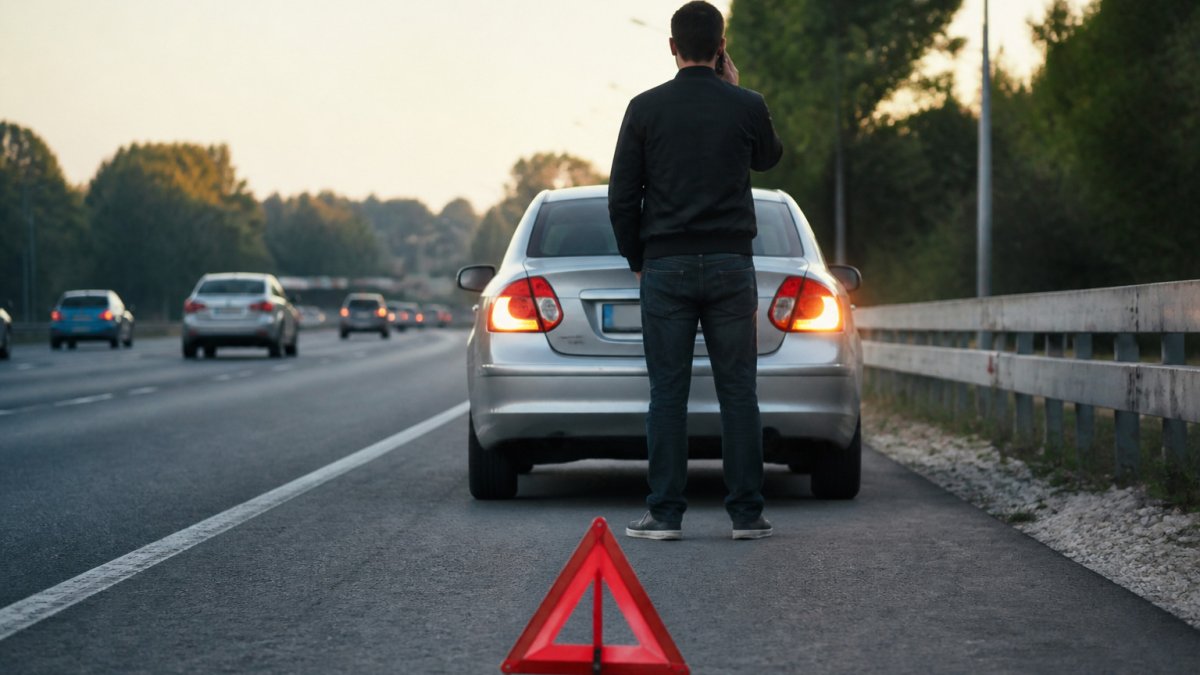
Moving Off the Road and Choosing a Safe Spot
Follow these steps to move the car to safety:
- Signal and steer right toward the shoulder or emergency lane.
- Brake gently so you do not cause a rear-end collision behind you.
- Stop as far off the road as possible, ideally on a wide, flat shoulder.
If the car cannot reach the shoulder, stay inside with your seat belt on and hazards flashing. Only exit the car if you are sure it is safe to do so, and always exit on the side away from traffic.
Use an exit ramp or a parking lot if one is close and reachable. Any location that gets you out of the travel lanes is better than staying put.
Turning On Hazards and Making Your Vehicle Visible
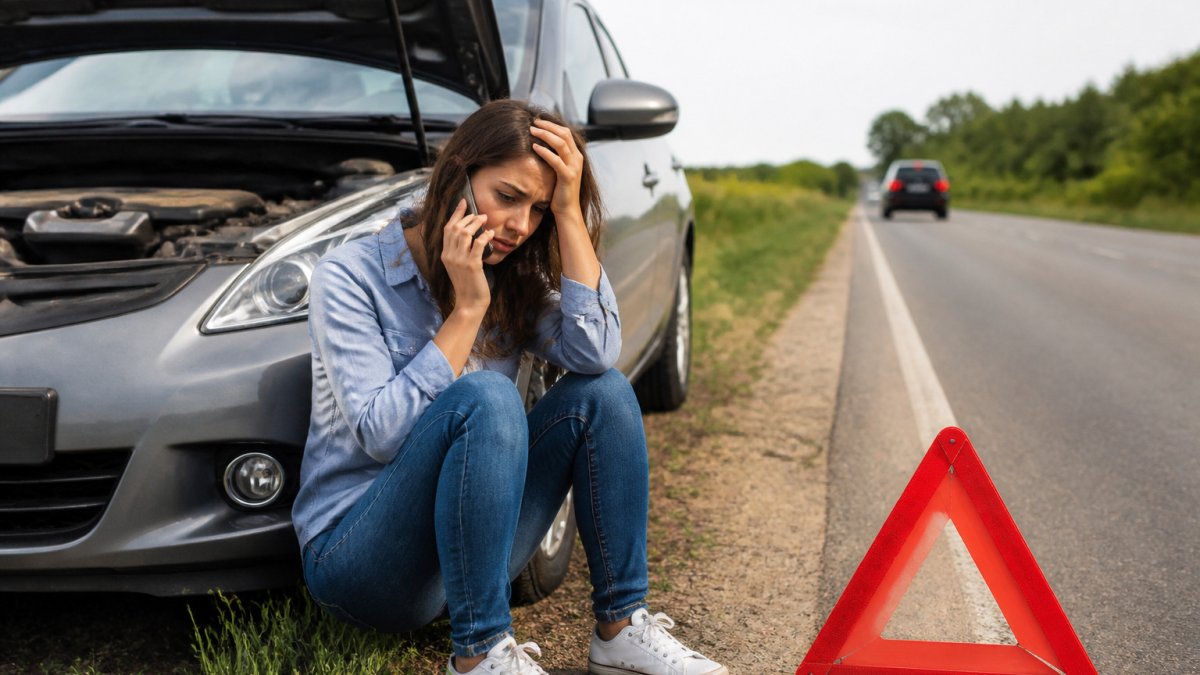
Visibility keeps you from being hit. Once the car is stopped, take these steps:
- Turn on your hazard warning lights right away.
- Set out a reflective warning triangle behind the car, at least 100 feet back on a highway.
- Wear a high-visibility vest if you have one, especially before you step out of the car.
A common mistake is placing the warning triangle too close to the car. Put it far enough back that drivers have time to slow down and change lanes.
Once you are safely stopped, these steps help keep you visible and protected while you wait for help.
| Step | What to do | Timing or distance |
|---|---|---|
| Signal and steer right | Move toward the shoulder or emergency lane | Brake gently |
| Stop off the road | Park as far off the road as possible | Avoid curves or hills |
| Hazard lights | Turn on hazard warning lights right away | Immediately |
| Warning triangle | Place it behind the car | At least 100 feet back on a highway |
| Headlights | Keep them on in darkness or fog | When dark or foggy |
| Front wheels | Keep them turned away from traffic | Before you wait |
What to Tell Roadside Assistance When You Call
A clear, quick call gets help moving faster. Have these details ready before you dial:
- Your exact location, including the highway name, direction of travel, nearest exit, or mile marker
- A landmark you can see, such as a sign, bridge, or business
- Your vehicle details, including the make, model, year, and color
If you have a phone app with GPS, share your location with the dispatcher. Sending a pin is often more accurate than describing where you are.
Roadside Assistance Response Time and What to Expect While You Wait
Response times depend on traffic, weather, time of day, and how far the nearest truck is from you. Many providers aim to reach drivers within an hour, though urban areas often see faster arrivals. Read more about average roadside assistance response times to know what to expect.
While you wait, stay in a safe place. Keep the doors locked and your phone charged. If you are outside the car, stand well away from the traffic lane, ideally behind a guardrail. If the wait is longer than expected, call back for an update.
Verifying Who Is Actually Responding
A breakdown on a shoulder attracts attention, and not all of it is helpful. A common pattern is for an unmarked vehicle to pull up and offer a tow before your dispatched driver arrives. Treat that offer with caution until you can verify it.
- Match the vehicle to the dispatch. Ask the driver for the company name, the truck number, and the name on the dispatch. Call your provider's published number, not a number the driver hands you, and confirm the truck was sent to you.
- Do not hand over keys or sign anything until you have confirmed the driver is with the company you called. A legitimate driver can wait two minutes for verification.
- Be wary of unsolicited cash-only offers. A driver who insists on cash before hooking up, or who quotes a price that changes once the car is on the truck, is a red flag. Ask for the price in writing or by text before you agree.
Making the Wait Productive
Once you are safely parked and help is confirmed, use the time to protect yourself after the tow:
- Photograph the scene, the vehicle's position, any damage, the road conditions, and the other driver's information if another vehicle was involved. These photos help with insurance claims later.
- Note the time, location, and dispatcher's name so you can follow up if the tow is delayed or the bill differs from the quote.
- Arrange onward travel before the tow arrives. Ask the dispatcher whether the truck can take you to a repair shop, or whether you will need a rideshare or a call to a family member.
If the wait stretches past the estimate, call back rather than walking toward the road to flag down help. Standing near a live lane is the single most common way a breakdown turns into a collision.
Building an Emergency Roadside Kit
A small kit can turn a stressful breakdown into a manageable one. Keep these items in your trunk or back seat:
- Warning triangles or road flares
- A reflective, high-visibility vest
- A flashlight with extra batteries
Check the kit twice a year. Replace expired food, water, and medication, and make sure batteries still hold a charge.
Booking Your Tow With JETZ TOWING
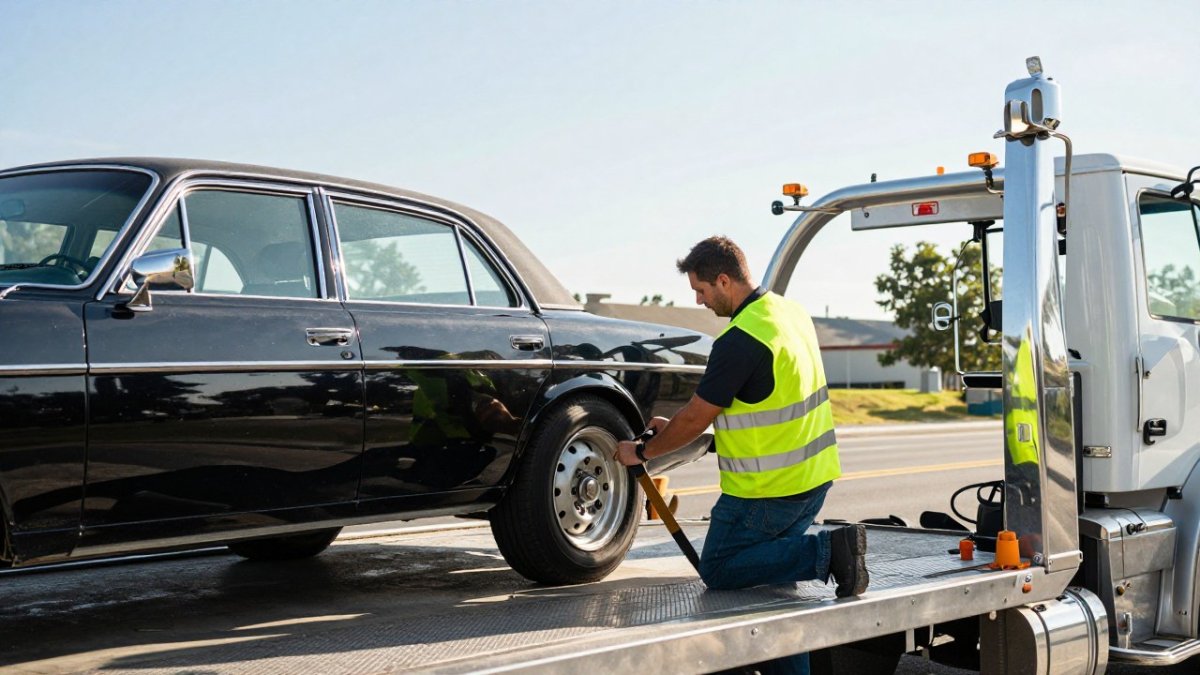
When your car cannot be driven, a tow is the safest way to get it to a repair shop or home. View JETZ Towing's towing and roadside services and pricing in Carmichael to choose the right service for your vehicle.
Before you book, confirm that your insurance or roadside plan covers the tow, and ask about the vehicle type. Read our guide to towing insurance coverage to see what your policy may pay for.
Frequently Asked Questions
What should you do first during a vehicle breakdown?
Stay calm, then assess your location. Signal your intent and move the vehicle as far off the roadway as you safely can, ideally onto the shoulder or a safe pull-off. Turn on your hazard lights right away so other drivers can see you. If the car is in an active lane and you cannot move it, stay with the vehicle and call for help rather than attempting risky maneuvers. Keep a safe distance from traffic when you exit the car.
Should you stay in your car during a breakdown?
In most cases, yes. If you are on a busy highway or the shoulder is narrow, staying inside with your seatbelt fastened and hazard lights on is usually safer than standing near passing traffic. Exit only if the car is smoking, there is a fire risk, or you are in a location where staying inside puts you in greater danger. Passengers should exit on the side away from traffic when it is safe to do so. Keep doors locked and do not open them for unfamiliar people while you wait.
How long does roadside assistance take to arrive?
Response times vary with location, time of day, weather, and call volume. Ask the dispatcher for an estimated arrival time when you call, and share your exact location, direction of travel, and nearest landmark or cross street so the operator can route help efficiently. Stay on the line if you are unsure of your position. Keep your phone charged, and let the dispatcher know if your location changes before help arrives.
What information should you give roadside assistance?
Provide your name, callback number, and exact location, including the highway, direction of travel, and nearest exit or mile marker. Describe the problem, such as a flat tire, dead battery, overheating, or loss of power, and whether the vehicle can be moved. Give the make, model, and year, and note any passengers who need assistance. Have your membership or account information ready if applicable.