 How-to
How Long Does a Tow Truck Really Take to Arrive?
Last Updated: November 8, 2026
Quick Summary
A tow truck response time usually depends on location, time of day, and the type of help needed. Urban calls in normal daytime hours often arrive within 60 minutes, while highway breakdowns typically take 45 minutes to 2 hours and rural calls can take 1 to 3 hours.
- Urban and suburban daytime calls often arrive in under 60 minutes.
- Rush hour can stretch arrival to 45 to 90 minutes or more.
- Highway breakdowns typically take 45 minutes to 2 hours to reach you.
- Rural or remote areas can see waits of 1 to 3 hours, sometimes longer.
- Treat your ETA as a window and call dispatch if it passes.
Table of Contents
- Typical Tow Truck Arrival Times Across Scenarios
- How Long Does a Tow Truck Take to Arrive in Practice?
- Why Do Tow Trucks Take So Long? Factors That Affect Response Time
- Estimated Versus Actual Arrival Time: Reading Your ETA Correctly
- How Long Do Tow Trucks Take at Night and on Peak Days?
- How Long It Takes a Tow Truck to Load a Car
- What to Do While You Wait and When the ETA Is Missed
- Request Your Tow With a Clear Arrival Window
- Frequently Asked Questions
Typical Tow Truck Arrival Times Across Scenarios
Most drivers want one answer: how long until the truck shows up? The honest answer is that tow truck response time depends on where you are, what time it is, and what kind of help you need.
Think of arrival time as a range, not a promise. Your dispatch ETA is the best estimate at the moment you call, and it can shift as traffic, weather, and truck availability change. Response times vary widely by situation, and general expectations for different scenarios are not guaranteed.
| Scenario | Typical arrival window (estimate) | What drives the range |
|---|---|---|
| Urban and suburban streets, normal daytime hours | Often under 60 minutes | Dense truck coverage, short drive distance, moderate call volume |
| Rush hour or heavy traffic | 45 to 90 minutes or more | Congestion adds drive time; trucks may be stuck in the same jam |
| Highway breakdowns | 45 minutes to 2 hours | Longer travel distance, need to reach a safe shoulder or mile marker, setup away from traffic |
| Rural or remote areas | 1 to 3 hours, sometimes longer | Few trucks spread over large distances; the closest free truck may be far away |
| Late nights, weekends, and holidays | 60 minutes to several hours | Fewer drivers on shift, higher demand, less predictable dispatch |
| Severe weather (snow, ice, flooding, high wind) | 90 minutes to several hours | Slower travel, careful recovery work, and a spike in call volume |
Arrival times can differ noticeably between peak and off-peak hours. If you want a more useful benchmark, ask dispatch for the range for your specific location and time, and ask what could push it later.
Watch out: an ETA quoted in minutes can look precise while still being a forecast. If dispatch says 45 minutes, plan for the full window and keep your phone reachable so you hear about changes.
How Long Does a Tow Truck Take to Arrive in Practice?
The real tow truck response time depends on the trip it has to make. For a deeper look at typical response times for different situations, see our guide. The clock starts when your service request is logged, not when the truck leaves the yard. Dispatch first needs to find an available driver, and then the truck has to drive to you.
Here is what most people experience. Your call is answered, a driver is assigned, and the truck heads out.
Stay reachable by phone during this time. A quick update from dispatch is often the fastest way to learn about delays.
Why Do Tow Trucks Take So Long? Factors That Affect Response Time
Several factors can push a tow truck's arrival later than you expect. Knowing them makes the wait easier to understand.
- Truck availability: If nearby trucks are already on other calls, the closest free truck may come from farther away
- Dispatch location: A truck based far from your location needs more drive time
- Call volume: Busy periods, such as storms or rush hour, mean more requests at once
- Travel distance: Every extra mile adds minutes
- Vehicle location: Hard-to-reach spots, like a narrow lot or a median, take extra setup time
Traffic, Weather and Road Conditions
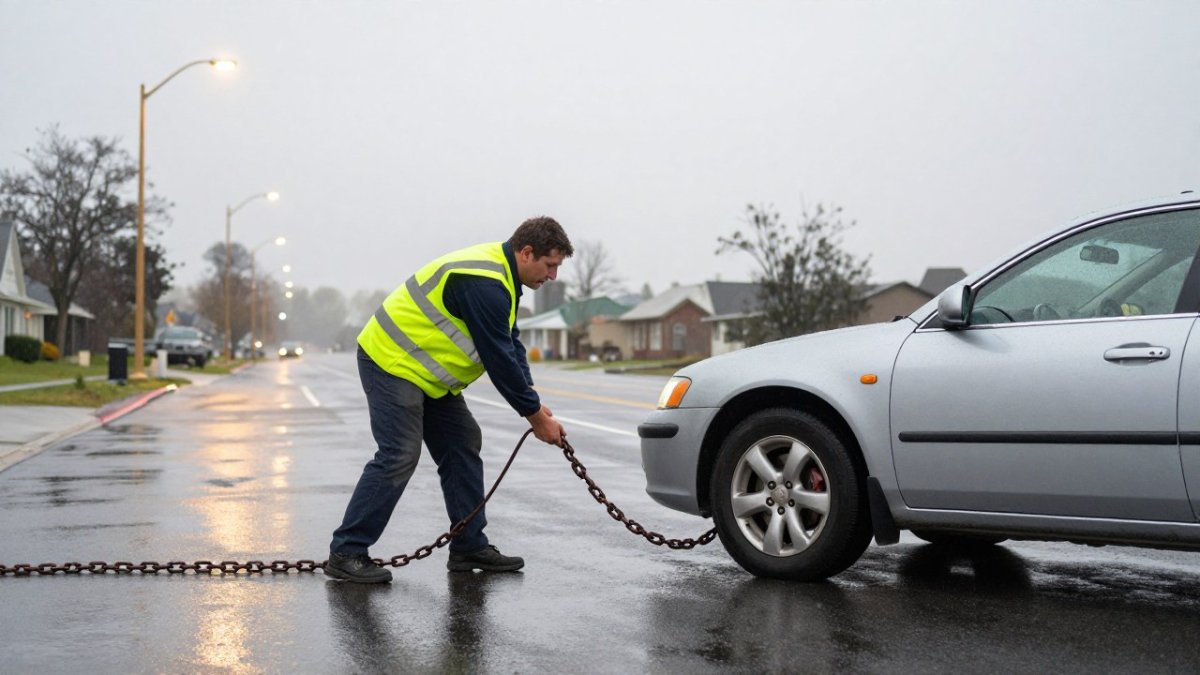
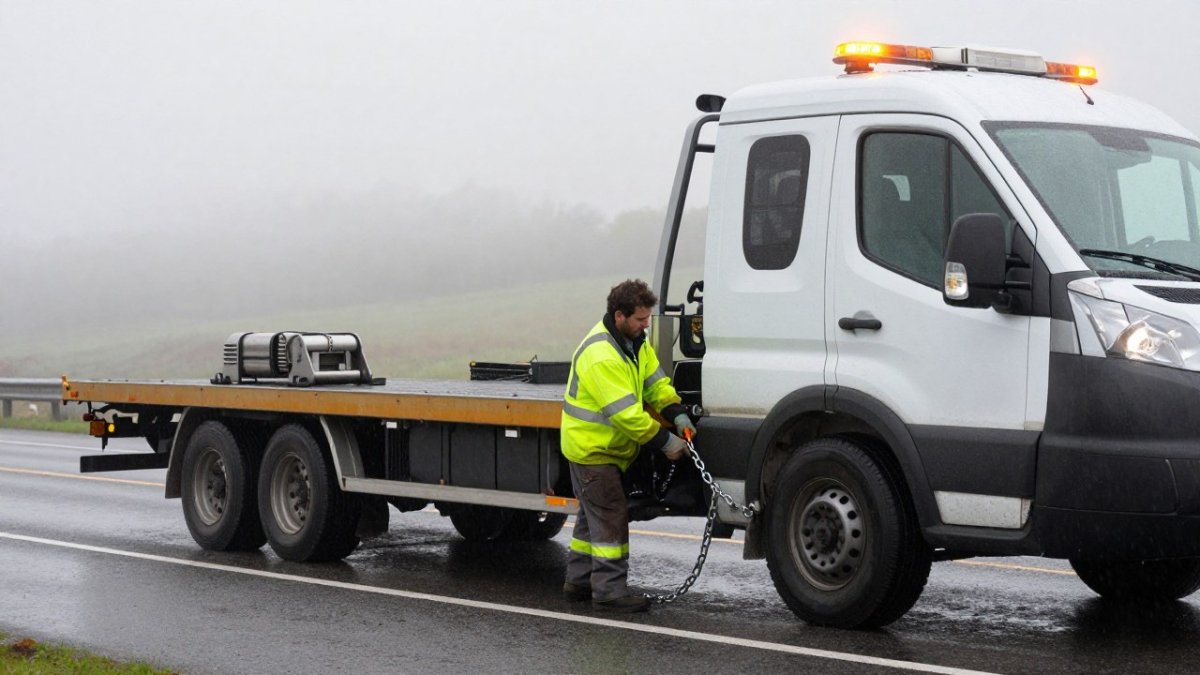
Traffic is one of the biggest causes of delay. A short trip on an empty road can become a long one during a jam. Rain, fog, and snow slow every driver on the road, including the tow truck, and crews must work more carefully in bad weather. Construction zones and detours can also add surprise minutes.
Urban Versus Rural and Highway Response
Urban calls often get faster responses because trucks are closer together. You can check whether we cover your community and nearby areas before you call. Rural and remote areas usually mean longer drives between calls. Highway emergencies bring their own challenges, since trucks must reach you safely and may need extra time to set up away from moving traffic. Tell dispatch your exact location and nearest mile marker so the driver can find you.
Estimated Versus Actual Arrival Time: Reading Your ETA Correctly
An ETA is an estimate, not a guarantee. The estimated arrival time is what dispatch predicts when you call. The actual arrival time is when the truck pulls up. These two numbers often differ, especially during peak hours or bad weather.
A good way to read your ETA is to treat it as a window. If dispatch says 45 to 60 minutes, plan for the full hour. If the truck arrives early, that is a bonus. If it runs late, call dispatch for an update rather than assuming the worst.
To check and improve your ETA:
- Give your exact location, including cross streets or mile markers
- Confirm your callback number
- Ask dispatch for an updated time if the window passes
- Share any safety concerns so the driver can plan accordingly
How Long Do Tow Trucks Take at Night and on Peak Days?
Night calls and peak days often bring longer waits. Fewer drivers may be on shift, and demand can rise during holidays, storms, and busy weekends.
If you need help during these times, call early and stay in contact. A quick check-in can keep you informed and help you stay safe while you wait.
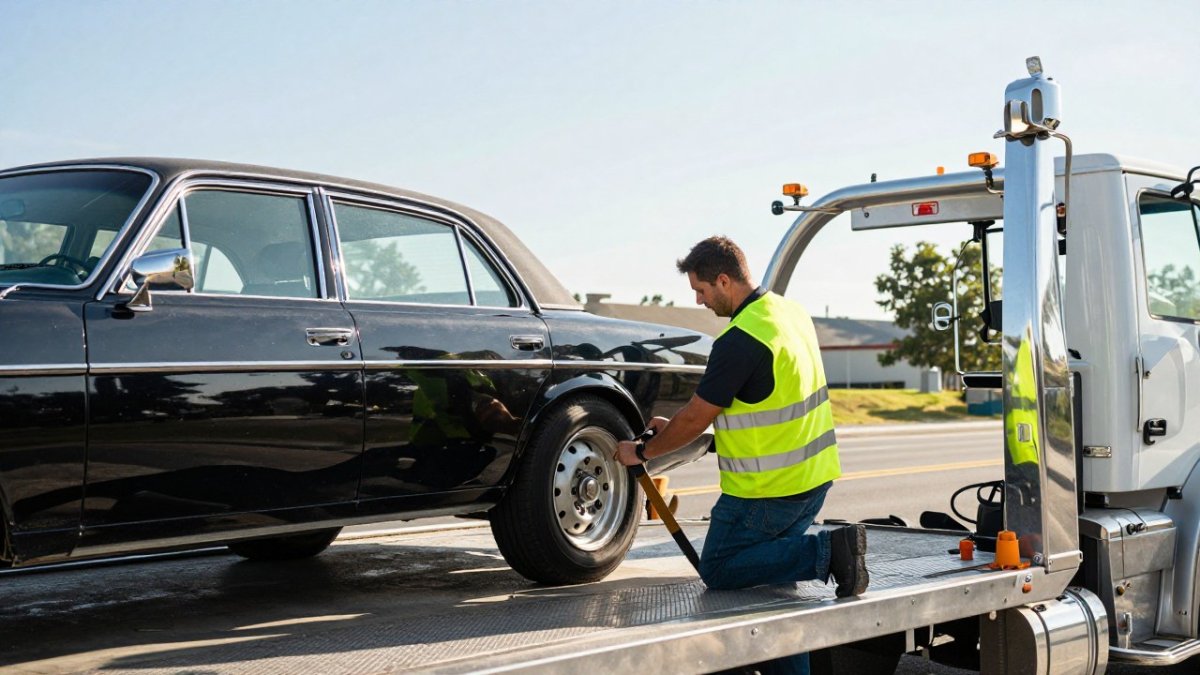
How Long It Takes a Tow Truck to Load a Car
Arrival is only part of the story. Once the truck is on scene, loading takes time too. Simple recoveries on level ground can be quick. Cars stuck in ditches, mud, or tight spaces need more setup, and the driver must secure the vehicle properly before moving it.
What to Do While You Wait and When the ETA Is Missed
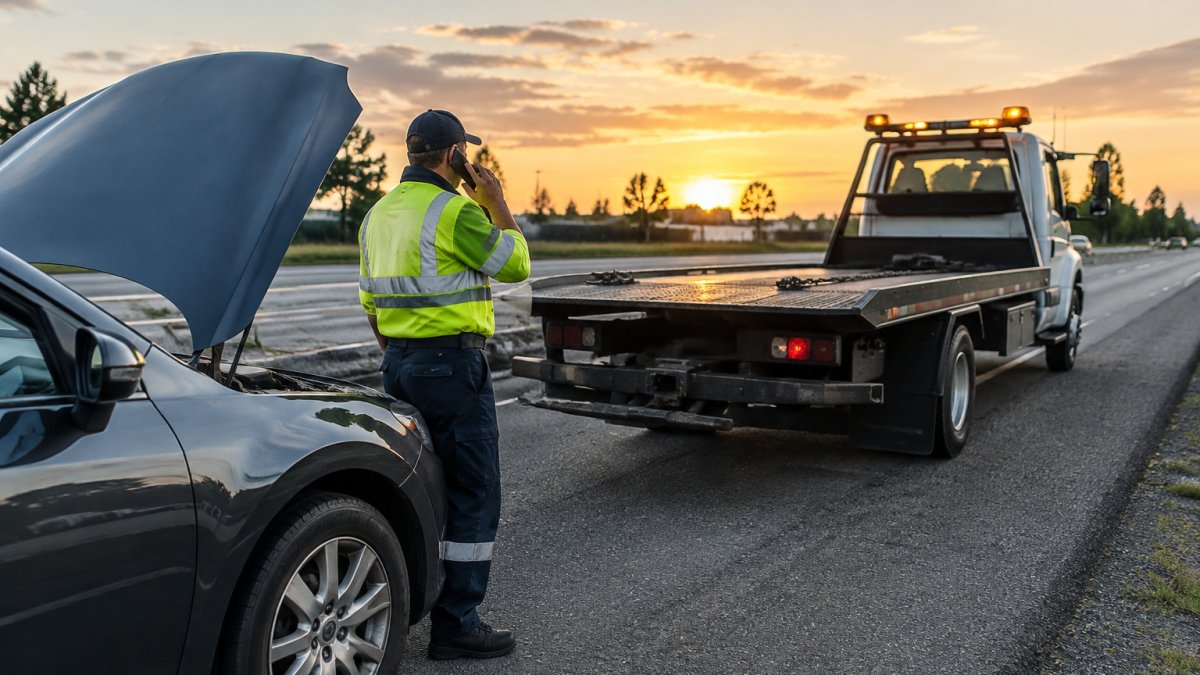
Waiting on the roadside can feel stressful, so a few simple steps help. The right moves depend on where you are and what the weather is doing, so use the guidance that fits your situation.

On a highway or busy road:
- Pull as far onto the shoulder as you can and turn on hazard lights
- If you can safely do so, exit on the side away from traffic and stand behind a barrier or well off the roadway
- If you cannot exit safely, keep your seat belt on, lock the doors, and stay in the vehicle
- Note the nearest mile marker or exit number so dispatch and the driver can find you
In poor visibility (fog, heavy rain, snow):
- Keep hazard lights on and, if equipped, turn on parking lights
- Stay inside the vehicle with seat belts on unless there is a safer nearby structure
- Avoid standing between your vehicle and traffic, where other drivers may not see you
In extreme heat or cold:
- Run the engine and climate controls only if it is safe and you are not in an enclosed space
- Keep windows cracked if you must idle for long periods, and watch for signs of heat or cold stress
- Conserve phone battery by dimming the screen and closing unused apps
In an unsafe location (blind curve, narrow median, active construction zone):
- Call dispatch back and describe the hazard so the driver can approach with caution
- If you feel immediate danger, move to a safer spot first and update dispatch with your new location
- Do not attempt repairs or walk along a live traffic lane
General steps that always help:
- Keep your phone charged and stay reachable for dispatch updates
- Note cross streets, mile markers, and landmarks to speed up the driver's search
- Ask dispatch whether a closer truck is available if the window slips
When the ETA is missed:
- Call dispatch again and ask for a revised arrival window
- Confirm your exact location and callback number
- Ask whether another truck can be dispatched or whether the current driver is delayed
- If you are in immediate danger, contact emergency services first, then update dispatch
Watch out: silence is the most common mistake. If the quoted window passes, call dispatch rather than waiting and hoping. A clear update is the fastest way to get back on track.
Request Your Tow With a Clear Arrival Window
Knowing what to expect makes the wait easier. When you request a tow, give your exact location, describe your vehicle, and ask for a specific arrival window. Ask for a realistic ETA when you request your tow, and stay in contact until the truck arrives. Review our towing and roadside services before you call. Request your tow using the contact details on our website.
Frequently Asked Questions
How long does it take for a tow truck to respond?
Response times depend on how far the nearest available truck is, traffic, weather and how many calls the provider is handling at the same time. Ask for an estimated arrival time when you request service, and ask for an update if the window passes without a truck in sight. Treat the first quoted time as an estimate, not a guarantee, and keep track of when you called so you can compare it with the actual arrival.
How long is too long to wait for a tow truck?
There is no universal cutoff, but if your provider's estimated arrival has passed without an update, call dispatch and ask for a revised ETA. Ask whether a closer truck is available or whether another provider should be dispatched. If you feel unsafe waiting, especially on a highway shoulder, move to a safer location if you can do so without risk, and contact emergency services if you are in immediate danger.
How long does it take a tow truck to load a car?
Loading time depends on the vehicle and the recovery conditions. Vehicles that are low, damaged, locked or not rolling can take longer, and recovery from a ditch or soft ground adds more time. Ask the operator for a rough estimate of loading time at dispatch so you know what to expect before the truck arrives.
Do roadside assistance providers give accurate arrival estimates?
Estimates can change quickly as conditions shift. A provider that updates you when conditions shift is more useful than one that quotes a single number and goes silent. Compare the estimate against the time you called and the time the truck actually arrives to judge how reliable a given provider is for your area.