 How-to
How do you choose a reliable towing service?
Last Updated: October 25, 2026
Quick Summary
A reliable towing service arrives quickly, handles your vehicle with care, is transparent about costs, and treats you professionally. Choose one by verifying licensing and insurance, confirming they have the right equipment for your vehicle type, getting pricing upfront, and checking their response time and service area before you need emergency help.
- Ask towing companies about average response time, 24/7 availability, equipment types, base fees, and licensing before calling in an emergency.
- Verify the company holds a current state business license and liability insurance covering damage during transport.
- Flatbed towing is safest for sedans, SUVs, sports cars, and luxury vehicles; wheel-lift works for standard vehicles but stresses the frame.
- Get five numbers upfront: base hookup fee, per-mile rate, after-hours premium, special-equipment surcharge, and daily storage charges.
- Test a reliable towing service with a non-emergency tow first to confirm they deliver on promises before an actual crisis.
Table of Contents
- What Makes a Reliable Towing Service
- Questions to Ask a Towing Company Before You Need One
- Verify Towing Company License and Insurance
- Understand Types of Tow Trucks for Different Vehicles
- Evaluate Towing Service Cost and Fees Upfront
- Check Response Time and Service Area Coverage
- Request Your First Tow with Confidence
- Frequently Asked Questions
What Makes a Reliable Towing Service
When your car breaks down on the highway, you don't have time to research. Grabbing the first number you find can lead to expensive mistakes, damaged vehicles, or unsafe situations.
At JETZ TOWING, we know a reliable towing service isn't just about showing up, it's about arriving quickly, handling your vehicle with care, being transparent about costs, and treating you professionally when you're already frustrated.
This guide shows how to choose a reliable towing service before you need one, when you're calm and can ask the right questions.
Questions to Ask a Towing Company Before You Need One
Vet a towing company now, while you can think clearly. Call a few local providers and ask these questions, their answers reveal how they'll treat you in an emergency.
Start with availability and response:
- What is your average response time?
- Do you operate 24/7?
- What areas do you serve?
Move to equipment and expertise:
- What types of tow trucks do you operate?
- Can you handle my specific vehicle type (sedan, truck, classic car, motorcycle)?
- What training do your operators have?
Ask about costs upfront:
- Do you provide free estimates over the phone?
- What is your base towing fee?
- Are there additional charges I should know about?
Verify their credentials:
- Are you licensed and insured?
- Can you provide proof of your insurance coverage?
- How long have you been in business?
Clear, confident answers signal professionalism. If they dodge questions or seem annoyed, move on.
Verify Towing Company License and Insurance
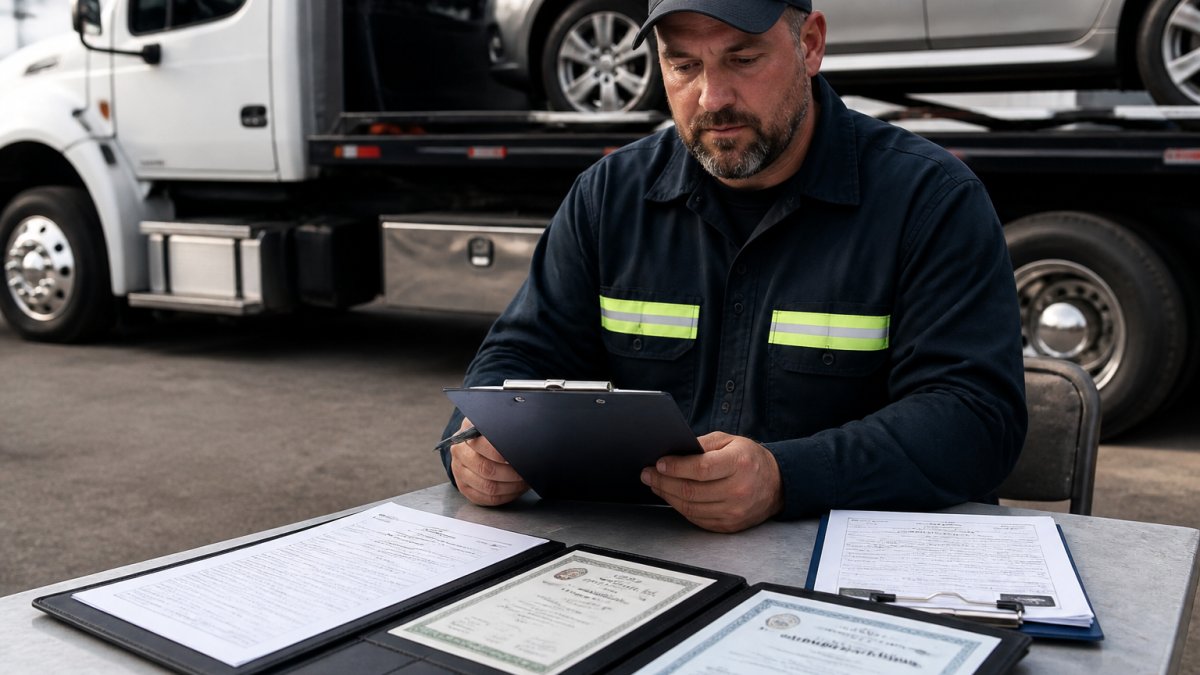
This is non-negotiable. A licensed, insured towing company protects you; an unlicensed operator puts your vehicle and wallet at risk.
What you need to verify:
A legitimate towing company holds a current state business license and carries liability insurance covering damage during transport; many also carry cargo insurance. Learn what towing insurance coverage should include to understand the protection level you need.
If an unlicensed operator damages your car, you have no recourse.
How to check:
When you call JETZ TOWING or any local provider, ask for their license and insurance information immediately.
Watch out: Some operators claim to be insured but carry minimal coverage. Ask specifically what their liability limit is.
Understand Types of Tow Trucks for Different Vehicles
Not all tow trucks are equal, and the wrong equipment can damage your vehicle. Knowing the types helps you judge whether a company can safely handle your car.
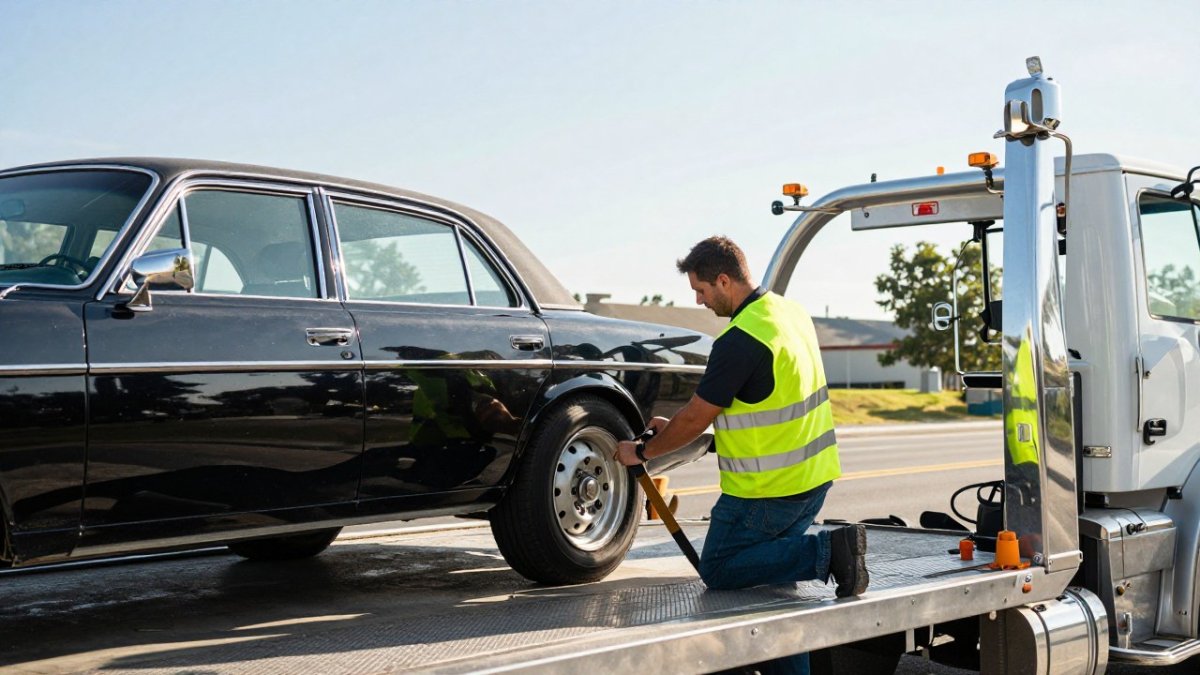
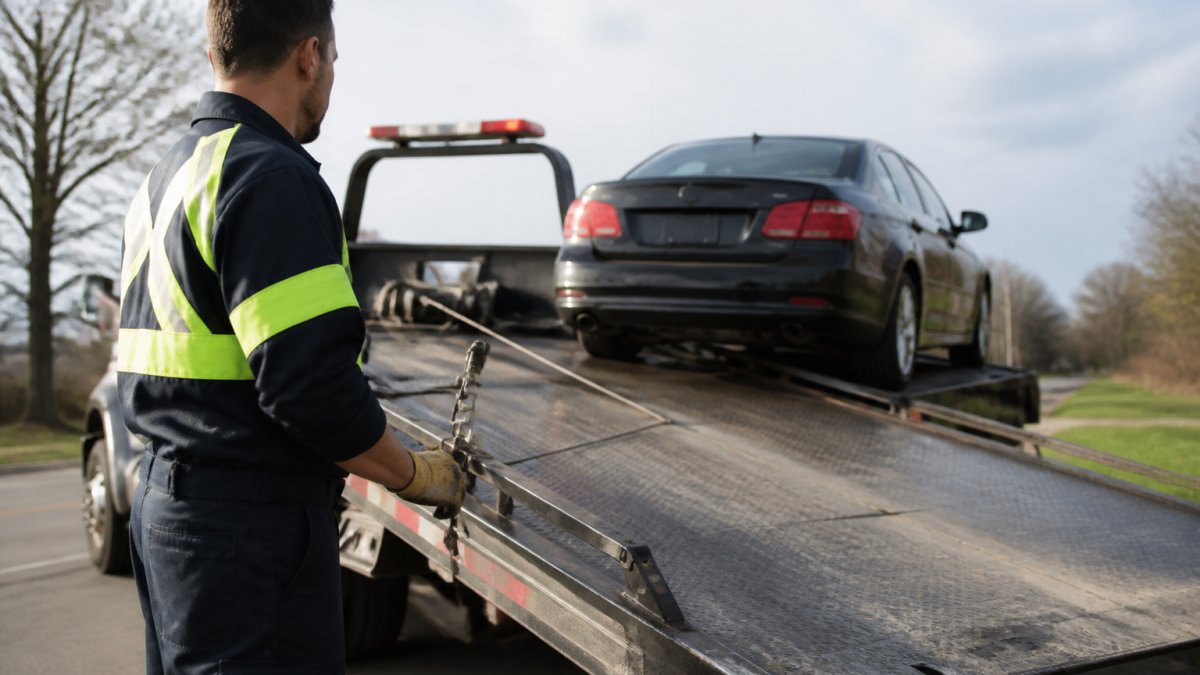
Flatbed towing is the safest option for most vehicles: the entire vehicle sits on a flat platform with all four wheels off the ground. It works for sedans, SUVs, sports cars, and luxury vehicles, if you own anything valuable or unusual, choose flatbed.
Wheel-lift towing uses a hydraulic arm to lift the front or rear wheels while the other two stay on the ground. It's faster and cheaper than flatbed but stresses the frame, skip it for classic or high-end vehicles.
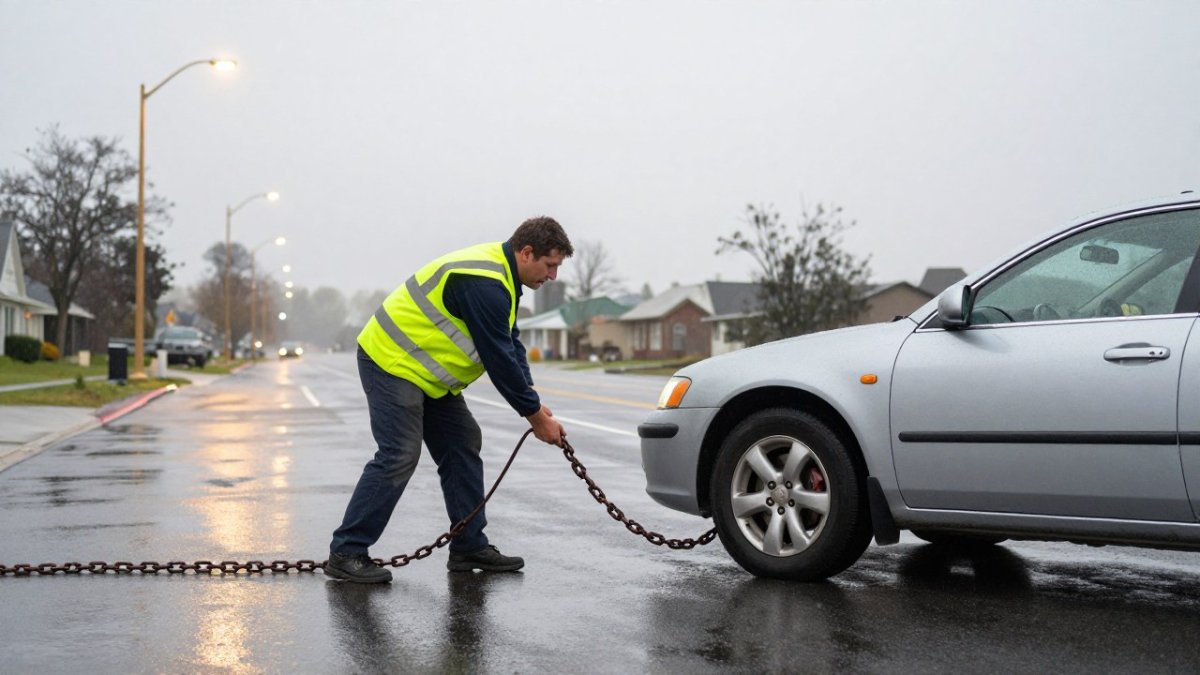
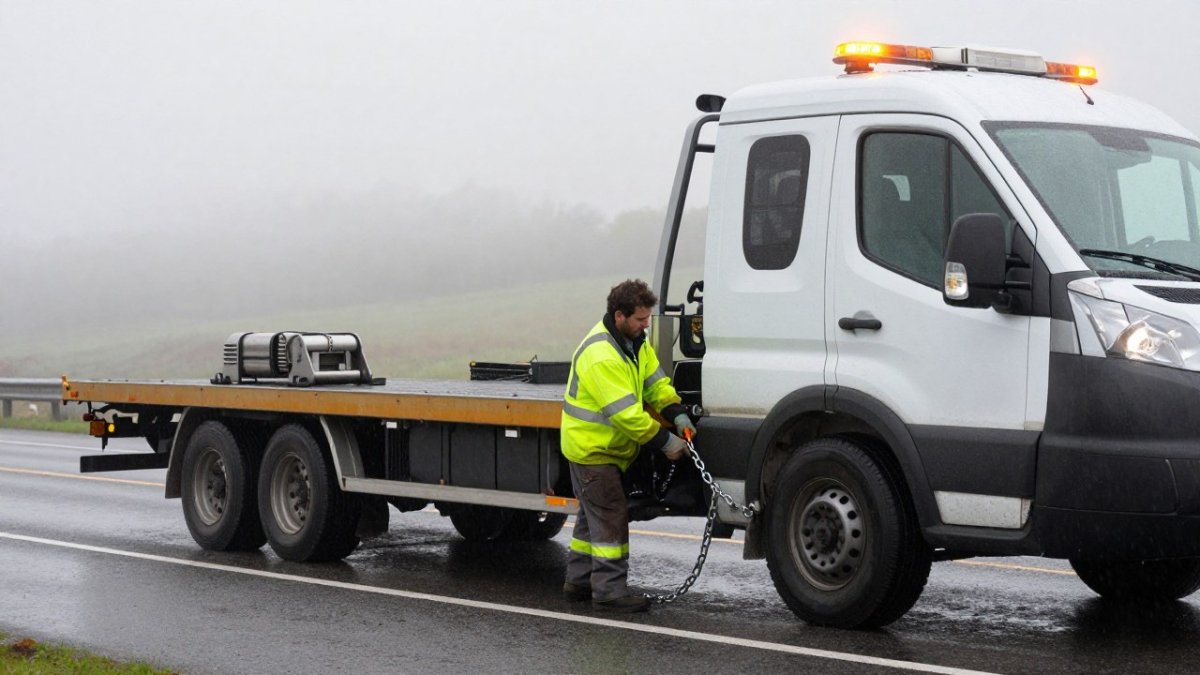
Hook and chain towing is the oldest method: a chain wraps around the frame and can scratch and damage your vehicle.
The right choice depends on your vehicle type:
- Classic or luxury car → Flatbed only
- Standard sedan → Flatbed preferred, wheel-lift acceptable
- Light truck → Wheel-lift or flatbed
When you call a towing company, tell them your vehicle type and ask which method they'll use.
Evaluate Towing Service Cost and Fees Upfront
Surprise bills after a tow are among the most common complaints. Force the numbers into the open before you authorize the hookup, use this section as a call-time script.
The five numbers you must get before saying yes:
- Base hookup fee, the flat charge to attach and load the vehicle, regardless of distance. This is separate from mileage.
- Per-mile rate and the included-mileage allowance, ask how many miles are bundled into the base fee and what the per-mile charge is after that. A $75 base that includes 5 miles is a very different price than a $75 base with mileage billed from foot one.
- After-hours or weekend premium, many operators add a surcharge outside Monday-Friday business hours. Ask the exact percentage or flat amount.
- Special-equipment surcharge, flatbed, wheel-lift, or heavy-duty recovery each carry different rates. Confirm which truck they will dispatch and whether that changes the price.
- Storage and administrative fees, if the vehicle cannot be delivered immediately (closed shop, insurance delay), daily storage charges begin. Ask the daily rate and when the clock starts.
Get a total, not a range. A professional dispatcher can quote a firm out-the-door number once you give pickup and drop-off locations, vehicle type, and condition.
Payment methods and insurance billing. Ask whether they accept credit cards, debit cards, or cash only, and whether there's a card surcharge. If you plan to file a claim, ask whether they bill your insurer directly or require upfront payment and reimbursement. Direct billing is common with larger operators; smaller ones often require out-of-pocket payment. Confirm before the truck rolls.
Match the final invoice to the quote. Compare the bill line by line to the number you wrote down.
Keep a paper trail. Save the text or email with the quote, photograph the driver's paperwork, and note the truck number. Most states require a written receipt or invoice on request, and that document makes any later complaint far easier to pursue.
Check Response Time and Service Area Coverage
Response time is the number drivers care about most, and the one dispatchers are most tempted to shade. Treat the quoted arrival time as a claim to verify, not a promise.
What a realistic arrival window looks like. Review average roadside assistance response times to set realistic expectations for your area. Ask two questions: "What is your average arrival time right now, today?" and "What is your average during your busiest window?" The gap shows how much their schedule degrades under load.
Verify the quote at call time. Before you agree to service, ask the dispatcher to confirm four things and read them back to you:
- The dispatch location the truck is coming from (not the company's office address, the actual lot or staging area).
- The estimated arrival window in minutes, not "soon" or "shortly."
- The truck type being dispatched and its capacity rating.
Write these down with the time of the call. If the truck hasn't arrived within the quoted window plus a reasonable buffer, call dispatch for the driver's location and a revised ETA.
Service area coverage, get specific. Check which communities are served in your area to confirm the company reaches your location. Ask whether they cover the roads you drive most: your commute, your weekend highway corridor, and rural roads near any property you own. Verify that JETZ Towing is licensed and insured before authorizing any service.
What to do safely while you wait. This is the part most towing guides skip, and it matters more than any selection criterion once you are the one stranded.
- Get out of the travel lane. If the vehicle can roll, move it to the right shoulder, a parking lot, or the far edge of the road. If it cannot move, stay in the vehicle with your seatbelt on and call 911 if you are in a live lane on a highway.
- Turn on hazard lights immediately and, if it is dark or visibility is poor, raise the hood or tie something bright to the antenna or door handle.
- Set out warning devices if you have them, reflective triangles or flares placed well behind the vehicle on the traffic side. Do not walk into traffic to place them.
- Stand away from the vehicle once you are safely off the roadway. Wait behind a guardrail or well off the shoulder, on the side away from traffic. Do not stand between your car and the tow truck as it approaches.
- Keep your phone charged and share your location with the dispatcher, many dispatch systems can send a live location link. Give the nearest mile marker, exit number, or cross street.
- Do not accept unsolicited help from a truck that pulls up unrequested. Predatory operators sometimes patrol highways and offer "help" at inflated rates. If a truck you did not call arrives, tell them you have already arranged service and call your dispatcher to confirm the truck number of the unit assigned to you.
Request Your First Tow with Confidence
Once you've chosen a reliable towing service, use them for a minor tow while you're not in crisis mode, so you can experience their service firsthand. Request your first tow and see the full range of services available.
What to do when you call:
Be specific about your location. Give your vehicle details. Describe the problem clearly.
When the driver arrives, watch how they approach your vehicle. Do they ask questions about it?
After the tow:
Ask yourself: was the driver courteous? Did they explain what they were doing?
[Get started with JETZ TOWING and request your first tow to experience professional, licensed towing service across 18 communities.
| Step | What to Do | Why It Matters |
|---|---|---|
| 1. Ask questions | Call ahead and verify availability, equipment, credentials | Reveals professionalism and reliability |
| 2. Verify license and insurance | Confirm state licensing and liability coverage | Protects you if damage occurs |
| 3. Understand equipment | Know which tow truck method suits your vehicle | Prevents damage during transport |
| 4. Get pricing upfront | Ask about base fees, mileage, and additional charges | Avoids surprise bills |
| 5. Check response time | Confirm average arrival time and service area | Ensures help arrives when you need it |
| 6. Test the service | Use them for a non-emergency tow first | Confirms they deliver on promises |
Frequently Asked Questions
How can I tell if a towing company is reliable?
A reliable towing service has proper licensing, current insurance, positive customer reviews, and a verifiable track record in your area. Call ahead to confirm response time estimates, ask about their equipment and operator training, and check whether they're available 24/7. Request an upfront estimate before service and verify their credentials with your state's regulatory body. Avoid companies that pressure you into payment before arrival or refuse to answer questions about their experience.
What should I ask a towing company before hiring them?
Ask about average response time, their service area, types of tow trucks available, operator training for specialty vehicles, insurance coverage limits, and whether they charge fixed fees or hourly rates. Request an upfront estimate and clarify what's included. Ask how they handle payment and whether they accept insurance billing. For specialty vehicles like classic cars, ask about their experience with secure transport. Verify they're licensed and insured, and confirm availability for your specific situation.
How do I verify that a towing company is licensed and insured?
Request their license number and insurance policy details directly. Verify the license with your state's Department of Consumer Affairs or relevant regulatory agency. Contact their insurance provider to confirm active coverage and liability limits. Reputable companies provide this information readily and display it on their website or vehicles. Never hire a towing service that refuses to share credentials or can't provide proof of insurance. Ask for a copy of their insurance certificate before service.
How can I avoid hidden towing fees?
Get a detailed written estimate before service that lists all charges: base tow fee, mileage, equipment surcharges, and any specialty handling costs. Ask whether after-hours or emergency surcharges apply. Clarify payment terms and whether they accept your roadside assistance coverage or insurance. Request itemized billing after service. Choose companies that post transparent pricing on their website. If a fee seems unclear, ask for a breakdown. Avoid operators who quote one price verbally then demand more at the end.