 How-to
Book Emergency Vehicle Transport: Step-by-Step Guide
Table of Contents
- Book Emergency Vehicle Transport: What the Term Actually Means
- What to Tell a Tow Truck Dispatcher When You Call
- How Long Does a Tow Truck Take to Arrive?
- Emergency Towing Cost: What Drives Your Final Bill
- Towing Insurance Coverage: Who Pays for the Tow
- Step-by-Step: How to Book Emergency Vehicle Transport Fast
- Frequently Asked Questions
Last Updated: October 16, 2026
Book Emergency Vehicle Transport: What the Term Actually Means
When drivers search for a way to book emergency vehicle transport, they usually mean one of two very different things: a tow truck for a broken-down car, or a medical ride to a hospital or doctor's appointment.
Emergency vehicle transport is the urgent movement of a vehicle or a person when a breakdown, accident, or medical need cannot wait.
Emergency Towing vs. Non-Emergency Medical Transportation
Emergency towing moves your vehicle. Non-emergency medical transportation, or NEMT, moves you. A tow truck hauls a dead battery, blown tire, or wrecked sedan to a repair shop.
If your car will not start and you need a ride to work, you need both: a tow for the car and a separate ride for yourself.
How Emergency Towing Differs from Vehicle Shipping
Emergency towing is immediate and local. Vehicle shipping is planned and often long-distance. When you book emergency vehicle transport for a breakdown, a truck arrives within the hour and moves your car a short distance to a shop.
Auto shipping works differently. An open or enclosed carrier transports a vehicle across states, usually booked days or weeks ahead.
What to Tell a Tow Truck Dispatcher When You Call
Give the dispatcher five things, in this order: your exact location, your vehicle's make and model, the problem, whether anyone is injured, and a callback number. Clear details let the dispatcher send the right truck the first time:
- Pickup location: The nearest cross street, mile marker, or business name. On a highway, name the direction of travel.
- Vehicle details: Make, model, color, and whether it is a car, truck, or van.
- The problem: Flat tire, dead battery, accident, or lockout. Each one may need different equipment.
A vague location like "somewhere on the highway" can add twenty minutes to your wait. If you are unsure where you are, check your phone's map app and read the nearest exit or street name aloud.
How Long Does a Tow Truck Take to Arrive?
Response time depends on your location, traffic, and how many trucks are already dispatched. In a dense metro area, a truck often arrives within 30 to 60 minutes; in rural areas, expect longer.
Several factors push that window out:
- Peak traffic hours: A tow truck fights the same congestion you do.
- Weather: Rain, ice, and storms slow every truck on the road.
- Distance: A far pickup location simply takes more time to reach.
When you call, ask for an estimated arrival window and a callback if the driver is delayed. If a dispatcher cannot tell you roughly when a truck will reach you, that is a warning sign.
Emergency Towing Cost: What Drives Your Final Bill
Emergency towing cost is built from a few moving parts, not one flat fee. The final bill usually reflects a hook-up or base charge, a per-mile rate, time of day, vehicle type, and the equipment needed. What most rate tables skip is how to compare two quotes apples to apples before you commit.
The Parts of a Tow Bill
Most providers price a tow in three layers:
- Base or hook-up fee: A flat charge for the truck to arrive and secure the vehicle. This is charged even if the tow is short.
- Per-mile rate: A charge for each mile between pickup and drop-off. This is where distance quietly drives the total.
- Surcharges and add-ons: Overnight, weekend, and holiday calls; heavy-duty or dually vehicles; winching out of a ditch; lockout service; and storage if the car sits at the lot.
A short local haul on a weekday afternoon is the cheapest combination. A long haul at 2 a.m. on a holiday, with a winch recovery, is the most expensive. The same car can produce two very different bills depending on when and where it dies.
Why We Do Not Print a Flat Rate
A single flat rate would be dishonest, because the variables above change the total on every call. What a provider can do is give you an estimate before the truck rolls, based on your pickup and drop-off locations and the equipment required. Ask for it so there is no argument at the lot.
How to Compare Two Tow Quotes
When you have more than one option, compare them on the same five lines, not on the headline number:
- Base fee: Is the hook-up charge included in the quote, or added later?
- Per-mile rate and the mileage used: Ask whether mileage is measured from the dispatch yard, the pickup point, or the drop-off. The starting point changes the total.
- Surcharge schedule: Get the after-hours, weekend, and holiday multipliers in writing.
- Equipment add-ons: Winch, dolly, lockout, and heavy-duty fees.
- Storage terms: Daily rate, when storage starts, and whether the first day is free.
A quote that looks $40 cheaper can end up $120 more expensive once the after-hours multiplier and a winch fee land on the invoice.
Payment Methods and What to Have Ready
Most providers accept major credit and debit cards, and many take mobile payment; some still run cash-only for after-hours calls, so ask before the driver arrives. Have your driver's license, registration or title information, and insurance card accessible. If your insurer or motor club is paying, confirm the claim or membership number so the provider can bill them directly.
What Changes the Total Most
If you want to lower the bill, the levers are timing and distance. A tow during business hours to a shop a few miles away is the cheapest version of the same event. A tow at midnight to a dealership across the metro is the most expensive. When the car is safe and the situation is not urgent, waiting until morning can cut the total substantially.
Towing Insurance Coverage: Who Pays for the Tow
Towing insurance coverage determines whether you pay out of pocket or someone else covers the bill. Who pays depends on the coverage you already carry.
Here is how it usually breaks down:
- Auto insurance: Many policies include roadside assistance or towing as an add-on. Check your policy or call your insurer.
- Membership programs: Motor clubs and some credit cards bundle towing as a benefit.
- Extended warranties: Some vehicle warranties include towing to a covered repair shop.
Before you authorize a tow, ask whether your coverage requires a specific provider or pre-approval. Skipping that step can mean paying for a tow your insurance would have covered. Keep your receipt and trip details; most insurers ask for them when you file a claim.
Step-by-Step: How to Book Emergency Vehicle Transport Fast
Most results for this query are service listings or booking forms. Almost none walk you through the actual decision and the actual call.
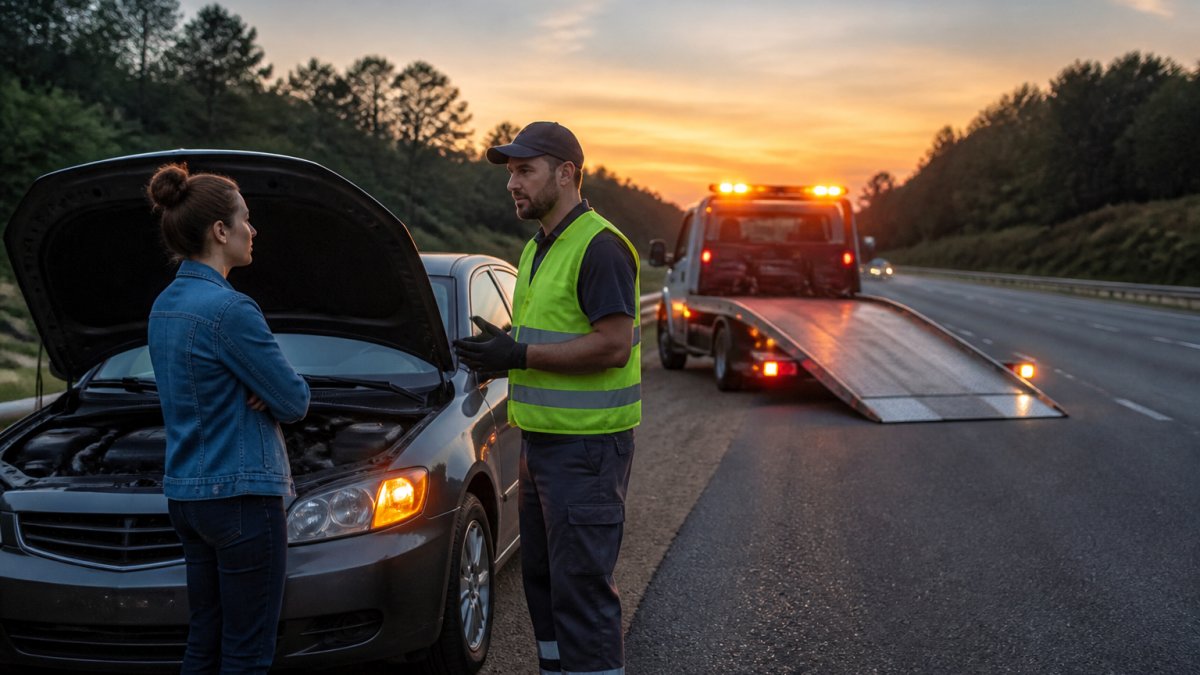
Step 0: Triage Before You Dial
Before you call anyone, answer one question: is a person hurt, or is only the vehicle disabled?
- If anyone is injured, trapped, or in immediate danger, call 911 first. Tow trucks and NEMT vehicles are not equipped or legally authorized to provide emergency medical care, and dispatching one instead of 911 can cost a life.
- If only the vehicle is disabled and everyone is safe, you need a tow. Move to the steps below.
- If a person needs to reach medical care but the situation is not life-threatening, you need non-emergency medical transportation (NEMT), not a tow. NEMT providers handle dialysis, follow-up visits, discharge rides, and similar trips, but they are not an ambulance substitute.
Getting this decision right is the single biggest time-saver in the whole process.
Step 1: Get to Safety
Pull as far off the road as you can, turn on your hazard lights, and stay away from traffic. Wait inside a nearby business rather than on the shoulder if you can, and do not attempt repairs in traffic.
Step 2: Gather the Five Details a Dispatcher Needs
Have these ready before you dial. A dispatcher who has to pull them out of you one at a time adds minutes to your wait.
- Exact location. Nearest cross street, mile marker, exit number, or business name. On a highway, name the direction of travel. If you are unsure, open your phone's map app and read the nearest street or exit aloud.
- Vehicle details. Make, model, color, and whether it is a car, truck, van, or dually. Note if it is all-wheel drive or has low clearance, because that changes the equipment.
- The problem. Flat tire, dead battery, accident, lockout, or mechanical failure. Each one may need different equipment.
- Accessibility needs. If a wheelchair or stretcher is involved for a passenger, say so immediately, that is an NEMT call, not a tow call.
- Your name and callback number. So the driver can reach you if the pickup is hard to find.
Step 3: Call a Licensed Provider
Phone booking is fastest in a true emergency. Online booking and rate calculators work well for planned tows, but a form cannot answer a follow-up question in real time. When you call, confirm three things before you hang up:
- The estimated arrival window, in minutes, not 'soon.'
- The estimated cost, based on your pickup and drop-off.
- The driver's name and the truck number, so you can confirm you are getting into the right vehicle, which matters most if you are waiting alone at night.
Step 4: Confirm the Pickup and Drop-Off
Tell the dispatcher where the car is and where it needs to go. If you have a preferred shop, give the address; if not, ask whether they can recommend one near your destination, many can, and it saves a second call. Confirm the drop-off is open; a shop that closed at 6 p.m. means your car goes to a storage lot and you pay storage.
Step 5: Stay Reachable and Stay Visible
Keep your phone on and stay near your vehicle so the driver can find you. If it is dark, turn on your interior light or use your phone's flashlight to signal your location. If the driver is delayed, call the dispatcher back rather than waiting silently.
Step 6: Confirm the Total Before the Truck Leaves
Before the driver pulls away with your car, confirm the final total against the estimate you were given. If a surcharge or add-on appeared that was not in the estimate, ask about it on the spot. Keep the receipt and trip details for your insurer.
Frequently Asked Questions
What information do I need to give a towing company when I call?
Have your exact pickup location ready, including cross streets, mile markers, or a parking level. Give the dispatcher your vehicle's make, model, year, and whether it rolls, steers, or has a flat. Mention any accessibility needs, like a wheelchair-accessible vehicle or stretcher transport for a passenger. Share your drop-off location, such as a repair shop or medical facility, and a callback number. Clear trip details help the dispatcher send the right truck the first time and give you an accurate response time.
How much does emergency towing and vehicle transport cost?
Emergency towing cost depends on distance, time of day, vehicle size, and the type of equipment needed, such as a flatbed, wheel lift, or enclosed carrier. Factors like winching, storage, and after-hours dispatch can add to the total. Most providers quote a base hookup fee plus a per-mile rate. Ask for a fare estimate before you confirm the booking so there are no surprises when the driver arrives.
Does insurance cover emergency towing or vehicle transport?
Towing insurance coverage varies by policy. Many auto insurance plans include roadside assistance as an add-on, and some credit cards or auto clubs reimburse towing up to a set limit. Liability-only policies usually do not cover towing. Check your declarations page for a towing or emergency road service line, and ask whether reimbursement is direct or if you pay upfront and file a claim. Keep your receipt and the tow invoice for any claim.
What is the difference between emergency towing and vehicle shipping?
Emergency towing moves a disabled vehicle a short distance, often to a nearby repair shop, and is dispatched within minutes. Vehicle shipping, sometimes called auto shipping, moves a working or non-working car long distance using an open carrier or enclosed carrier, and is booked days in advance. If your car broke down on the road, you need emergency transport. If you are relocating a classic car or a fleet vehicle across states, you need vehicle shipping with scheduled pickup and delivery windows.
A breakdown never happens at a convenient time, and the difference between a stressful hour and a manageable one is who answers your call. JETZ TOWING provides licensed and insured towing and roadside assistance with fast local dispatch, safe vehicle transport, and clear rates you can check before you commit. Our professionals handle light and heavy-duty tows with the care your vehicle deserves, day or night. Request a tow with JETZ TOWING and get back on the road with confidence.