 How-to
What to Expect From Professional Towing?
Last Updated: November 1, 2026
Quick Summary
Professional towing usually follows six steps: a dispatcher confirms your location and assigns the right truck, the operator inspects and secures your vehicle, and you sign a service record at drop-off. The whole process typically moves from the first call to drop-off in a fairly predictable sequence.
- Dispatch usually takes 2-5 minutes after your initial call.
- Photograph your vehicle from multiple angles before it is loaded.
- Confirm the destination and quoted price in writing before the truck leaves.
- Keep the service record and receipt to compare against the final bill.
Table of Contents
- What Happens From the First Call to Drop-Off
- What to Tell the Dispatcher and How to Prepare While You Wait
- Towing Towing Response Time: What Is Realistic
- Choosing Between Flatbed Towing and Other Methods
- Understanding Towing Service Cost and the Quote
- Verifying the Operator, Truck, Insurance and Vehicle Condition
- Booking Your Tow With Sacramento Towing Services
- Frequently Asked Questions
What Happens From the First Call to Drop-Off
Most drivers only think about professional towing when something has already gone wrong. A stalled car on a busy road is stressful, and the process after your first call can feel like a mystery. Here's what professional towing actually looks like, step by step, so you know what to expect at each stage, and what you should be doing while you wait.
Step 1, The call and dispatch (typically 2-5 minutes). A dispatcher answers, confirms your location, asks what happened, and collects your vehicle details. They use that information to assign the right truck, a flatbed for an all-wheel-drive car, a wheel-lift for a simple front-wheel-drive tow, a heavy-duty wrecker for a larger vehicle. Ask for the dispatcher's name, the company name, and an estimated arrival window before you hang up.
Step 2, The wait (varies by traffic, weather, and call volume). While you wait, turn on your hazard lights, move to a safe spot away from traffic if you can, and stay inside a locked car or stand well back from the road. Keep your phone charged and your paperwork, registration, insurance card, and ID, within reach. If the truck is running late, call dispatch back for an update rather than flagging down an unmarked truck.
Step 3, Arrival and inspection (typically 5-10 minutes). When the operator arrives, confirm the company name on the truck matches the company you called, and ask to see identification. The operator will walk around your vehicle, note existing damage, check the tires and drivetrain, and confirm the destination. This is the moment to ask which towing method they plan to use and why.
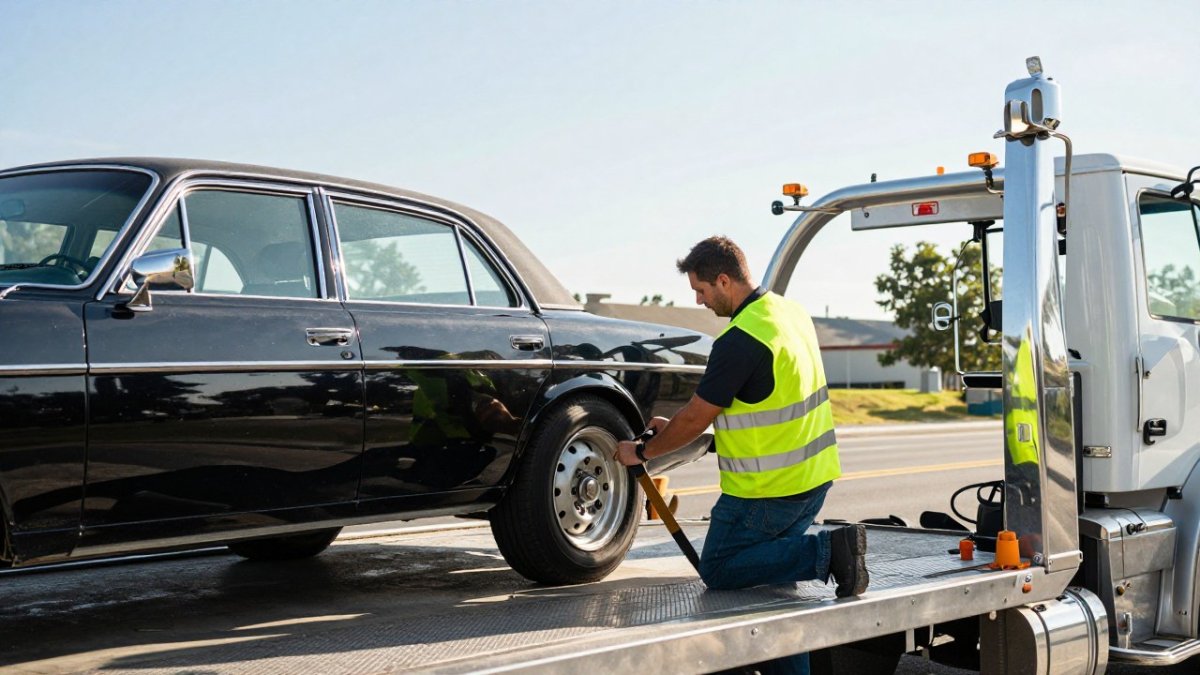
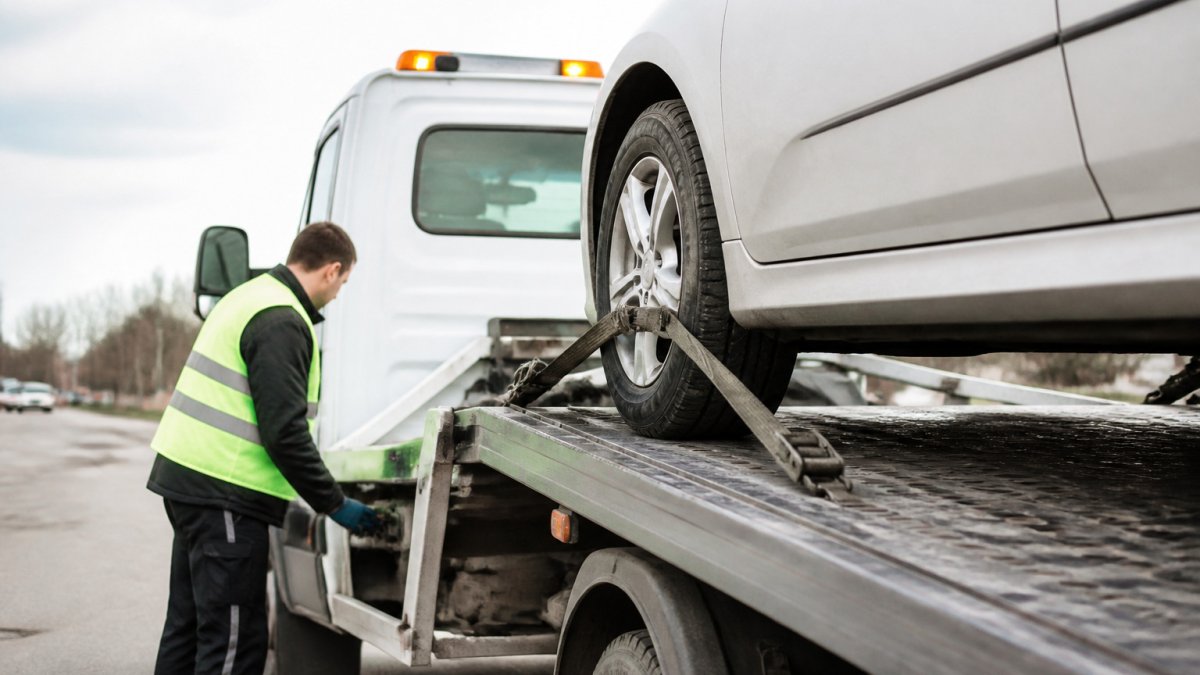
Step 4, Loading and securing (typically 10-20 minutes). The vehicle is secured to a flatbed or wheel-lift. Before it moves, take a few photos of your car from multiple angles, this is your proof if damage is discovered later. Ask the operator to confirm the destination address and the quoted price in writing before the truck leaves.
Step 5, Transport. The car travels to your chosen destination. You can usually follow in another vehicle or arrange to meet the truck there. Note the operator's name and the truck number in case you need to follow up.
Step 6, Drop-off and paperwork (typically 5-10 minutes). At drop-off, inspect the vehicle again with the operator present, compare it to your pre-tow photos, and sign the service record. Ask for a receipt or service record that shows what was moved, when, and where. Keep that paperwork, it proves the transaction and is your reference if the final bill differs from the quote.
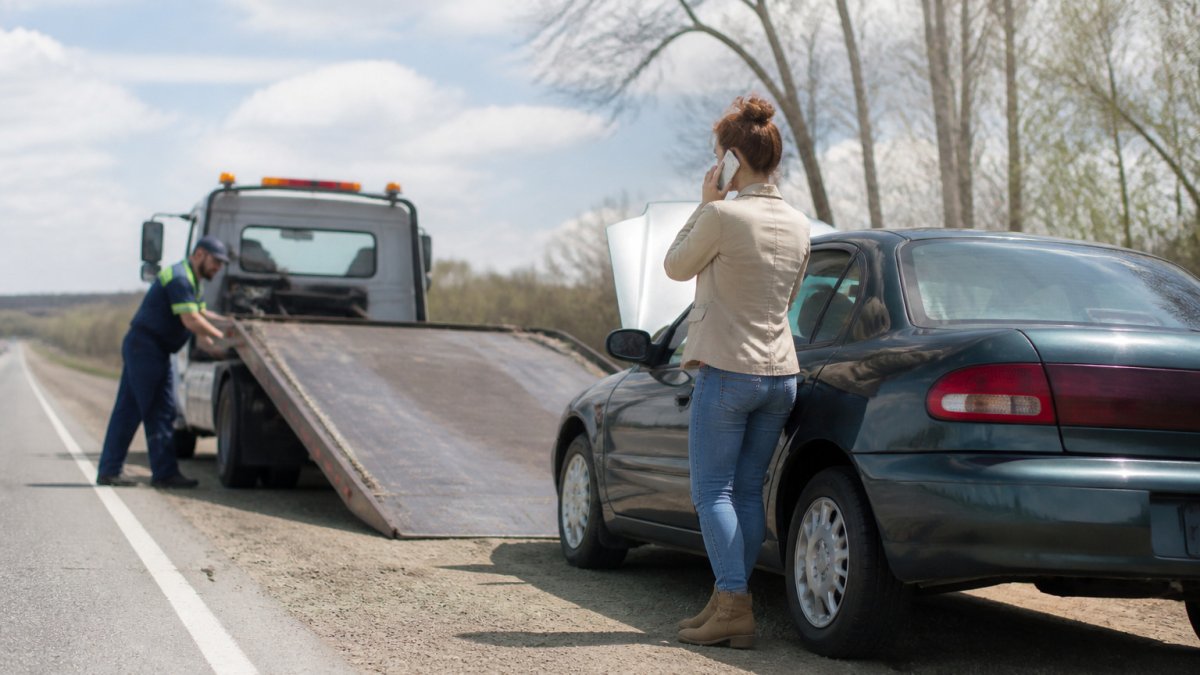
The process typically moves through six stages, each with a rough time frame:
| Step | What happens | Typical time |
|---|---|---|
| 1. Call and dispatch | Dispatcher confirms location and assigns the right truck | 2-5 minutes |
| 2. Wait | Stay safe, keep paperwork ready, call back for updates | Varies by traffic, weather and call volume |
| 3. Arrival and inspection | Confirm company, check ID, note existing damage | 5-10 minutes |
| 4. Loading and securing | Photograph the vehicle, confirm destination and price in writing | 10-20 minutes |
| 5. Transport | Vehicle travels to chosen destination | Varies |
| 6. Drop-off and paperwork | Re-inspect vehicle, sign service record, keep receipt | 5-10 minutes |
What to Tell the Dispatcher and How to Prepare While You Wait
The details you give the dispatcher shape how fast help arrives and whether the right truck is sent the first time. Have these ready before you call:
- Your exact location, including the nearest cross street, mile marker, or exit number. If you're on a highway, note the direction of travel and the nearest overhead sign.
- Your vehicle's year, make, and model, plus whether it's all-wheel drive, four-wheel drive, or rear-wheel drive. Drivetrain determines whether a flatbed is required.
- What happened, dead battery, flat tire, collision, mechanical failure, or lockout. This tells the dispatcher whether you need a tow or roadside assistance.
- Whether the car runs, is in gear, or has a flat tire. A car that rolls freely can be loaded differently than one that doesn't.
- Any safety hazards, such as being on a busy road, in a tunnel, on a bridge, or in a construction zone. Tell the dispatcher if you smell fuel or see smoke.
- Where you want the car taken, a repair shop, dealership, home, or storage lot. Confirm the address and whether the shop is open.
While you wait, turn on your hazard lights and move to a safe spot away from traffic if you can. Stay inside a locked car or stand well back from the road, never stand between your vehicle and oncoming traffic. If you have a flat or dead battery, a roadside assistance plan may also cover a jump start or tire change, so mention it when you call.
Document the scene before the truck arrives. Take photos of your vehicle's position, any visible damage, and the surrounding area. Note the time you called and the estimated arrival window the dispatcher gave you. If the operator asks you to sign anything on arrival, read it first, it should match the price and destination you confirmed by phone.
Towing Towing Response Time: What Is Realistic
Response time depends on traffic, weather, distance, and how many calls the company is handling. Most drivers should expect a wait, not an instant arrival. Ask the dispatcher for an estimated arrival time when you call, and ask for an update if the truck is running late.
Ask the dispatcher whether the estimate covers arrival only or the full job.
Choosing Between Flatbed Towing and Other Methods
Different vehicles need different methods. A flatbed lifts the whole car onto the truck bed. A wheel-lift raises only the front or rear wheels.
Understanding Towing Service Cost and the Quote
Towing cost depends on several factors. Check JETZ TOWING's website for current pricing or request a quote. Before the truck is hooked up, ask for a total price in writing. Ask whether the quote is all-inclusive before work begins.
Get a clear figure before any work starts. If the final bill is higher, ask for an itemized breakdown.
Verifying the Operator, Truck, Insurance and Vehicle Condition
Before you agree to a tow, check a few basics:
- The company name on the truck matches the company you called
- The operator can show identification and company credentials
- The company confirms it is licensed and insured
- You note existing damage with photos before loading
A common mistake is skipping the photo step. Taking a few pictures of your car before it's loaded gives you clear proof if something goes wrong later.
Booking Your Tow With Sacramento Towing Services
JETZ TOWING provides professional light-duty and roadside services across the Greater Sacramento area. Licensed and insured operators handle light-duty towing and roadside assistance.
Ready to get help now? call JETZ TOWING for a fast tow, or see the towing services and starting prices. You can also check the areas JETZ TOWING covers before you book. For a deeper look at light-duty response times, read our guide on fast light-duty towing in Sacramento, or see what realistic roadside response times look like.
Frequently Asked Questions
What happens when you call a professional towing service?
A dispatcher will usually ask for your location, the vehicle make, model and year, whether it runs and steers, and what kind of problem you have. They then assign the closest available truck and give you an estimated arrival window. Have your location described clearly, such as a cross street or highway mile marker, so the operator can find you quickly. Ask for the dispatcher's name while you are on the call.
What information should I give the towing dispatcher?
Give your exact location, your callback number, the vehicle's year, make, model and color, and whether the vehicle is in gear or the wheels are locked. Mention whether any wheels are damaged. Note the destination you want the car taken to.
How long does a typical towing service take?
Arrival times depend on traffic, weather, how far the nearest truck is, and how many calls the company is handling. Ask for an estimated arrival time when you book and confirm it is a window, not a guarantee. Once the vehicle is loaded, the drive to your destination is usually the shortest part of the process. Ask the dispatcher for an updated estimate if the truck is delayed.
Request a tow from JETZ TOWING today and get back on the road with confidence.