 Listicle
Professional Medium Duty Towing Services: A 2026 Guide
Table of Contents
- What Professional Medium Duty Towing Services Cover
- Commercial Fleet Towing Services for Your Business
- Fleet Roadside Assistance Beyond Basic Towing
- Understanding Medium-Duty Towing Cost Factors
- Fleet Towing Alternatives When You Need Backup
- How to Choose a Professional Medium Duty Towing Provider
- What to Do While Waiting for Your Tow
- Conclusion
- Frequently Asked Questions
Last Updated: October 12, 2026
What Professional Medium Duty Towing Services Cover
Professional medium duty towing services handle vehicles that fall between light-duty and heavy-duty categories. These services typically cover work trucks, commercial vans, box trucks, and small tractor-trailers that weigh between 10,000 and 26,000 pounds.
Medium-duty towing isn't just about having a bigger truck. It requires operators trained in different hookup techniques, weight distribution, and safety protocols specific to commercial vehicles. A flatbed rated for passenger vehicles will struggle with a loaded work truck. The difference matters.
These services typically include towing to repair shops, recovery from ditches or embankments, and transport of disabled vehicles during business hours or emergencies. Many medium-duty towing providers also handle equipment hauling, which requires secure tie-down systems and knowledge of how to safely transport sensitive machinery without damage.
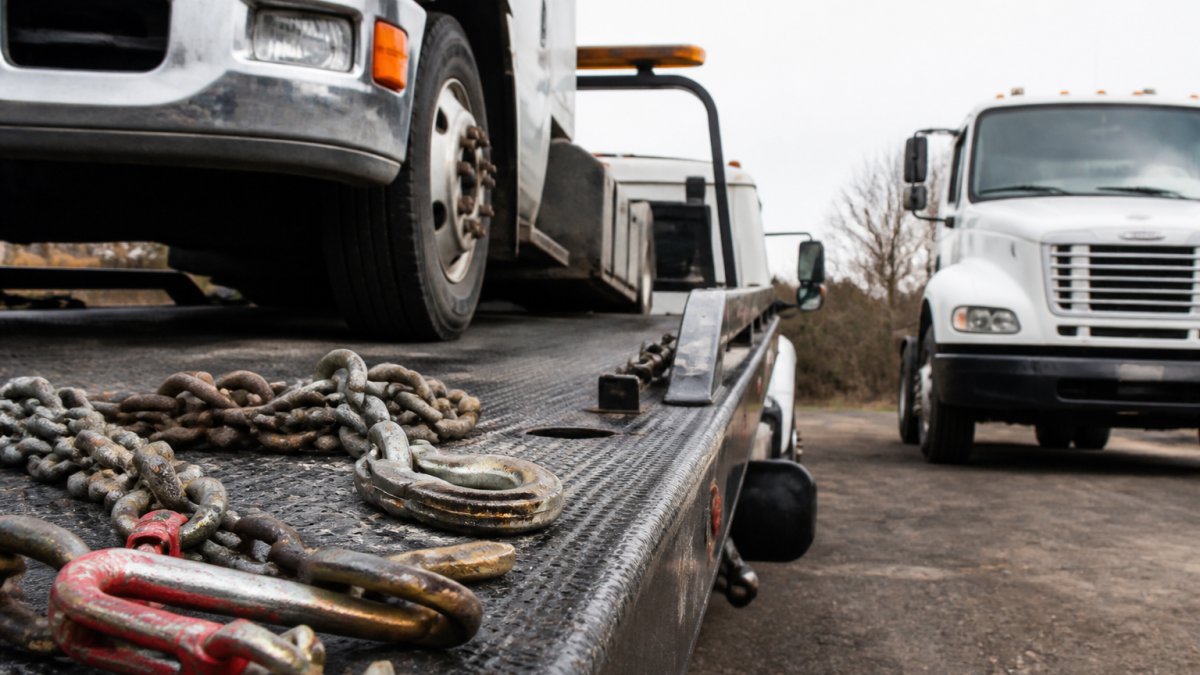
The equipment matters as much as the operator. Proper medium-duty towing requires flatbeds with reinforced decks, hydraulic lift systems rated for higher weights, and safety chains or straps designed for commercial loads. This is where professional medium duty towing services differentiate themselves from general operators, the right equipment prevents damage and ensures safe transport.
Commercial Fleet Towing Services for Your Business
If you manage a fleet of commercial vehicles, breakdowns happen. A single disabled truck can disrupt your entire operation. That's where commercial fleet towing services become essential to your business continuity.
Fleet towing differs from one-off roadside assistance. When you operate 5, 10, or 20 vehicles, you need a towing partner who understands your operation's urgency. A delivery truck down for an hour costs you missed routes and unhappy customers. A service vehicle breakdown means delayed jobs and lost revenue.
Professional commercial fleet towing services provide several advantages over calling a random tow company each time. Established relationships mean faster dispatch, priority response, and operators familiar with your vehicle types. Many businesses negotiate account pricing for regular customers, which reduces per-incident costs compared to standard rates.
The best commercial towing partners also offer preventive coordination. This data-driven approach helps you avoid future incidents.
When selecting a commercial fleet towing provider, ask about their experience with your specific vehicle types. A company that regularly handles box trucks and work vans understands the unique challenges your fleet faces. They'll know the proper hookup points, weight limits, and transport procedures specific to your equipment.
Fleet Roadside Assistance Beyond Basic Towing
Fleet roadside assistance extends beyond towing. When a vehicle breaks down, the immediate need isn't always a tow, it might be a jump-start, fuel delivery, lockout service, or tire change. Comprehensive fleet roadside assistance covers these scenarios, getting your drivers back on the road faster.
The value of fleet roadside assistance becomes clear when you consider the cost of downtime. A driver stranded with a dead battery doesn't need a tow truck, they need a jump-start. A locked-out driver doesn't need recovery, they need someone to open the door.
JETZ TOWING provides roadside assistance across 18 communities in the Greater Sacramento area, ensuring your fleet receives support wherever your vehicles operate. This geographic coverage matters for businesses with multiple service locations or drivers covering wide territories.
Quality fleet roadside assistance includes several standard services: battery jump-starts, fuel delivery, lockout assistance, tire changes, and minor mechanical support.
Response time is critical for fleet assistance. When a driver is stranded, every minute affects your business. Professional fleet roadside assistance programs prioritize quick dispatch and local coverage, ensuring help arrives before your operation suffers major disruption.
Understanding Medium-Duty Towing Cost Factors
Medium-duty towing cost depends on several variables that differ from light-duty pricing. Understanding these factors helps you budget accurately and avoid surprise charges.
Distance traveled is the primary cost driver. Towing a vehicle two miles costs less than towing it twenty miles.
Vehicle weight and condition affect pricing significantly. A 15,000-pound work truck requires more fuel and equipment wear than a 5,000-pound sedan. If the vehicle is damaged, stuck, or requires special handling, costs increase.
Time of service impacts cost. Emergency towing after hours, on weekends, or during holidays typically costs more than daytime weekday service. This reflects the higher operational costs of maintaining 24/7 availability.
Equipment requirements add to the cost. Flatbed towing costs more than wheel-lift towing because flatbeds require more specialized equipment and operator training. Delicate vehicles or sensitive cargo may require specialized equipment, increasing the price.
Your location and service area affect pricing. Urban areas with high competition often have lower rates than rural areas.
| Cost Factor | Impact | How to Reduce |
|---|---|---|
| Distance traveled | Primary cost driver | Schedule tows to nearby shops when possible |
| Vehicle weight | Affects equipment and fuel | Provide accurate weight information upfront |
| Time of service | After-hours costs more | Plan non-emergency tows during business hours |
| Recovery complexity | Stuck vehicles cost more | Call early before situation worsens |
| Flatbed vs. wheel-lift | Flatbed is higher cost | Ask if wheel-lift is appropriate for your vehicle |
Understanding these factors helps you budget accurately with your towing provider. When you request quotes, specify your typical towing scenarios so providers can give accurate pricing.
Fleet Towing Alternatives When You Need Backup
Relying on a single towing provider creates risk. If they're overwhelmed or unavailable, your fleet is stranded. Smart fleet managers maintain relationships with backup providers or alternative solutions.
One alternative is maintaining a small internal recovery capability. This handles minor issues without calling a tow truck. However, this approach only works for simple problems and doesn't replace professional towing.
Another alternative is subscribing to multiple roadside assistance programs. These programs work well for unpredictable breakdowns but may not offer the same response times or familiarity with your fleet that a dedicated provider offers.
Some businesses partner with their vehicle maintenance provider for towing coordination. Your regular repair shop may have relationships with towing companies and can expedite dispatch. This works best when your maintenance provider has a dedicated towing partnership.
Insurance-provided towing is another option. Many commercial auto insurance policies include towing coverage. However, this may not provide the priority service that regular fleet customers receive.
The most reliable approach combines a primary towing provider with a secondary backup. Your primary provider handles most calls and offers account pricing. Your backup provider activates only when your primary is unavailable.
How to Choose a Professional Medium Duty Towing Provider
Selecting the right medium duty towing services provider requires evaluating several critical factors. The cheapest option isn't always the best, reliability and response time matter more when your business depends on it.
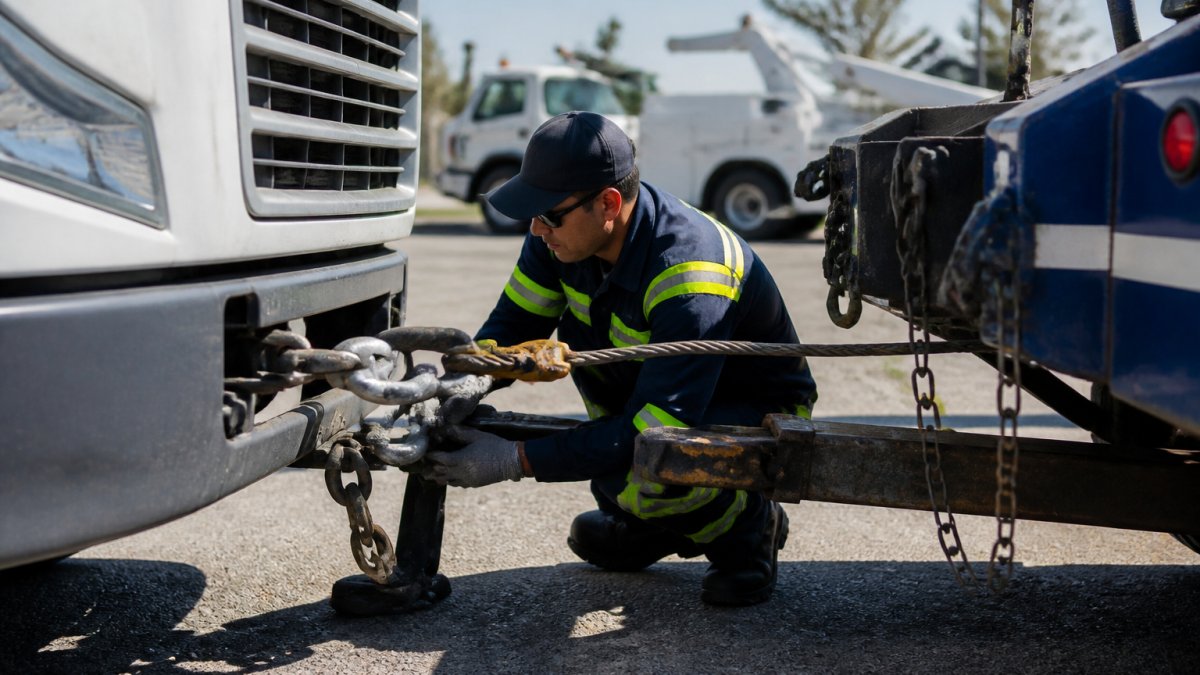
Start by verifying that the provider actually handles medium-duty vehicles. Ask directly: "Do you regularly tow vehicles in the 10,000 to 26,000-pound range?" Many operators focus on light-duty towing and lack the equipment for medium-duty work. Their answer tells you whether they're a fit for your needs.
Ask about their equipment specifically. What flatbed capacity do they maintain? How many medium-duty capable trucks do they operate? A provider with only one medium-duty truck may be unavailable when you need them. Providers with multiple trucks can handle simultaneous calls and offer more reliable coverage.
Response Time and Availability
Response time directly impacts your downtime costs. A provider that arrives in 15 minutes costs you less operational disruption than one that takes an hour. Ask for their average response time in your area and verify they operate 24/7 if you need emergency coverage.
Ask how they handle peak demand. What happens when multiple calls come in simultaneously? The best providers maintain enough capacity to handle typical demand without long delays.
Availability extends beyond response time. Confirm they operate in your service area. Some providers cover wide regions but have gaps. Ask for their specific service boundaries and confirm your locations fall within them.
Equipment and Capability
Equipment quality separates professional operations from amateur ones. Ask about their flatbed specifications: deck length, weight capacity, and tie-down systems. Proper equipment prevents damage during transport, a critical concern for valuable commercial vehicles.
Inquire about specialized capabilities. Can they handle low-clearance recovery? Do they have winch equipment for extraction? Can they transport vehicles with sensitive cargo? The more capabilities they offer, the more situations they can handle without transferring your vehicle to another provider.
Ask about driver training. Are their operators trained specifically in medium-duty towing? Training matters because improper hookup can damage your vehicle.
Insurance and Credentials
Verify that the provider carries proper insurance. Ask for their commercial general liability coverage and cargo insurance. Legitimate providers carry both. Request proof of coverage and confirm the limits are adequate for your vehicle values.
Check their licensing. Most states require towing operators to be licensed. Verify your provider holds current licensing in your state.
Ask about their safety certifications. These certifications indicate commitment to professional standards.
What to Do While Waiting for Your Tow
The period between calling for help and the tow truck arriving can feel stressful. Knowing what to do makes the wait safer and more productive.
First, ensure your safety. If you're on a highway or busy road, turn on hazard lights and move away from traffic if possible. Stand outside your vehicle, away from the roadway.
Stay with your vehicle unless it's unsafe to do so. This helps the tow operator locate you quickly and allows you to provide information about the problem.
Document the situation if it's an accident or collision. Take photos of vehicle damage and the scene. Note other vehicles involved and get contact information from witnesses.
Communicate with your dispatcher about your location. Provide specific details: highway number, mile marker, nearby landmarks, or cross streets. The more specific you are, the faster the operator finds you.
If you need to contact your business, do that while waiting. Alert your dispatch about the breakdown and estimated wait time.
Avoid attempting repairs yourself unless you have specific expertise. Even simple-looking problems can be dangerous. A professional operator arriving shortly will handle it correctly and safely.
Conclusion
Professional medium duty towing services require more than just a large truck. They demand specialized equipment, trained operators, and reliable availability, exactly what JETZ TOWING provides across 18 communities in the Greater Sacramento area. Our licensed and insured professionals understand the unique challenges of medium-duty vehicles, from work trucks to box trucks and small tractor-trailers. When your commercial fleet breaks down, response time and safe transport directly impact your business continuity. Request a tow with JETZ TOWING today and experience the difference that professional handling and fast dispatch make when your operation depends on it.
Frequently Asked Questions
What is considered a medium-duty towing service?
Medium-duty towing services handle vehicles between 10,000 and 26,000 pounds, including work trucks, box trucks, small delivery vans, and Sprinter vans. Professional medium duty towing services use specialized equipment designed for these heavier vehicles, which require different hookup techniques and load management than light-duty towing. The service bridges the gap between standard passenger vehicle towing and heavy-duty commercial recovery.
How much can a medium-duty truck tow?
A medium-duty tow truck typically handles loads up to 26,000 pounds, though capacity varies by equipment and vehicle configuration. This range covers most commercial work trucks, fleet vans, and small box trucks. Operators determine exact capacity based on your specific vehicle's weight, dimensions, and condition. Always confirm your vehicle falls within the provider's medium-duty range before booking to ensure safe transport.
When should a fleet use medium-duty towing instead of light-duty service?
Use medium-duty towing when your fleet vehicles exceed 10,000 pounds or require specialized handling like flatbed transport for delicate equipment. Work trucks, commercial vans, and box trucks typically need medium-duty service because light-duty equipment lacks the capacity and proper load-securing methods. Professional medium duty towing services prevent damage and ensure safe transport of heavier commercial vehicles that standard towing cannot safely handle.
What should I provide when requesting commercial towing?
Provide your vehicle type, current location, approximate weight or GVWR (Gross Vehicle Weight Rating), and description of the problem (breakdown, accident, lockout). For fleet accounts, share your service area, typical vehicle types, and preferred response time. This information helps dispatchers send the right equipment and experienced operators. Clear communication about your vehicle's condition and location speeds up response time and ensures proper service selection.