 how-to
24 Hour Roadside Help: How to Get It Fast
Table of Contents
- Who to Call for 24 Hour Roadside Help (Membership vs. Pay-Per-Use)
- How to Request Roadside Assistance Step by Step
- What to Do While Waiting for Roadside Assistance
- Roadside Assistance Response Time: What Affects It and How to Speed It Up
- What 24 Hour Roadside Help Actually Covers: Towing, Fuel, Locks, and More
- What It Costs and How to Avoid Surprise Bills
- Frequently Asked Questions
Last Updated: October 7, 2026
Who to Call for 24 Hour Roadside Help (Membership vs. Pay-Per-Use)
The two paths work very differently, and the wrong one wastes time you don't have.
A membership program, whether through a motor club, your insurer, or your automaker, works like a subscription.
Pay-per-use means you contact a towing company yourself and pay for the specific service.
Here's the part most guides skip: your choice affects more than cost. It affects how fast someone reaches you.
Roadside Assistance Without a Membership: Pay-Per-Use Options
Pay-per-use is the fastest route when you have no coverage, because you're calling the company that actually sends the truck. There's no middle layer.
When you call a local towing operator directly, you're talking to the people dispatching the driver.
A common mistake is assuming a membership is always cheaper.
For fleet managers and rideshare drivers, pay-per-use with a regular local provider can be a practical choice. You can build a relationship and understand their response patterns.
When Your Insurer or Automaker Is the Better Call
Your insurer or automaker program is the better call when the service is already bundled into what you pay. Many policies and new-vehicle warranties include roadside coverage at no extra charge.
Read the fine print before you need it. Coverage limits vary widely.
If you're not sure what you have, check your policy documents or the automaker's assistance app before you drive. Two minutes of reading now beats twenty minutes of confusion on the shoulder.
How to Request Roadside Assistance Step by Step
Requesting help takes about five minutes if you have the right information ready.
Follow these steps in order:
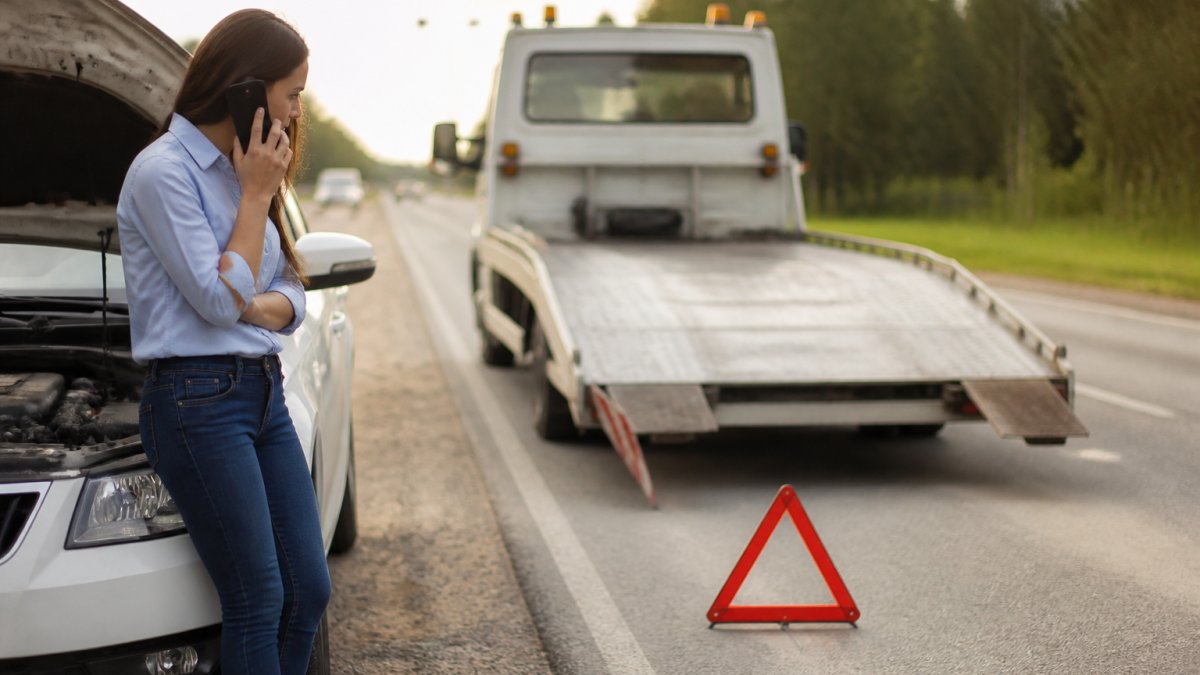
- Get to safety first. Move to the shoulder, turn on hazard lights, and stay behind the guardrail if there is one. Do this before you dial, a dispatcher can wait, oncoming traffic won't.
- Confirm your exact location. Read the nearest mile marker, exit number, or cross street. On a highway, note the direction you're traveling (northbound vs. southbound) and the last exit you passed. If you're on a surface street, give the nearest intersection and a landmark.
- Call your provider or a local towing company. Use the toll-free number on your membership card, your insurer's app, or a direct local line. If you have no coverage, calling a local operator directly removes the call-center middle layer.
- State your vehicle details. Make, model, color, and license plate help the driver spot you. Mention if it's a dually, a lifted truck, an EV, or a commercial vehicle, equipment needs change.
- Describe the problem. Flat tire, dead battery, lockout, or mechanical failure each require different equipment. Say whether the vehicle rolls, steers, and brakes, since that determines whether a flatbed is needed.
- Give a callback number. Confirm the dispatcher has a number that works and that you'll answer unknown numbers.
- Ask for an estimated arrival time. Get a window, not a vague "soon." Ask whether the driver will call before arrival.
- Stay reachable. Keep your phone on and answer unknown numbers; the driver may call for final directions.
Information checklist to have ready before you dial:
- Exact location (mile marker, exit, cross street, or GPS coordinates)
- Direction of travel
- Vehicle make, model, color, and plate
- What's wrong and whether the vehicle is drivable
- Whether anyone is injured or in immediate danger
- Your callback number
- Your coverage details (membership number, insurer, or automaker program)
- Your preferred destination if a tow is needed
What happens after you hang up: The dispatcher logs the request, assigns a driver, and the driver is routed to your location.
Expected result: You'll have a confirmed service request, a reference number, and an arrival window.
If you're not sure which number to dial, the National Highway Traffic Safety Administration guidance on disabled vehicles covers what to do when your car breaks down on the road.
What to Do While Waiting for Roadside Assistance
While you wait, your only job is to stay safe and stay visible. Most breakdown injuries happen because a driver stayed in a live traffic lane or stood in the wrong spot.

Follow these safety actions while you wait:
- Stay inside the vehicle with your seatbelt on if you're on a highway, unless it's unsafe to remain.
- If you must exit, get behind the guardrail and away from traffic.
- Keep hazard lights on the entire time.
- Raise the hood or tie something bright to the antenna to signal distress.
- Don't stand behind or in front of your car.
- Don't attempt repairs in a traffic lane.
Keep your phone charged and stay near it. If the driver calls for final directions, a missed call can add real minutes to your wait.
Roadside Assistance Response Time: What Affects It and How to Speed It Up
Response time depends on four things: your location, traffic, weather, and how the call is dispatched. A local provider can often offer a more direct dispatch process compared to a call center routing a distant contractor.
What you control:
- Give a precise location. A mile marker beats "somewhere on the highway."
- Describe the problem accurately. The right equipment gets sent the first time.
- Call a local provider directly. Fewer handoffs means a shorter dispatch chain.
- Call during off-peak hours when possible. Rush hour slows every truck.
What you can't control: weather, accidents blocking the route, and how busy the provider is at that moment.
A common mistake is calling three companies at once. That doesn't speed things up; it can send two trucks to the same spot and delay both. Call one, get an arrival window, and wait.
If you're a rideshare driver or fleet operator, ask about average response times before you need help. Building that relationship ahead of time pays off during a breakdown.
What 24 Hour Roadside Help Actually Covers: Towing, Fuel, Locks, and More
24 hour roadside help covers the most common breakdowns, day or night. Most providers offer a core set of services, though what's included depends on your plan or the provider.
The standard services:
| Service | What It Handles | Typical Trigger |
|---|---|---|
| Emergency towing | Mechanical failure, accident recovery | Car won't drive safely |
| Fuel delivery | Out of fuel on the road | Ran dry, no station nearby |
| Battery service | Dead battery, jump-start | Car won't crank |
| Lockout assistance | Locked keys inside | Keys visible inside vehicle |
| Flat-tire service | Spare tire install | Punctured or blown tire |
| Winch-out / recovery | Stuck in mud, snow, or a ditch | Vehicle off the roadway |
Heavy-duty recovery for commercial vehicles and semi trucks is a separate service with different equipment. If you manage a fleet, confirm your provider handles your vehicle class before you need it.
Coverage limits matter here. Some plans cap towing distance; beyond that, you pay per mile. Ask before you commit.
What It Costs and How to Avoid Surprise Bills
Costs depend on the service, the distance, the time of day, and whether you have coverage. There's no single flat rate, and any provider quoting one number before knowing your situation is guessing. What you can do is understand how the pricing is built so you can spot a fair quote from a padded one.
How roadside pricing is typically structured:
- Base or call-out fee. A flat charge to dispatch a truck, regardless of service. This is the number most providers quote first.
- Per-mile towing rate. Towing is usually priced by loaded mileage from the pickup point to the destination. Ask whether the rate starts at pickup or at the shop.
- Service-specific charges. Jump-starts, lockouts, fuel delivery, and tire changes are often flat-fee services rather than mileage-based.
- After-hours or holiday surcharge. Many providers charge more outside standard business hours, on weekends, or on holidays. Ask before you commit.
- Winch-out or recovery fee. If the vehicle is off the roadway, in a ditch, or stuck in mud or snow, recovery is a separate, higher-priced service.
- Storage fees. If the vehicle can't be delivered to a shop immediately, daily storage may apply. Confirm the daily rate and when it starts.
How coverage changes the math:
- Membership programs usually cover a set number of service calls per year and a capped tow distance (often expressed in miles). Beyond the cap, you pay per mile out of pocket.
- Insurer and automaker programs vary widely. Some cover towing to the nearest shop only; others cover a set distance or reimburse you up to a limit. Read the policy or warranty language before you need it.
- Pay-per-use means you pay the provider's rate directly. No annual fee, but no cap either.
How to avoid surprise bills:
- Ask for the rate before dispatch. A reputable provider will explain how pricing works, base fee, per-mile rate, and any surcharges.
- Confirm what's covered. If you have a membership, ask whether this specific call is included and what your remaining balance is.
- Ask about mileage charges. Know the per-mile rate and whether the first few miles are included.
- Get the total in writing or by text if you can, including the destination address.
- Confirm the destination. Tell them where the vehicle is going before the truck arrives, a change of destination mid-tow can add cost.
- Ask about storage. If the shop is closed, find out where the vehicle goes and what storage costs per day.
For fleet accounts and regular commercial customers, ask whether account pricing is available. Many providers offer better rates for repeat business, and a fleet agreement often locks in a per-mile rate instead of a one-off quote.
Frequently Asked Questions
Can I get roadside assistance without a membership?
Yes. You can call a local towing and recovery company directly and pay per use, with no membership or annual fee. You can also check whether your auto insurance policy includes roadside coverage, since many insurers add it as a cheap optional rider. Some automakers bundle assistance during a new-car warranty period. The trade-off is that pay-per-use means you pay the full rate at the time of service, while memberships spread that cost across the year.
What information should I have ready when I call for roadside help?
Before you dial, know your exact location. The fastest way is a dropped pin on your phone or the nearest mile marker, exit number, or cross street. Have your vehicle's make, model, color, and license plate ready, plus a description of the problem (flat tire, dead battery, locked keys, out of fuel). Mention any safety issues, such as being in a live lane, having children or pets in the car, or driving a commercial vehicle or semi truck that needs heavy-duty recovery.
How long does roadside assistance usually take to arrive?
Arrival time depends on your location, traffic, and provider workload. In a metro area, a local dispatcher can often reach you within 30 to 60 minutes. Rural areas, severe weather, and peak commute hours push that estimate higher. When you call, ask for a realistic window and request a text update when the technician is dispatched. If the estimate keeps slipping, call back and ask for the driver's current status rather than waiting in silence.
What should I do while waiting for roadside assistance?
Move your car as far off the road as possible, turn on hazard lights, and set out reflective triangles or flares if you have them. Stay inside with your seatbelt on if traffic is fast, or stand behind a guardrail if you must exit. Keep your phone charged and share your live location with someone you trust. Avoid standing behind or between vehicles, and never try to change a tire in a live lane. Wait for the technician to signal it is safe before approaching.