 Listicle
7 Emergency Roadside Assistance Options for Businesses
Last Updated: October 26, 2026
Quick Summary
Emergency roadside assistance businesses can choose from local providers like JETZ TOWING offering fast dispatch in specific regions, national membership plans like AAA with nationwide coverage, insurer-backed options bundled with commercial auto insurance, or standalone plans that let you select your provider independently. The right choice depends on your fleet's geography, vehicle types, incident patterns, and whether you prioritize response speed, predictable costs, or multi-state coverage.
- JETZ TOWING operates across 18 communities in the Greater Sacramento area with services including towing, jump-starts, tire changes, lockout service, and fuel delivery.
- AAA membership includes 24/7 roadside assistance with nationwide coverage, though commercial fleet restrictions vary by location and membership type.
- Most roadside plans limit towing distance (commonly 50 miles at no charge), exclude certain vehicle types, and do not cover damage from accidents or maintenance neglect.
- Compare providers using total cost of ownership by estimating annual incidents, multiplying by per-incident rates, and adding overage charges like per-mile towing fees.
- Request 90th-percentile response times and dispatch-to-arrival definitions specific to your service area, not national averages.
Table of Contents
- 1. JETZ TOWING: Local Fast-Response Roadside Assistance
- 2. Best Roadside Service: Commercial Fleet Plans with 24-Hour Coverage
- 3. AAA: Membership-Based Roadside Support with Nationwide Reach
- 4. Business Fleet Towing Services: Insurer-Backed Options
- 5. 24/7 Commercial Roadside Assistance: Standalone Plans Compared
- 6. Fleet Breakdown Assistance: What Coverage Actually Covers
- How to Choose the Right Emergency Roadside Assistance for Your Business
- Frequently Asked Questions
1. JETZ TOWING: Local Fast-Response Roadside Assistance
When your fleet breaks down, every minute costs money.
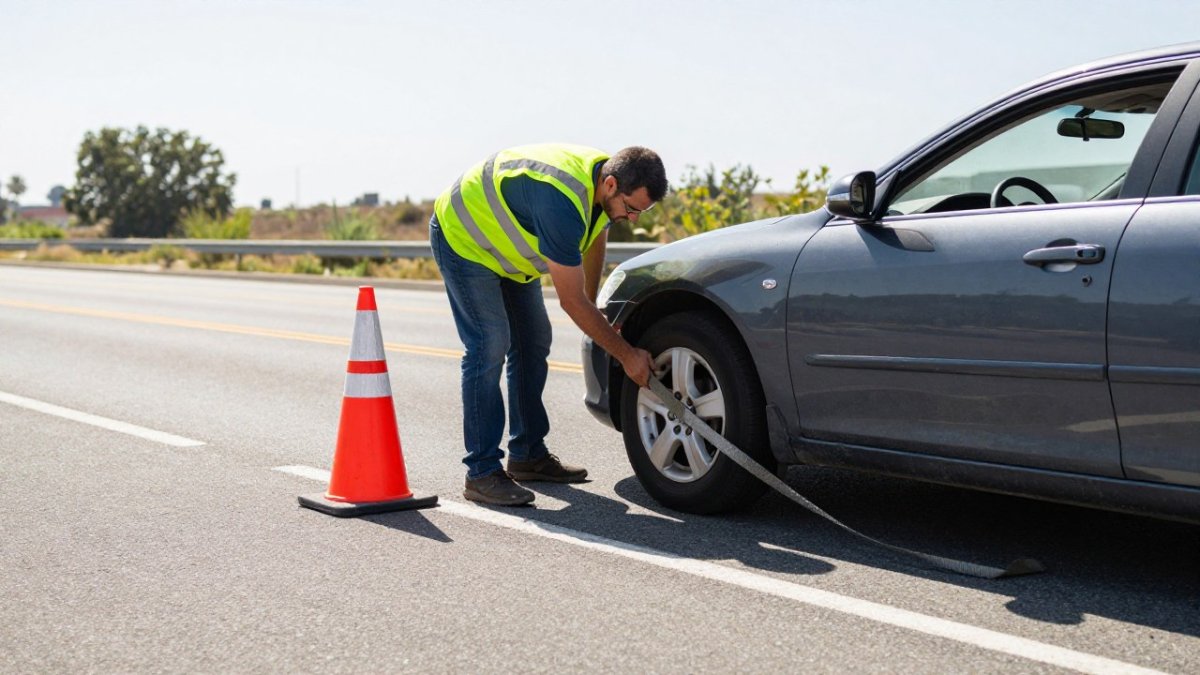
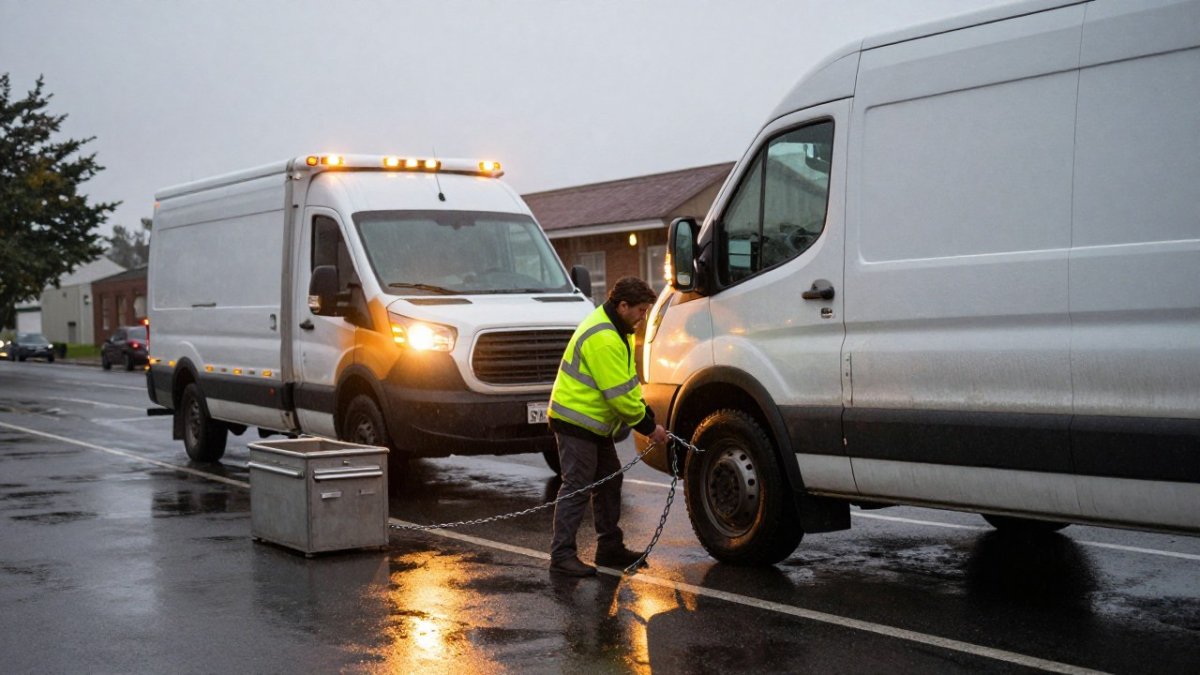
We offer emergency roadside assistance for businesses with fast local dispatch across 18 communities. Our licensed and insured team handles towing, jump-starts, tire changes, lockout service, and fuel delivery.
What sets local roadside assistance apart from national chains is accountability: the same dispatch center, drivers who know your service area, and transparent arrival times.
JETZ TOWING pricing varies based on service type and distance, so contact us directly to discuss your specific business needs and get an accurate quote for your fleet.
Best for: Local businesses in the Sacramento region that need predictable response times and direct relationships with their roadside provider.
Skip if: You operate across multiple states and need a national network, you'll want broader geographic coverage.
2. Best Roadside Service: Commercial Fleet Plans with 24-Hour Coverage
Best for: Fleet operators with multiple commercial vehicles who want a provider focused exclusively on their segment.
Skip if: You have just one or two vehicles, a more general roadside plan might offer better value.
3. AAA: Membership-Based Roadside Support with Nationwide Reach
AAA membership includes 24/7 roadside assistance with towing, fuel delivery, and flat-tire support, and one card can cover multiple drivers or vehicles.
Nationwide coverage is AAA's strongest advantage: a driver in California gets the same service level as one in Nevada or Oregon.
The membership structure means costs are predictable and bundled: you pay an annual or monthly fee, and roadside services are included rather than pay-per-incident.
However, AAA membership plans vary by location, and you'll need to confirm whether commercial fleet coverage aligns with your specific vehicles and use case. Personal-vehicle memberships sometimes have restrictions on commercial or heavy-duty vehicles.
Best for: Businesses with multiple drivers or vehicles that operate across multiple states and want predictable membership costs.
Skip if: You need specialized commercial fleet support or operate primarily in one region where local providers offer faster response.
4. Business Fleet Towing Services: Insurer-Backed Options
Several major insurers offer roadside assistance as an add-on to commercial auto insurance, bundling coverage with your existing fleet policy and simplifying billing.
Insurer-backed plans typically include towing, jump-starts, fuel delivery, and lockout assistance.
The disadvantage is limited choice: you're locked into your insurer's network, and response times depend on network depth, with urban regions typically strong and rural areas sometimes gapped.
Understanding what towing insurance actually covers before choosing an insurer-backed plan helps you avoid surprises when you need roadside help.
Best for: Businesses already insured with a major carrier that offers competitive roadside add-ons and operates in well-covered regions.
Skip if: You need guaranteed response times or prefer choosing your own service provider rather than using your insurer's network.
5. 24/7 Commercial Roadside Assistance: Standalone Plans Compared
Standalone roadside assistance plans give you flexibility: you choose a provider independent of your insurer, prioritizing response time, service quality, or specific capabilities.
The trade-off is managing two separate relationships, your insurer and your roadside provider, with different incident reporting and claims processes. Some businesses prefer this separation; others find it creates administrative overhead.
Realistic response times for roadside assistance vary by provider and region. When comparing standalone plans, ask each provider for their average response time in your specific service area, not just their national average.
Best for: Fleet managers who want to choose their roadside provider independently and are willing to manage separate relationships for insurance and roadside coverage.
Skip if: You prefer one-vendor simplicity or your insurer already offers competitive roadside coverage.
6. Fleet Breakdown Assistance: What Coverage Actually Covers
Emergency roadside assistance businesses sound comprehensive until you read the details. Most plans cover towing, jump-starts, fuel delivery, lockout service, and tire changes, but limits, exclusions, and vehicle eligibility vary significantly.
Vehicle eligibility matters too. Some plans exclude commercial trucks above a certain weight, trailers, or specialty vehicles, so confirm each vehicle type qualifies; a plan covering your sedans but not your service trucks creates gaps.
Breakdowns are covered, but damage from accidents, neglect, or improper maintenance typically isn't. If a driver runs the engine out of oil and it seizes, that's a maintenance failure, not a covered breakdown.
Best for: Fleet managers who read the fine print and understand their coverage limits before an incident occurs.
Skip if: You want simple, unlimited coverage without worrying about exclusions, that doesn't exist in the roadside assistance market, so expect limits.
How to Choose the Right Emergency Roadside Assistance for Your Business
Choosing emergency roadside assistance for businesses requires matching your fleet's needs to what each provider actually offers. This framework is built around pricing models, service-level agreements, and industry-specific needs so you can evaluate providers on measurable terms rather than marketing claims.
Step 1: Document your fleet and incident profile
Document your fleet composition: vehicle count, types (light-duty sedans, commercial trucks, trailers), operating area, and likely incidents. Then build an incident profile from your own records: pull the last 12 months of breakdowns and categorize them by type (towing, jump-start, tire, lockout, fuel), location (urban, rural, highway), and time of day. That profile tells you which services you actually use and which tiers are worth paying for. A fleet averaging two lockouts a month should weight lockout coverage heavily; a fleet with long rural routes should prioritize towing distance.
Step 2: Compare pricing models on total cost of ownership
Providers price fleet roadside assistance in three main ways, and the cheapest headline number is rarely the lowest total cost:
- Per-incident (pay-per-use): You pay only when service is dispatched. This works for fleets with low incident frequency or seasonal operations, but per-incident rates are typically higher and you have no cap on annual spend.
- Per-vehicle membership: A flat fee per vehicle per month or year, with services included up to plan limits. This is predictable and works well for steady fleets, but you pay for coverage on vehicles that may rarely break down.
- Account or contract pricing: A negotiated rate for a defined fleet, often with volume discounts and custom service levels. This suits larger fleets and businesses that want a single point of contact and consolidated billing.
To compare total cost of ownership, estimate your annual incident count from Step 1, multiply by the per-incident rate, and compare that against the annual membership cost for the same fleet. Then add overage costs, per-mile towing charges, after-hours dispatch fees, and specialty-service surcharges. A membership that looks more expensive on the sticker can be cheaper once overages are included, and vice versa.
Step 3: Evaluate service-level agreements and response performance
National averages don't matter if your region is slower. Ask providers for response-time commitments in your specific service area, and how they define the clock: dispatch, driver acceptance, or arrival on scene? A provider measuring from dispatch will always look faster than one measuring from arrival. Request these metrics:
- Average and 90th-percentile response time in your service area, not the national average.
- Dispatch-to-arrival definition so you compare like with like.
- Escalation procedure if a driver is delayed or a service cannot be completed.
- Status updates, whether drivers or dispatchers provide ETA updates and through what channel.
- Reporting, whether you receive monthly incident reports you can use to track performance and renegotiate terms.
Step 4: Match coverage to your industry's operating pattern
General commercial fleet coverage is not the same for every business. The incidents that matter, and the response you need, differ by industry:
- Delivery and last-mile fleets: High vehicle count, tight schedules, and frequent urban stops. Prioritize fast urban response, high service caps, and lockout and jump-start coverage.
- Construction and trades: Heavy-duty trucks, trailers, and equipment. Prioritize weight-class eligibility, winching and recovery, and towing distance for job sites outside metro areas.
- Field service and mobile technicians: Vehicles double as mobile workshops. Prioritize lockout coverage, battery service, and fast response so technicians can resume appointments.
- Passenger transport and shuttle operations: Downtime directly affects customers. Prioritize response-time guarantees, passenger-safe extraction procedures, and backup vehicle coordination.
- Mixed light- and heavy-duty fleets: The hardest to cover with one plan. Build the eligibility matrix from the coverage section and confirm each vehicle class is covered, or split coverage across two providers.
Step 5: Test the reporting and dispatch process before you need it
Finally, test the reporting process before an incident occurs. Can drivers submit requests via app, phone, or web? How quickly do you get confirmation? Does the provider integrate with your fleet management system?
Contact JETZ TOWING directly to discuss your specific business needs and how local, responsive roadside assistance can support your fleet operations.
| Provider | Best For | Response Strength | Coverage Scope | Pricing Model |
|---|---|---|---|---|
| JETZ TOWING | Local Sacramento-area businesses | Fast local dispatch | Towing, jump-start, tire, lockout, fuel | Per-service or account pricing |
| Best Roadside Service | Commercial fleet operators | 24-hour nationwide | Fleet-focused coverage | Membership |
| AAA | Multi-state operations | Nationwide network | Standard roadside services | Membership by location |
| Insurer-backed plans | Existing insurance customers | Network-dependent | Bundled with insurance | Insurance add-on |
| Standalone plans | Independent provider choice | Variable by plan | Tiered coverage options | Standalone membership |

The right emergency roadside assistance for businesses aligns with your fleet's actual geography, vehicle types, and incident patterns. Use the five steps above to compare providers on total cost of ownership, measurable response commitments, and industry-specific fit rather than headline price or brand recognition.
Frequently Asked Questions
What does emergency roadside assistance for businesses typically cover?
Most emergency roadside assistance plans cover towing, tire changes, jump-starts for dead batteries, fuel delivery, and lockout assistance. Business plans often include 24/7 dispatch, faster response times than personal plans, and support for multiple vehicles. Coverage limits and service radius vary by provider, so confirm whether your fleet size and vehicle types (light-duty trucks, commercial vehicles, trailers) qualify before signing up.
How can a business get roadside assistance for a fleet?
Contact providers that explicitly serve commercial fleets, Best Roadside Service, JETZ TOWING, and insurer-backed plans all offer fleet options. Request a quote with your fleet size, vehicle types, and service area. Many providers offer tiered pricing based on the number of vehicles and coverage zones. Ask about account management features, bulk discounts, and whether they integrate with your fleet tracking system.
How do businesses choose a roadside assistance provider?
Evaluate response time guarantees, geographic coverage matching your service area, services included (towing, lockout, fuel delivery), and whether the plan covers your vehicle types. Compare pricing for your fleet size, check if they offer account pricing or volume discounts, and verify they are licensed and insured. Read reviews from other business customers, not just individuals, and confirm their dispatch technology and communication methods.
Is roadside assistance worth it for a business fleet?
Yes, especially for businesses where vehicle downtime directly reduces revenue, rideshare drivers, delivery services, and service contractors lose money every minute their vehicle is off the road. A reliable emergency roadside assistance plan reduces downtime, ensures professional handling of your vehicles, and provides peace of mind. The cost is typically much lower than the expense of a single tow or a day without a vehicle.
Emergency roadside assistance keeps your fleet mobile and your business running. JETZ TOWING provides fast, local roadside assistance across the Greater Sacramento area with licensed, insured professionals handling towing, jump-starts, tire changes, lockout service, and fuel delivery. Get started with JETZ TOWING and eliminate the stress of fleet breakdowns.