 blog
Emergency Vehicle Transport Cost: What to Expect
Table of Contents
- What Drives Emergency Vehicle Transport Costs
- Towing Insurance Coverage Explained
- Emergency Roadside Assistance Rates
- Emergency vs. Non-Emergency Transport Pricing
- How to Request a Shipping Quote and What to Expect
- Frequently Asked Questions
Last Updated: October 9, 2026
What Drives Emergency Vehicle Transport Costs
When your vehicle breaks down on the highway or you're involved in an accident, understanding emergency vehicle transport cost factors helps you anticipate what you'll actually pay.
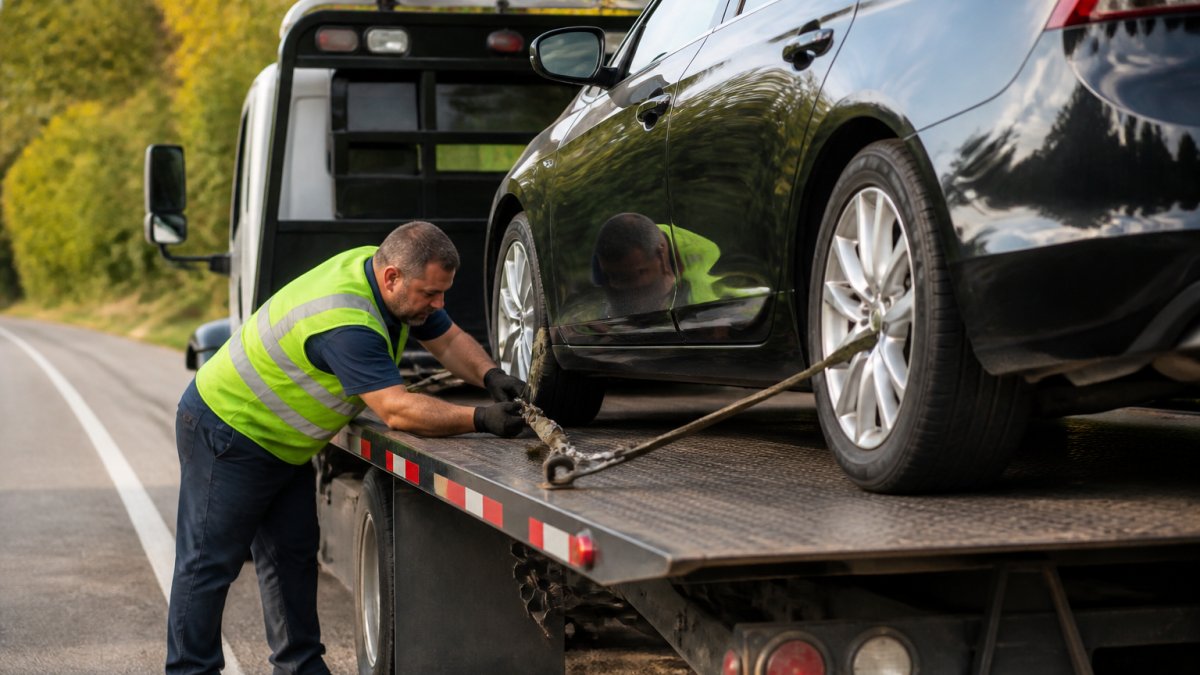
Distance and mileage form the foundation of most emergency vehicle transport pricing. A 5-mile local dispatch costs far less than a 50-mile highway recovery.
Distance and mileage-based rates
Most emergency transport providers use a two-tier pricing model: a base fee for dispatch and initial response, then per-mile charges for distance traveled. The base fee covers the dispatcher, fuel, and operator time to reach your location. Additional mileage accumulates once the vehicle is secured and transport begins.
Your actual cost depends on how far the tow must travel. A short-haul recovery within 10 miles typically falls under a flat rate. Beyond that threshold, per-mile charges apply.
Vehicle type and weight classification
Not all vehicles cost the same to transport. A compact sedan requires different equipment and handling than a full-size pickup truck or an SUV. Heavier vehicles demand more powerful towing equipment and consume more fuel, which carriers factor into their pricing.
Classic cars and specialty vehicles often require enclosed transport rather than open carriers. This premium service protects your vehicle from weather and road debris but increases the cost. If you own a classic car that means everything to you, requesting an enclosed transport ensures professional handling and protection during the entire journey.
Time of day and seasonal demand
Emergency vehicle transport cost fluctuates based on when you need service. Late-night and early-morning calls often include surcharges because they require operators to work outside standard business hours. Weekend and holiday emergencies carry premium rates for the same reason, you're asking someone to interrupt their personal time.
Seasonal demand also affects pricing. Winter months see higher call volumes due to weather-related breakdowns, so many providers increase rates during those periods. Summer vacation season can also spike demand, particularly in regions with heavy tourist traffic.
Towing Insurance Coverage Explained
Your personal auto insurance policy may or may not cover emergency vehicle transport. Understanding what your policy actually covers prevents surprises when you receive the bill.
What your policy covers
Standard auto insurance typically includes roadside assistance as an optional add-on. This coverage usually covers towing to the nearest repair facility, often up to a certain distance limit (commonly 5-7 miles).
Collision and comprehensive coverage may apply if your vehicle was damaged in an accident, but they don't automatically cover towing costs. You need to read your policy declarations page or call your insurer to confirm what's included. Many drivers discover gaps in their coverage only when they need it most.
Carrier liability and damage protection
When a towing company transports your vehicle, that company carries liability insurance to cover damage during transport. This protection matters significantly. If the carrier damages your vehicle while securing it to the flatbed or during transport, their insurance should cover repairs.
At JETZ TOWING, we maintain full licensing and insurance coverage to protect your vehicle and give you peace of mind. Our licensed and insured professionals provide fast local dispatch and safe, secure vehicle transport, giving you confidence that your vehicle issues are handled with the utmost care and efficiency.
Emergency Roadside Assistance Rates
Roadside assistance and vehicle transport are priced differently, and conflating them is the most common reason callers are surprised by a bill. Roadside service sends a technician to solve a problem on-site; transport moves the vehicle. Each has its own rate logic.
How roadside service is priced
Most providers build a roadside rate from three components:
- Dispatch or service-call fee, a flat charge to send a technician, typically covering the first few miles of travel to your location.
- Per-service fee, a separate charge for the actual task (jump-start, lockout, tire change, fuel delivery).
- Per-mile or extended-distance charge, applied once you're outside the provider's standard service radius.
A jump-start or lockout is usually the cheapest call because it takes minutes and requires no towing equipment. A tire change sits in the middle. Fuel delivery adds the cost of the fuel itself on top of the service fee. Towing is the most expensive because it requires a flatbed or wheel-lift and a second vehicle to move yours.
Service radius and extended-distance surcharges
Every provider defines a standard service radius, often expressed as a mileage band from their base. Inside that band, the dispatch fee is fixed. Outside it, expect a per-mile surcharge for the technician's travel to you and the return trip to base, you are paying for both legs, not just the one that reaches you.
A common pattern is a tiered structure: a base rate for the first several miles, then a per-mile rate beyond that. If you are stranded far from any populated area, the extended-distance charge can exceed the cost of the actual repair service.
Membership plans versus pay-per-call
Many providers sell annual membership plans that bundle a set number of service calls, waive or reduce dispatch fees, and cap per-mile charges. For a household with older vehicles or a fleet with predictable breakdown exposure, membership math often beats pay-per-call pricing. For a one-time emergency, pay-per-call is usually cheaper because you are not amortizing a year of coverage against a single event.
Urgent and after-hours surcharges
When you need service immediately, not scheduled for tomorrow, providers apply an urgency premium. This reflects the cost of pulling a technician off a scheduled job or routing the nearest available unit to you out of sequence.
After-hours calls carry the steepest surcharges because they require overnight staffing or on-call pay. A breakdown at 2 a.m. costs more than the identical breakdown at 2 p.m. for the same distance and vehicle. Weekend and holiday calls sit between the two. If your situation is not truly time-critical, waiting for standard-rate hours can meaningfully reduce the bill.
Emergency vs. Non-Emergency Transport Pricing
This is where most cost guides go wrong. The phrase "emergency vehicle transport" describes two completely different services with two completely different pricing models, and the search results for this query routinely mix them together. Getting clear on which one you need is the first step to understanding what you will pay.
Two services, one phrase
Vehicle logistics transport moves a car, truck, SUV, or specialty vehicle from one point to another, a tow from a breakdown site, a dealer-to-dealer transfer, or an interstate move.
Medical transport moves a person who needs care during transit, a patient being transferred between facilities, or a non-emergency medical appointment ride. The vehicle is the service environment, and the passenger is the concern.
If you are searching because your car is disabled, you need logistics transport. If you are searching on behalf of a patient, you need medical transport. The cost structures do not overlap.
How urgency changes the price
Within vehicle logistics, the emergency-versus-scheduled distinction drives the rate:
- Emergency (unscheduled) transport dispatches the nearest available unit immediately. Routing is optimized for speed, not efficiency, and the provider cannot batch your pickup with others. Expect an urgency premium on top of the base and mileage charges.
- Scheduled (non-emergency) transport lets the provider plan the route, combine loads, and choose an efficient time window. Rates are lower because the provider's cost per unit is lower.
The premium for urgency is real but not fixed, it scales with how disruptive your call is to the provider's schedule. A same-day request during a slow period costs less than a 3 a.m. holiday call during peak demand.
Regulatory and insurance differences
This is the part competitors skip, and it matters because it changes who can legally perform the work and who is liable if something goes wrong.
Vehicle logistics transport is regulated primarily at the state level. Towing and transport operators typically need a state-issued operating authority, and interstate moves fall under federal motor carrier registration and insurance minimums.
Medical transport operates under a separate framework. Non-emergency medical transportation (NEMT) providers are often subject to state licensing, driver background-check requirements, vehicle safety and accessibility standards, and, when serving Medicaid beneficiaries, federal program rules governing coverage and billing.
Insurance and liability: what to confirm before you book
For vehicle logistics, confirm the carrier's cargo and on-hook liability coverage and ask for the certificate. For medical transport, confirm the provider's commercial auto liability, professional liability, and, if applicable, Medicaid enrollment status. In both cases, ask whether your own auto or health policy provides any overlapping coverage, because the provider's insurance is primary for damage they cause, not a substitute for your own.
The cost difference, summarized
Emergency vehicle logistics transport costs more than scheduled transport for the same distance because you are paying for immediacy, after-hours labor, and lost routing efficiency. Medical transport is priced on a different basis entirely, often per trip, per mile, or per level of care required, and may be partially or fully covered by insurance or a public program depending on the passenger's eligibility. Do not use one service's pricing to estimate the other.
How to Request a Shipping Quote and What to Expect
Getting an accurate emergency vehicle transport cost estimate requires providing specific information to the carrier. The more detail you supply, the more precise the quote.
Request a quote before committing. A reputable provider gives you an estimate range based on your details.
The quote typically includes the base service fee, per-mile charges if applicable, any surcharges for time of day or urgency, and equipment fees if you need specialized transport.
Emergency vehicle transport cost depends on distance, vehicle type, time of day, and urgency. JETZ TOWING serves the greater Sacramento area with licensed and insured professionals who provide transparent pricing and reliable service.
Frequently Asked Questions
What factors influence the cost of emergency vehicle transport?
Emergency vehicle transport costs depend on distance traveled, vehicle type and weight, time of day, seasonal demand, and whether you need enclosed or open carrier service. Mileage-based rates form the foundation of pricing, but surcharges apply for after-hours dispatch, holiday service, or urgent same-day requests. Vehicle classification, from compact cars to heavy-duty trucks, affects carrier requirements and fuel costs. Service radius limitations and fuel surcharges also play a role in your final bill.
Does insurance cover emergency towing and vehicle transport?
Many auto insurance policies include roadside assistance or towing coverage, but limits vary. Standard policies may cover 5-10 miles of towing at no cost; longer distances often require out-of-pocket payment unless you have premium roadside assistance. Carrier insurance protects against damage during transport, but your insurance policy should be reviewed to confirm coverage limits. Always ask your provider whether your plan covers the specific distance and service type you need before an emergency occurs.
What is the difference between emergency roadside assistance and vehicle transport?
Emergency roadside assistance covers immediate help at your location, jump-starts, lockouts, flat tire changes, and fuel delivery, typically within a defined service radius. Vehicle transport moves your car from one location to another, often across longer distances, using a carrier truck. Roadside assistance rates are usually lower and based on service type, while transport costs depend on mileage, vehicle type, and destination. Some providers bundle both services; others charge separately.
How do I request a shipping quote for emergency vehicle transport?
Contact a transportation provider directly with your vehicle details: make, model, current location, and destination. Provide the pickup address and delivery address to get an accurate mileage-based estimate. Mention any special requirements, enclosed transport, same-day service, or pickup from a remote location, as these affect pricing. Most providers offer free quote requests online or by phone, with no obligation. Request the quote in writing to confirm the estimated delivery window and any fuel surcharges before committing.