 Listicle
Best Roadside Assistance for Rideshare Drivers
Table of Contents
- Why Rideshare Drivers Need Dedicated Roadside Assistance
- Roadside Assistance for Uber Drivers: Coverage and Eligibility
- Roadside Assistance for Lyft Drivers: Plans and Benefits
- Key Services: Towing, Lockouts, Battery, and Fuel Delivery
- AAA Roadside Assistance Towing Limits and Multi-Car Coverage
- Roadside Assistance Response Time: What to Expect
- How to Choose the Right Plan for Your Driving Pattern
- Frequently Asked Questions
Last Updated: October 14, 2026
Why Rideshare Drivers Need Dedicated Roadside Assistance
The best roadside assistance for rideshare drivers addresses this directly. Standard plans often exclude commercial driving, and many platforms offer limited coverage, leaving drivers vulnerable. You need fast, reliable help that understands the urgency.

Uber, Lyft, DoorDash, and other platform drivers need roadside assistance that prioritizes speed and reliability, not just basic towing.
This guide covers what to look for in roadside assistance, how platform benefits work, and which options deliver when you're stranded.
Roadside Assistance for Uber Drivers: Coverage and Eligibility
Uber doesn't provide built-in roadside assistance. It offers Vehicle Interruption Coverage, which reimburses some lost earnings after a breakdown but doesn't get your car fixed or towed.
Uber drivers must source roadside assistance separately, often through auto insurance add-ons, AAA, or standalone plans.
When evaluating roadside assistance as an Uber driver, verify three things: commercial rideshare coverage, towing distance limit, and response time.
Roadside Assistance for Lyft Drivers: Plans and Benefits
Lyft offers a clearer pathway through Lyft Rewards: Platinum or Elite drivers get free roadside assistance through Allstate Roadside, while Silver and Gold members receive discounted access.
This is a meaningful benefit if you qualify, removing a major expense from your operating costs.
Lyft drivers outside qualifying tiers should treat roadside assistance as a separate purchase, verifying commercial-use coverage, towing distance limits, and response time commitments.
Key Services: Towing, Lockouts, Battery, and Fuel Delivery
Roadside assistance plans vary widely in what they include. The most critical services for rideshare drivers are towing, lockout service, battery jump-starts, and fuel delivery.
Towing is the cornerstone of any plan, and distance limits matter enormously. A 5-mile cap can leave you stranded far from repair shops, while 50, 75, or 100 miles provides much better protection (How Far Does AAA Tow?).
Lockout service gets you back in your car quickly.
Battery jump-starts address dead batteries without a tow. Common in winter or after leaving lights on, a jump-start gets you moving within 15-30 minutes, making this a high-value benefit.
Fuel delivery brings fuel to your location if you run out of gas.
AAA Roadside Assistance Towing Limits and Multi-Car Coverage
AAA is one of the largest roadside assistance networks in the country, with broad provider coverage, tiered membership, and a long track record. But for rideshare and delivery drivers, the brand name isn't the deciding factor. What matters is whether your membership applies when you're logged into a platform and carrying a passenger or delivery order.
How AAA membership tiers actually differ
AAA sells membership through regional clubs, so pricing and benefits vary by territory, but the tier structure is consistent:
- Basic membership typically includes towing to a nearby facility, often capped around 5 miles, plus jump-starts, flat-tire changes, lockout service, and fuel delivery.
- Mid-tier membership usually extends the tow distance (commonly in the 100-mile range) and adds benefits like a second service call allowance or expanded lockout coverage.
- Premium membership generally pushes the tow distance further (often up to 200 miles) and adds perks such as trip-interruption coverage and one tow per disablement rather than per year.
For a rideshare driver, tow distance matters most. Break down 40 miles from your preferred shop with a 5-mile cap, and you're paying the difference out of pocket at commercial tow rates.
The commercial-use question you must ask before you buy
This is the biggest gap in most AAA write-ups for gig drivers. Membership is sold to individuals and tied to the member, not the vehicle, which is why multi-car coverage works. But roadside service is typically dispatched for personal-use vehicles, so whether a call is covered while you're actively driving for a platform can depend on the club, the dispatcher, and how the call is described.
Drivers commonly report that jump-starts and lockouts go through without friction, while commercial-context tows draw more questions. Don't assume. Before buying, call the local club and ask three questions directly:
- Is my membership valid if I am logged into a rideshare or delivery app at the time of the breakdown?
- Does the tow distance limit apply per call or per year?
- If a claim is denied, what is the appeal process?
Get the answer in writing if possible, or at minimum note the date, representative's name, and answer. If a dispatcher later pushes back, that record is your leverage.
Multi-car coverage: who it actually helps
Multi-car coverage lets you list more than one vehicle under a single membership, useful if you alternate between a primary gig car and a backup or a household member also drives.
But multi-car coverage doesn't solve the commercial-use question. It expands which vehicles are eligible, not which driving contexts are covered. Two cars without commercial-use confirmation still leaves you exposed.
Where AAA fits in a rideshare driver's stack
AAA makes the most sense for drivers who:
- Drive across state lines and need a national provider network
- Own multiple vehicles and want one membership to cover them
- Value the brand's broader travel benefits (maps, discounts, trip planning) alongside roadside service
It makes less sense for drivers who:
- Primarily drive one metro area and can get faster local dispatch from a regional provider
- Need explicit, written confirmation of commercial-use coverage
- Are optimizing purely on cost per service call
If you cannot get a clear answer, treat AAA as a backup layer rather than your primary plan, and pair it with a provider that explicitly states rideshare coverage in its terms.
Roadside Assistance Response Time: What to Expect
Response time decides whether a breakdown costs you one fare or one shift. But "fast" isn't a specification. To compare plans honestly, you need to know what the provider commits to, how they dispatch, and what happens when their network is saturated.
The three numbers that matter
When you evaluate any provider, ask for three distinct figures:
- Average dispatch time, how long until a truck is assigned to your call
- Average arrival time, how long until the truck reaches you
- Worst-case or peak-hour time, what happens on a Friday night, during a storm, or on a holiday
A provider that quotes "30 minutes" is usually quoting the first number, not the third. The third number is the one that hits your earnings.
Why rideshare drivers feel response time differently
A commuter stranded 90 minutes loses 90 minutes. A rideshare driver loses 90 minutes of gross fares plus any streak bonus, quest progress, or acceptance-rate protection tied to that window.
So the practical question isn't "what's the fastest provider" but "what's the fastest provider in the specific zone and time window I drive." A national average is meaningless if your metro is underserved on weekend nights.
How to actually test a provider's response time
You cannot fully test a provider before you need them, but you can get close:
- Call their dispatch line at 11 p.m. on a Saturday and ask what the current estimated arrival time is in your zone. Note whether you reach a human or a queue.
- Check the app's live ETA feature if they have one. Providers with real-time tracking tend to have better dispatch infrastructure than those that only give you a phone number.
- Search driver forums for your specific metro and look for recent posts about wait times. A provider that was fast two years ago may have changed networks.
- Ask about surge protocols. Some providers deprioritize non-emergency calls during peak demand. Ask directly whether rideshare calls are treated differently.
Commercial-use disclosure and response time are linked
Here's the gap most comparisons miss: if a provider's terms exclude commercial use, the dispatcher may still send a truck, but the call can be reclassified or denied afterward. Your "fast" response time came with an unexpected bill.
When testing response time, also ask: "If I tell the dispatcher I'm driving for a rideshare platform right now, does that change my coverage or ETA?" The answer reveals whether the provider is genuinely rideshare-friendly or just fast on paper.
Modeling the real cost of a slow response
Response time is a cost input, not just a convenience. To compare plans:
- Estimate your average gross hourly earnings during the shifts you drive.
- Estimate how many breakdowns you expect per year based on your mileage and vehicle age.
- Multiply expected breakdowns by the response-time difference between two plans, then by your hourly rate.
If Plan A costs $40 more per year but arrives 45 minutes faster on average, and you expect two breakdowns yearly at $25/hour, Plan A saves roughly $37.50 in recovered earning time, nearly break-even before counting the value of not losing a shift.
What to do when no provider is fast enough
If even the best provider in your zone quotes 90+ minutes, build redundancy:
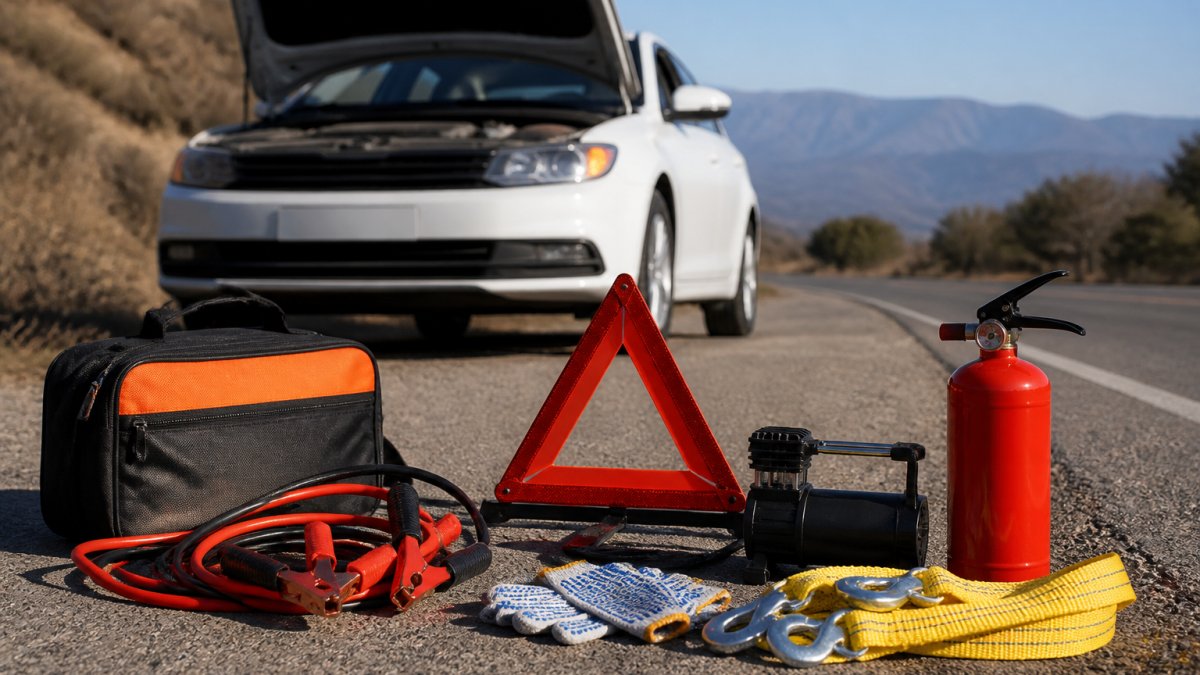
- Keep a portable jump-starter and a tire inflator in the trunk so you can self-resolve the two most common breakdowns without waiting.
- Carry a spare tire and confirm you have the tools to change it.
- Layer a pay-per-use service on top of a membership so you have a second dispatch option when the first is saturated.
For high-mileage drivers, the goal is not the single best plan. It is a stack that keeps you moving when any one layer fails.
How to Choose the Right Plan for Your Driving Pattern
Annual mileage: High-mileage drivers benefit from longer towing distances and unlimited service calls.
Vehicle age and reliability: Older vehicles break down more often.
Risk tolerance: If you can't afford downtime, invest in a premium plan with fast response and broad coverage.
| Factor | High Priority | Lower Priority |
|---|---|---|
| Response Time | Under 45 minutes | 60-90 minutes acceptable |
| Towing Distance | 75-100+ miles | 25-50 miles |
| Service Calls | Unlimited | Limited (5-10 per year) |
| Commercial Coverage | Must include rideshare | Standard personal use OK |
| Cost | Secondary to reliability | Primary consideration |
Better World Club offers a publicly reported starting price, making comparison easy.
The right choice depends on your situation. Lyft drivers in qualifying tiers should activate the free Allstate benefit immediately.
Frequently Asked Questions
What is the average roadside assistance response time for rideshare drivers?
Response times vary by provider and location, but most major roadside assistance services aim for 30 to 60 minutes for dispatch and arrival. Local providers like JETZ TOWING prioritize fast dispatch in their service areas. When selecting a plan, confirm the average response time for your specific region, since urban areas typically see faster service than rural locations. For rideshare drivers losing income during downtime, response time is often more important than plan cost.
Can I use personal roadside assistance while driving for Uber or Lyft?
Yes, you can use personal roadside assistance plans while driving for rideshare platforms, but check your plan's terms. Some plans exclude commercial use or have restrictions on for-hire driving. Lyft Rewards members get free or discounted roadside assistance through Allstate Roadside if they reach Platinum or Elite status. Verify coverage with your provider before relying on it during active rideshare shifts, since some standard plans may not cover vehicles used for commercial purposes.
What should rideshare drivers compare when choosing roadside assistance?
Prioritize response time, towing distance limits, and coverage for commercial driving. Compare whether the plan covers lockouts, battery service, fuel delivery, and tire changes. Check if your rideshare platform offers built-in benefits (Lyft Rewards roadside assistance, Uber Vehicle Interruption Coverage). Consider annual cost versus pay-per-use options. Verify the plan covers your vehicle type and service area. For high-mileage drivers, calculate total annual cost including potential service calls to find the best value.
Does AAA membership include roadside assistance towing, and what are the distance limits?
AAA membership includes roadside assistance with towing service, though specific towing distance limits depend on your membership tier. AAA typically offers multi-car coverage as a membership benefit, making it valuable for drivers with multiple vehicles. Towing distance and service limits vary by plan level, so review your specific membership details or contact AAA directly for exact coverage. Compare AAA's membership cost and towing limits against other providers to determine if it fits your rideshare driving needs.
Roadside assistance isn't optional for rideshare drivers, it's essential protection against income loss. The best plan for you matches your driving area, covers commercial rideshare work explicitly, and delivers fast response times when you're stranded. For drivers in the Greater Sacramento area, JETZ TOWING provides local dispatch and professional roadside assistance designed specifically for drivers who can't afford downtime. Request a tow or learn more about our coverage options today.