 How-to
7 Towing Service Pricing Factors That Set Your Final Bill
Quick Summary
Towing service pricing is built from a base or hookup fee plus per-mile charges, with extra costs for equipment, after-hours timing, and added work like winching or storage. Industry guides cite hookup fees of $75-$125 and per-mile rates of $2.50-$7 for a standard vehicle. Compare full quotes line by line, not just the headline base fee.
- Hookup fees of $75-$125 and per-mile rates of $2.50-$7 are general guidance for a standard vehicle.
- Ask whether the base fee already includes the first few miles to avoid double-counted distance.
- Confirm whether mileage counts loaded miles only or total dispatched miles, including the drive to you.
- Flatbeds usually cost more than wheel-lift equipment, so ask why one is on your quote.
- Get after-hours rates, storage, and winching terms in writing before the truck is dispatched.
Table of Contents
- How Towing Service Pricing Is Usually Structured
- Distance Traveled and Per-Mile Charges
- How Much Does It Cost to Tow a Car 20 Miles?
- Vehicle Type, Weight, and Flatbed Versus Wheel-Lift Equipment
- Time of Day, After-Hours Calls, and Emergency Service
- Why Are Towing Services So Expensive? Labor, Fuel, Insurance, and Add-On Fees
- Using a Towing Estimate Calculator and Comparing Quotes Fairly
- Questions to Ask a Towing Company Before You Authorize a Tow
- Frequently Asked Questions
How Towing Service Pricing Is Usually Structured
Most towing bills start with a base fee, then add charges for distance, equipment, and timing. Last Updated: November 5, 2026
Towing service pricing factors explained comes down to a few building blocks. Knowing them helps you read a quote before you authorize a tow. Industry sources describe a base or hookup fee plus a per-mile charge as a common structure, and Zarla's towing-rate guide reports hook-up fees of $75-$125 for a standard vehicle and per-mile ranges of $2.50-$7 Zarla towing rates guide. Those figures are general guidance, not a quote from any one company.
Here is how a typical bill breaks down:
- Base or hookup fee: the charge for dispatching a truck and connecting your vehicle.
- Mileage charge: a per-mile rate for the distance traveled.
- Equipment surcharge: extra cost for flatbeds or specialized recovery gear.
- Time-based add-ons: after-hours or emergency rates.
- Fees for extra work: winching, storage, or impound charges.
Watch out: Ask whether the base fee already includes the first few miles. Some quotes stack the hookup fee and mileage in ways that double-count distance.
Distance Traveled and Per-Mile Charges
Distance is usually the biggest variable after the base fee. Allstate lists distance, vehicle type, location, and provider as the main factors in towing costs Allstate towing cost guide. Its example ranges climb as trips get longer, from $35-$125 for five miles or less to $125-$275 for up to 40 miles.
Longer hauls also cost more per mile because the driver's time and fuel add up. A short tow across town and a long tow across the region can carry very different totals, even with the same base fee.
How Much Does It Cost to Tow a Car 20 Miles?
A 20-mile tow is a useful benchmark because it is long enough for mileage to matter but short enough that most providers quote it as a single local job. The total is the base fee plus mileage plus any surcharges, and you can build a working estimate yourself before you call.
Total cost depends on the base fee, the per-mile rate, and any add-ons. A flatbed, an after-hours call, or a winch recovery pushes the number higher.
Here is the arithmetic laid out step by step for a mid-range scenario:
- Base or hookup fee: quoted by the provider.
- Mileage: distance multiplied by the provider's per-mile rate.
- After-hours surcharge (if applicable): commonly a flat add-on or a multiplier on the base fee, ask for the exact figure.
- Winching or extra labor (if the car is in a garage, ditch, or tight spot): quoted separately, often by the job.
If a quote differs sharply from the others you receive for the same job, ask which line item is driving the difference.
Watch out: Confirm whether the per-mile rate applies to loaded miles only (from the pickup point to the drop-off) or to total dispatched miles including the drive to you. A quote that charges round-trip mileage on a 20-mile tow can nearly double the mileage line.
For reference, The Zebra reports an average U.S. towing cost of $109, which reflects the many short local tows in the mix rather than a 20-mile job The Zebra towing cost guide. Treat averages as a benchmark, not a quote. If you want a real number for your vehicle and distance, call JETZ TOWING at 916-628-8646, available 24/7, or send a request online.
Vehicle Type, Weight, and Flatbed Versus Wheel-Lift Equipment
The vehicle itself shapes the price. Heavier cars and trucks need stronger equipment, and all-wheel-drive or low-clearance vehicles may need a flatbed. The Zebra notes that a standard wheel lift or a flatbed may be required depending on the vehicle The Zebra towing cost guide.
- Wheel-lift towing is common for many passenger cars and costs less.
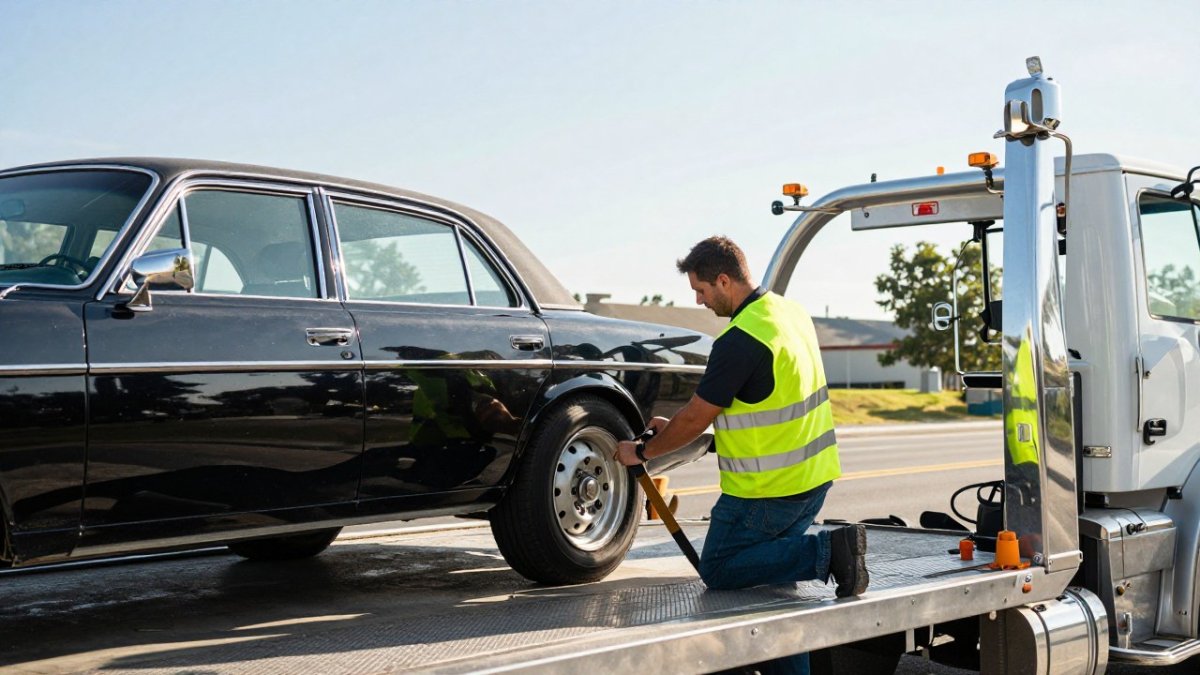
- Flatbed towing lifts the whole vehicle and suits damaged, low, or all-wheel-drive cars. It usually costs more.
Ask which method the company plans to use. A flatbed can be the right choice, but you should know why it is on the quote.
Time of Day, After-Hours Calls, and Emergency Service
Timing changes the price. Calls late at night, on weekends, or during emergencies often carry extra fees because the company must staff and dispatch differently. Speed's Towing notes that the total cost reflects vehicle size, weight, and distance, and that the job itself can change the bill Speed's Towing pricing factors.
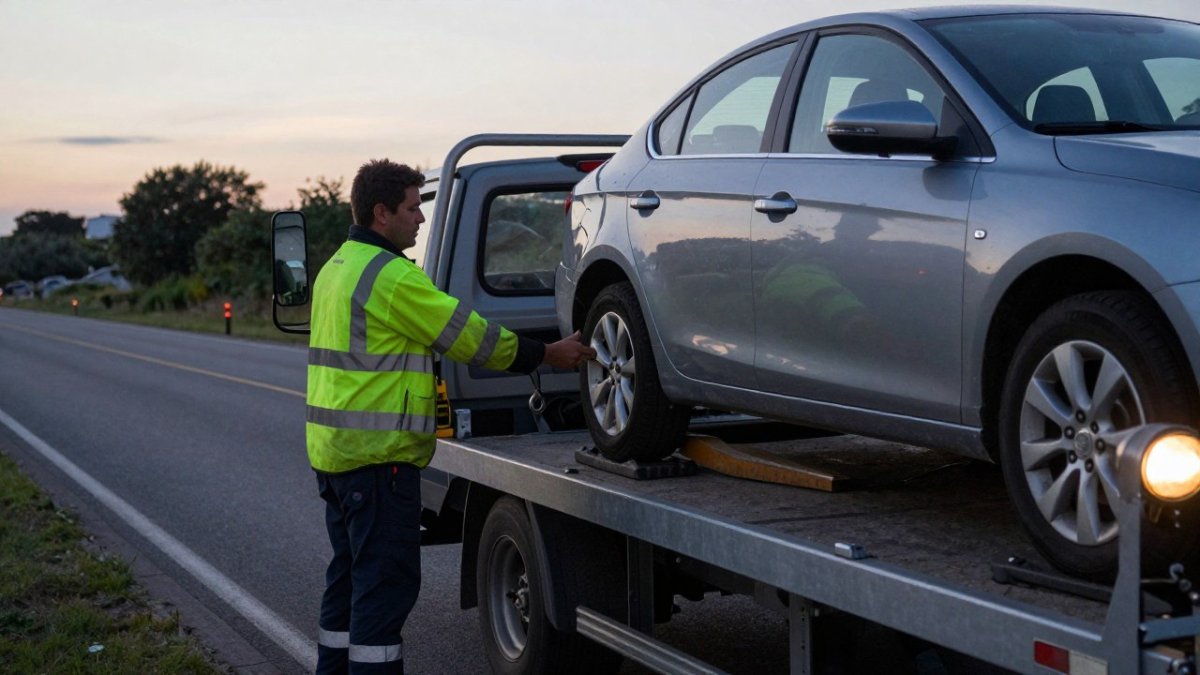
If you need help at odd hours, ask for the after-hours rate before the truck rolls. A reliable provider should give you a clear answer. For fast local help, you can reach JETZ TOWING's roadside team through its towing and roadside services page.
Why Are Towing Services So Expensive? Labor, Fuel, Insurance, and Add-On Fees
Towing costs reflect real expenses. Drivers, trucks, fuel, insurance, and equipment maintenance all add up. IBISWorld's industry analysis of U.S. automobile towing covers pricing pressures, including fuel surcharges, which affect what providers can charge IBISWorld automobile towing industry analysis.
Insurance is a big part of the cost. Coverage for vehicles damaged during transport is worth confirming before a tow. Add-on fees for winching, storage, or impound can also raise the final bill, so confirm them in advance.
Using a Towing Estimate Calculator and Comparing Quotes Fairly
A towing estimate calculator gives you a rough number, but it cannot see your vehicle's condition, the access to your parking spot, or the time of day. Use it as a starting point, then compare real quotes line by line. The goal is to make two quotes answer the same questions so the difference you see is a real price difference, not a difference in what is included.
Build a simple comparison sheet with these rows, and fill in each column from the written quote:
- Base or hookup fee, and whether it includes the first few miles.
- Mileage rate and mileage definition, loaded miles only, or dispatched miles including the drive to you.
- Vehicle class, does the quote assume a standard sedan, or does it upcharge for an SUV, truck, or AWD vehicle?
- Equipment, wheel-lift versus flatbed, and whether the flatbed is included or an add-on.
- Dispatch fee, a separate charge some companies add on top of the hookup fee.
- After-hours or weekend surcharge, flat fee or multiplier, and the exact window it applies to.
- Winching, storage, and impound terms, daily storage rate, winch rate, and who authorizes extra work.
- Cancellation policy, what you owe if you cancel after the truck is dispatched.
- Total estimated price, and whether the provider calls it a binding quote or an estimate.
The lowest base fee does not always produce the lowest total, so compare the full quote. Compare the total, not the headline number.
Watch out: A quote described as an 'estimate' can legally change after the truck arrives if the job turns out to be more complex, for example, a car that needs to be winched out of a tight garage. Ask the dispatcher to put the conditions that would change the price in writing before you authorize the tow.
If two quotes differ by more than the line items explain, ask each provider to walk you through their numbers. A provider that cannot itemize is telling you something. For a quote you can compare line by line, call JETZ TOWING at 916-628-8646, available 24/7, or send a request online.
The table below lists the line items to compare when you set two quotes side by side.
| Line item | What to check | Why it matters |
|---|---|---|
| Base or hookup fee | Whether it includes the first few miles | Prevents double-counted distance |
| Mileage rate | Loaded miles or total dispatched miles | Round-trip mileage can nearly double the line |
| Vehicle class | Sedan, SUV, truck, or AWD upcharge | Heavier vehicles cost more |
| Equipment | Wheel-lift or flatbed, and whether it is an add-on | Flatbeds usually cost more |
| Dispatch fee | Separate charge on top of hookup | Can hide in the total |
| After-hours surcharge | Flat fee or multiplier, and its time window | Late calls often carry extra fees |
| Winching and storage | Winch rate, daily storage, who approves extra work | Common source of surprise charges |
| Total estimated price | Binding quote or estimate | Estimates can change on arrival |
Questions to Ask a Towing Company Before You Authorize a Tow
Before you approve a tow, ask these questions:
- What is the base or hookup fee, and what does it include?
- How is mileage calculated, and from where?
- Is the price for the vehicle type I have, and which equipment will you use?
- Are after-hours or emergency rates applied?
- Are there storage, winching, or impound fees?
- Is the quote a final price, or an estimate?
Get the answers in writing. A clear quote protects you from surprise charges on the final bill. For a direct conversation about your situation, call JETZ TOWING at 916-628-8646, available 24/7, or send a request online.
Frequently Asked Questions
How much does it cost to tow a car 20 miles?
A 20-mile tow is usually priced as a base hookup fee plus a per-mile charge for the distance hauled. A 20-mile haul can land well above the base fee alone, since mileage adds to the total. The exact total depends on vehicle type, equipment needed, and time of day. Ask for the base fee, the per-mile rate, and any add-on charges in writing before the truck is dispatched.
Why are towing services so expensive?
Towing costs reflect the cost of the truck, equipment, fuel, insurance, and a trained operator who must respond quickly and often work in unsafe conditions on the road. Heavier vehicles and specialized recoveries also require more expensive equipment and more time. Fuel and operating costs are among the factors that shape towing rates. Comparing itemized quotes helps show where the cost actually comes from.
What should I ask a towing company before a tow?
Ask for the total estimated price with each component listed: the base hookup fee, the per-mile charge, and any after-hours or emergency surcharge. Confirm which truck type will be used and whether a flatbed or wheel lift is required for your vehicle. Ask whether storage, winching, or roadside add-on fees apply and whether the quote is final. Ask for licensing and insurance information so you know the driver is covered if your vehicle is damaged during transport.
Does car insurance cover towing costs?
Coverage depends on your policy. Many standard auto policies include roadside assistance or towing coverage as an optional add-on, often with a per-incident mileage limit. Check your policy for the towing limit and whether it applies to your breakdown or accident scenario. If you pay out of pocket, keep the itemized invoice, since it will be needed for any claim or reimbursement request.